Clinical Report: Predictive Model for Early Urinary Incontinence Post-LRP
Overview
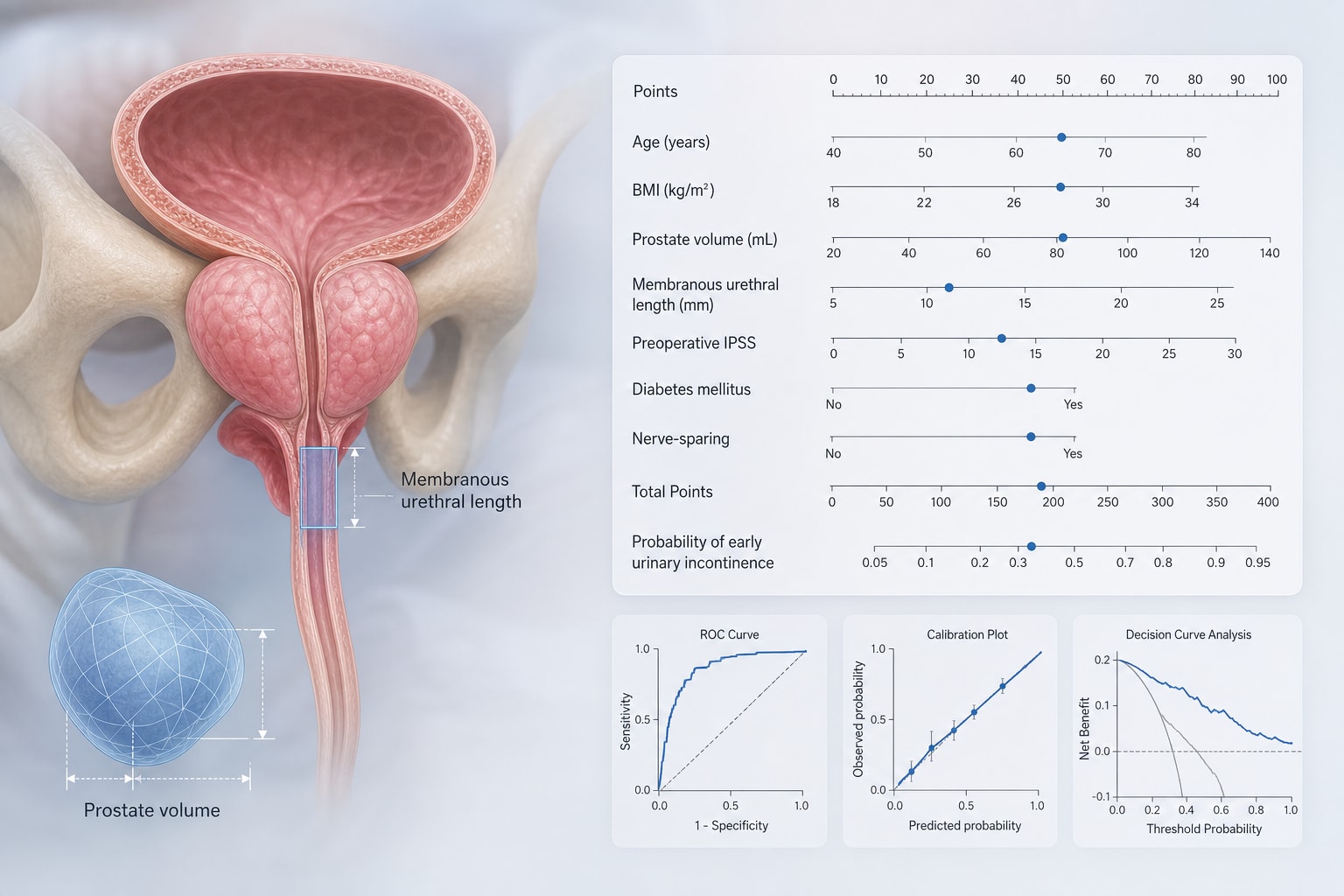
This study developed a predictive model for early urinary incontinence following laparoscopic radical prostatectomy (LRP) based on clinical data from 408 patients. Key predictors identified include prostate volume, membranous urethral length, intravesical prostatic protrusion length, and neurovascular bundle preservation.
Background
Urinary incontinence is a common complication after radical prostatectomy, impacting patient quality of life. This study aims to enhance predictive capabilities using anatomical factors obtained from MRI.
Data Highlights
Parameter
Value
Patients with urinary incontinence
168 (41.2%)
Patients without urinary incontinence
240 (58.8%)
AUC for predictive model
0.910 (95% CI 0.862–0.957)
Key Findings
41.2% of patients experienced urinary incontinence after LRP.
Prostate volume, membranous urethral length (MUL), intravesical prostatic protrusion length (IPPL), and neurovascular bundle (NVB) preservation were identified as independent predictors of urinary incontinence.
The predictive model demonstrated good discriminatory power with an AUC of 0.910.
Calibration curve showed good consistency for the predictive model.
The decision curve analysis was performed.
Clinical Implications
The identified predictors can assist clinicians in evaluating the risk of early urinary incontinence in patients undergoing LRP.
Conclusion
The study created a predictive model for early urinary incontinence post-LRP, highlighting specific anatomical factors.