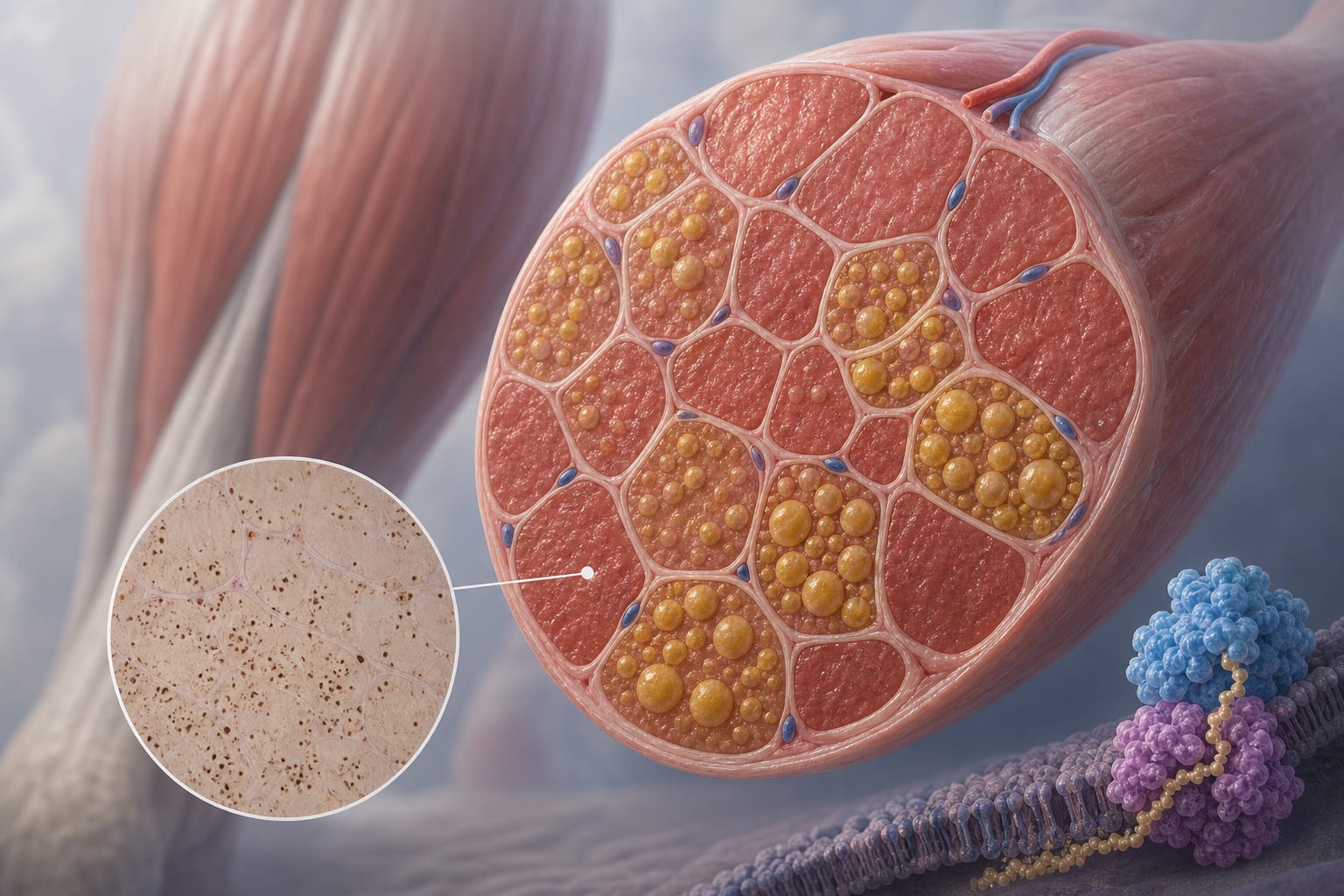
This study investigates the relationship between hyperhomocysteinemia (HHcy) and lipid accumulation in skeletal muscle. Findings indicate that HHcy is associated with increased expression of acetyl-CoA carboxylase 2, leading to impaired fatty acid oxidation and lipid deposition.
Background
Lipid storage myopathy (LSM) is characterized by abnormal lipid accumulation in skeletal muscle, leading to symptoms such as muscle weakness and exercise intolerance. Hyperhomocysteinemia (HHcy) is a known risk factor for various chronic diseases and has been linked to lipid metabolic disturbances. Understanding the role of HHcy in skeletal muscle lipid metabolism is crucial for developing targeted interventions.
Data Highlights
Parameter
Result
Patients with clinical myopathy
4 of 6
ACACB gene upregulation (p-value)
< 0.001
ACC2 protein expression elevation (p-value)
< 0.01
Malonyl-CoA level increase (p-value)
< 0.01
CPT1 inhibition (p-value)
< 0.05
Key Findings
Four out of six patients with HHcy exhibited clinical myopathy symptoms.
All patients showed abnormal lipid deposition in skeletal muscle.
Significant upregulation of the ACACB gene was observed in muscle tissues.
ACC2 protein expression was markedly elevated, leading to increased malonyl-CoA levels.
Clinicians should consider evaluating homocysteine levels in patients presenting with unexplained muscle weakness or lipid accumulation. B-vitamin supplementation may be beneficial in managing symptoms associated with HHcy and lipid storage myopathy.
Conclusion
The study highlights a significant association between HHcy and lipid accumulation in skeletal muscle, suggesting potential therapeutic avenues through B-vitamin supplementation and management of homocysteine levels.