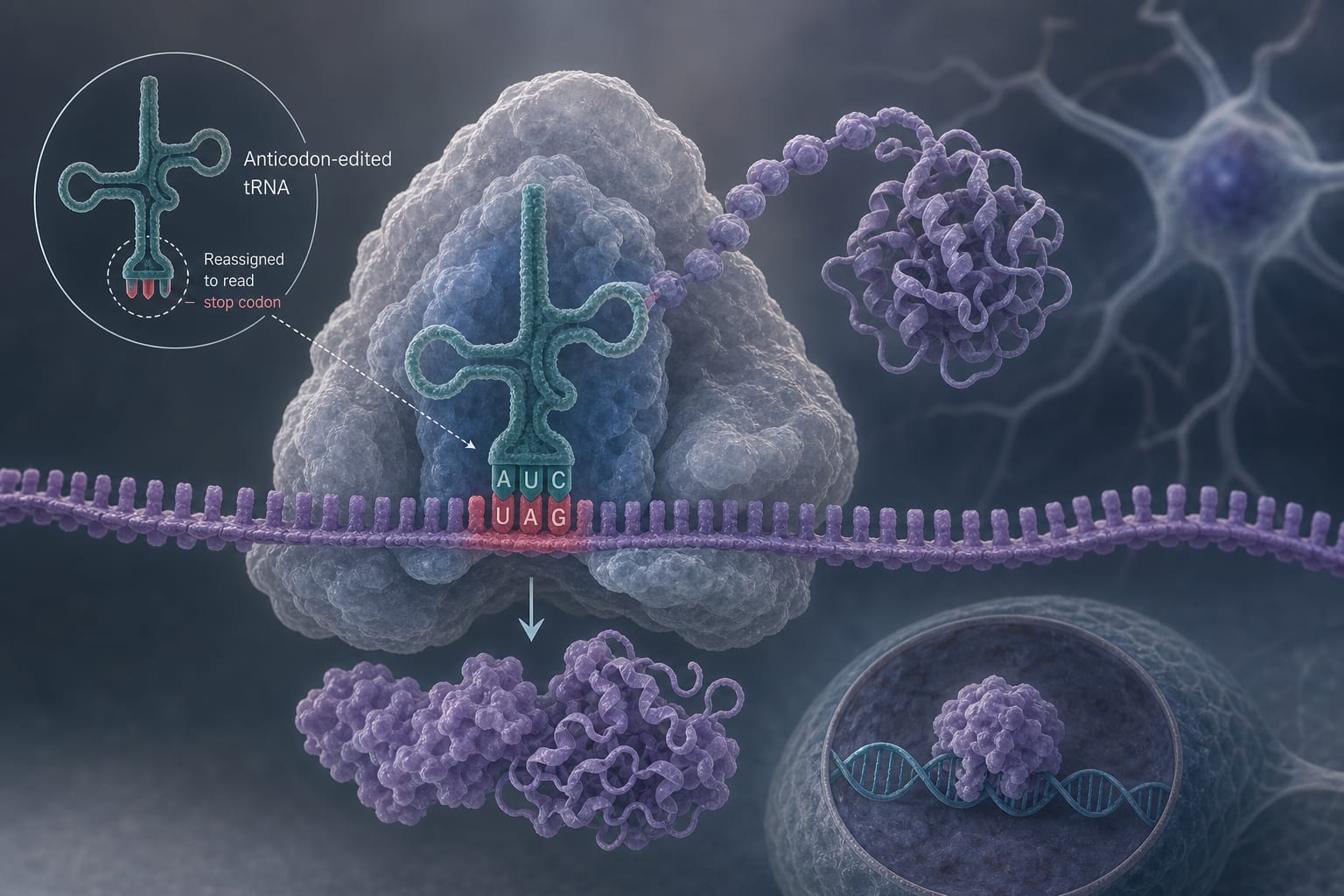
Clinical Report: tRNA Modifications Enhance MeCP2 Expression in Rett Syndrome
Overview
This study demonstrates that anticodon-edited transfer RNAs (ACE-tRNAs) can effectively promote readthrough of MECP2 nonsense mutations, leading to the production of full-length, functional MeCP2 protein. The findings highlight the potential of precision readthrough strategies for treating Rett syndrome associated with nonsense mutations.
Background
Expand on current therapy limitations and the importance of targeting nonsense mutations.
Data Highlights
ACE-tRNAs promote efficient and dose-dependent readthrough of MECP2 nonsense mutations, restoring full-length MeCP2 protein. Functional analyses indicate that ACE-tRNA–rescued MeCP2 localizes correctly and interacts with transcriptional corepressors, demonstrating functional relevance.
Key Findings
ACE-tRNAs enable efficient readthrough of specific MECP2 nonsense mutations.
Readthrough efficiency varies among different nonsense mutations, necessitating optimization.
Rescued MeCP2 protein correctly localizes to heterochromatic foci.
ACE-tRNA–rescued MeCP2 can recruit the transcriptional corepressor TBL1.
Scrambled control tRNAs do not restore MeCP2 localization or function.
Clinical Implications
The findings suggest that ACE-tRNA technology could be a promising therapeutic strategy for patients with RTT caused by nonsense mutations. Clinicians should consider the mutation-specific nature of this approach when evaluating treatment options for RTT.
Conclusion
ACE-tRNAs represent a novel and targeted strategy for restoring functional MeCP2 in RTT, warranting further investigation and optimization for clinical application.