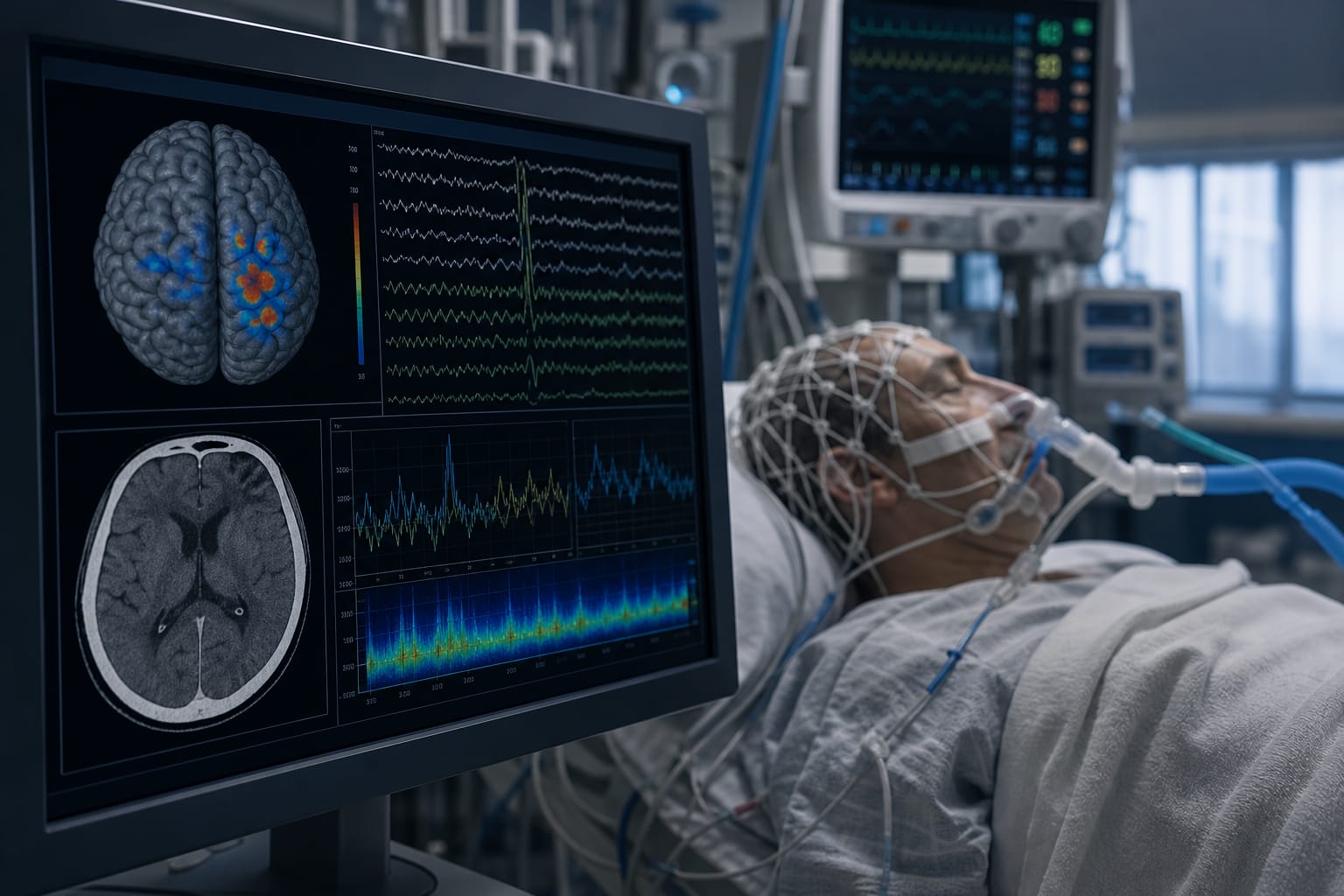
Clinical Report: Comparing Continuous and Short EEG Monitoring Following Ischemic Stroke
Overview
This study investigates the efficacy of continuous EEG (cEEG) versus short EEG (sEEG) in detecting abnormalities and predicting post-stroke epilepsy (PSE) in ischemic stroke patients.
Background
Stroke is a leading cause of epilepsy in older adults, with a significant proportion of new-onset epilepsy cases arising post-stroke. Early identification of patients at high risk for post-stroke epilepsy is essential for guiding follow-up care and preventive therapies. Current methods for predicting PSE, including clinical seizures, are limited, necessitating the exploration of additional prognostic tools such as EEG.
Data Highlights
No numerical data provided in the source material.
Key Findings
cEEG is more sensitive than sEEG for detecting transient EEG abnormalities in stroke patients.
EEG findings within 7 days post-stroke, such as epileptiform activity, are strong predictors of PSE.
Incorporating cEEG findings into the SeLECT-EEG model improves risk stratification for PSE.
cEEG detects abnormalities that sEEG may miss, particularly in patients without acute symptomatic seizures.
The study utilized a controlled comparison of cEEG and simulated sEEG from the same recording.
Clinical Implications
The findings suggest that cEEG should be considered for better prognostication of PSE in ischemic stroke patients. Clinicians may need to reassess the duration of EEG monitoring to optimize patient outcomes.
Conclusion
The study highlights the superior diagnostic capabilities of cEEG over sEEG in predicting post-stroke epilepsy, emphasizing the need for further research to establish optimal EEG monitoring practices.
Research highlights expanding diagnostic capabilities but persistent gaps in antiviral therapy and vaccine coverage for pediatric enterovirus infections.