Clinical Report: Intraocular Lens Placement Using the Bag-in-the-Lens Method
Overview
The bag-in-the-lens (BIL) technique optimizes intraocular lens (IOL) centration and aims to prevent posterior capsular opacification (PCO). This review synthesizes current literature on the BIL method, highlighting its design, surgical technique, and clinical outcomes.
Background
Cataract surgery is one of the most common procedures globally, yet complications such as PCO can compromise visual outcomes. The BIL technique, introduced to enhance IOL stability and prevent PCO, represents a significant advancement in cataract surgery. Understanding this technique is crucial for improving patient outcomes and minimizing postoperative complications.
Data Highlights
No numerical data was provided in the source material.
Key Findings
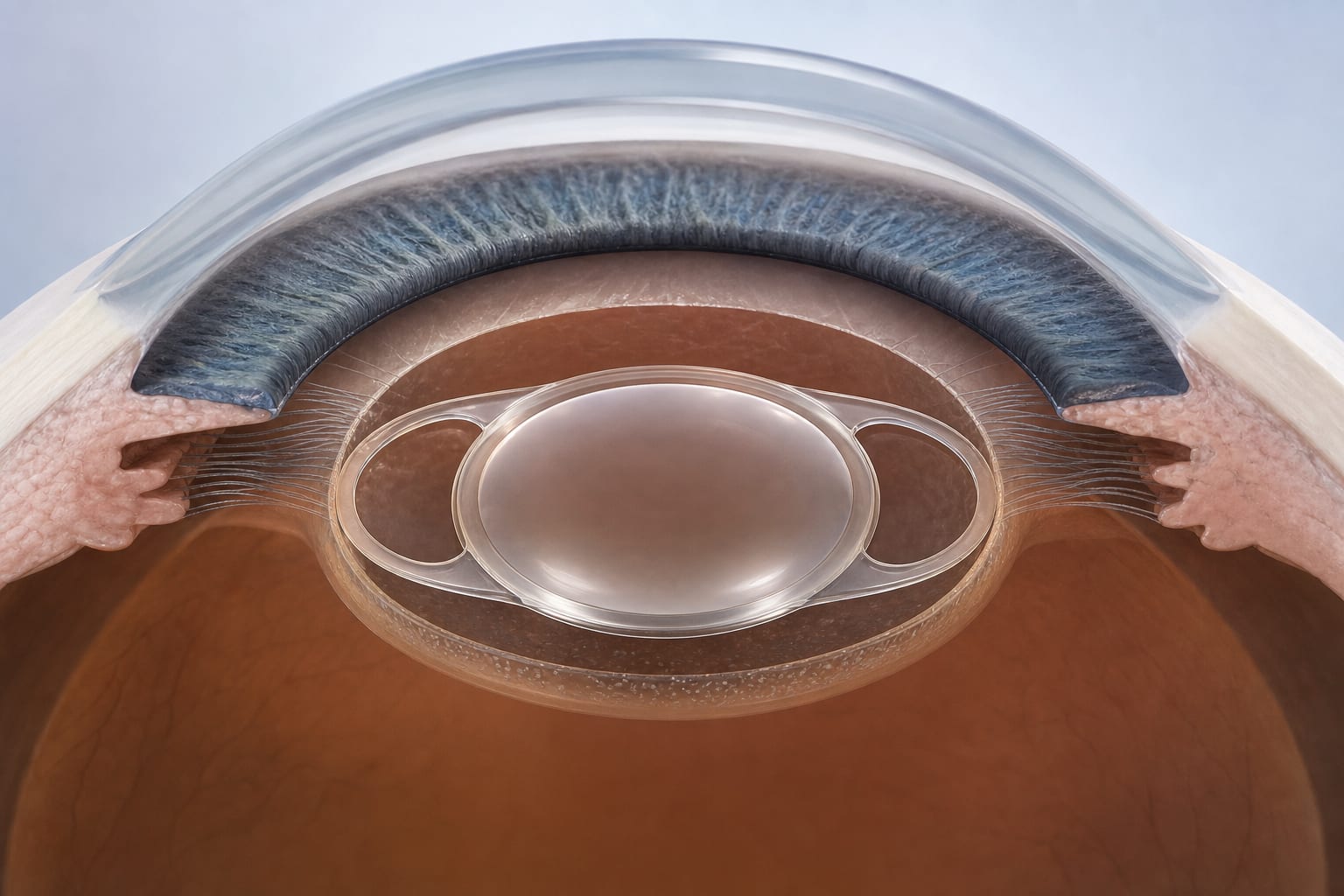
The BIL technique uses a monofocal hydrophilic IOL with a unique design to optimize lens centration.
It involves creating anterior and posterior capsulorhexes that fit into a peripheral groove of the IOL, preventing lens tilting.
The BIL design captures residual lens epithelial cells, reducing the risk of PCO.
Current models include the Morcher 89A, 89D, and 89F, each designed for enhanced stability.
Clinical studies validate the effectiveness of the BIL technique in preventing PCO and maintaining visual clarity.
Clinical Implications
Surgeons should consider the BIL technique for patients at risk of PCO, as it offers a method to enhance IOL stability and visual outcomes. Familiarity with the surgical technique and the specific IOL design is essential for successful implementation.
Conclusion
The bag-in-the-lens technique represents a promising advancement in cataract surgery, with the potential to significantly reduce the incidence of PCO and improve patient satisfaction. Ongoing research and clinical experience will further elucidate its benefits.