Real-world use and impact of direct oral anticoagulants among atrial fibrillation patients with cardioembolic stroke - Report - MDSpire

Real-world use and impact of direct oral anticoagulants among atrial fibrillation patients with cardioembolic stroke

  • By

  • Vladislavs Sokaļskis

  • Kaspars Kupics

  • Kristaps Jurjāns

  • Nikolajs Ņesterovičs

  • Ieva Ozoliņa

  • Guntis Karelis

  • Evija Miglāne

  • Andrejs Ērglis

  • June 18, 2026

  • 0 min

Share

Utilization and Effects of Direct Oral Anticoagulants in Atrial Fibrillation Patients Experiencing Cardioembolic Stroke

Overview

Revise to include methodology and clarify the relationship between DOAC adherence and stroke severity.

Background

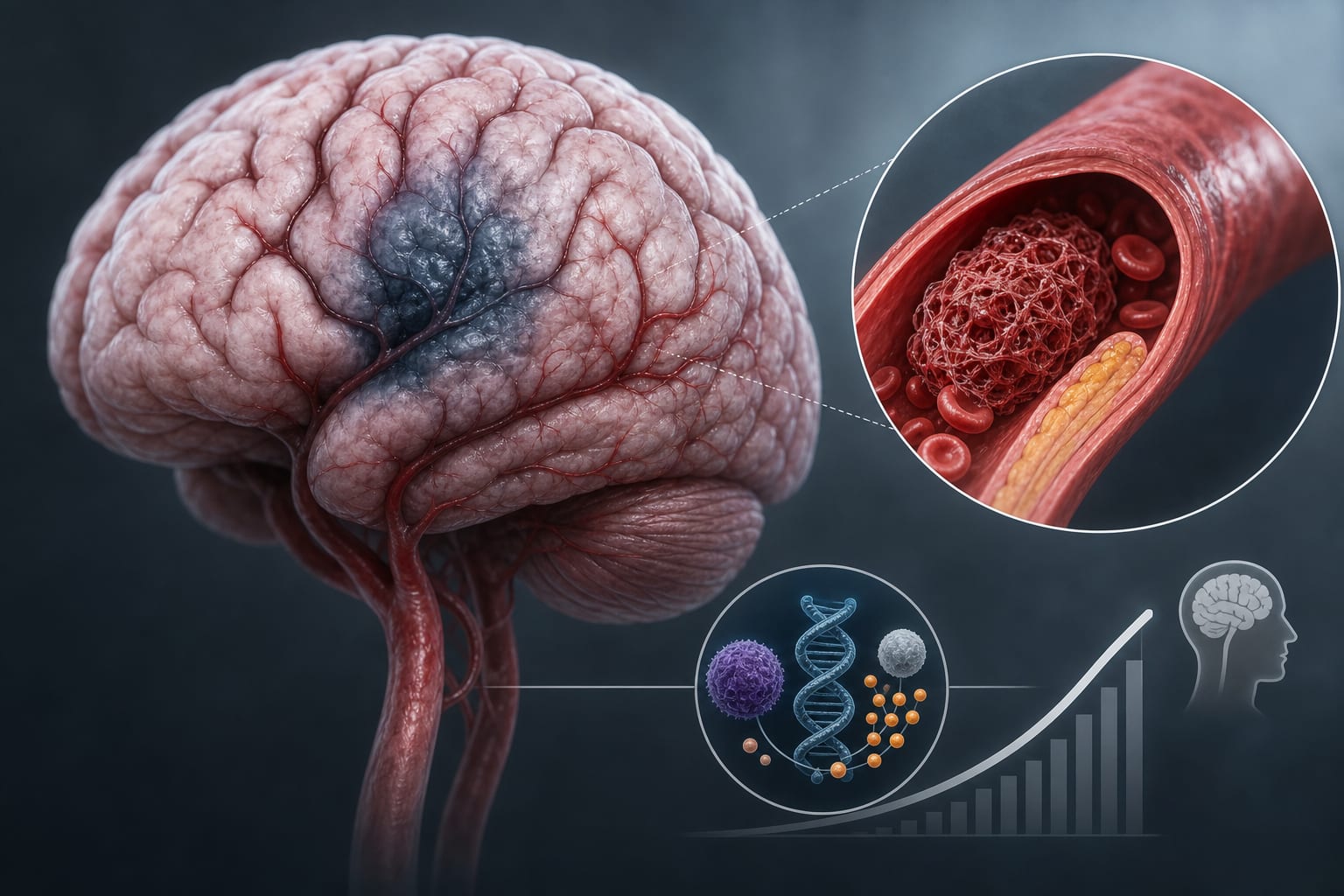
Atrial fibrillation is a leading cause of cardioembolic strokes, which are associated with increased morbidity and mortality. The use of DOACs has transformed stroke prevention in AF patients, yet non-adherence remains a critical issue, particularly in Eastern Europe. Understanding the implications of DOAC adherence on stroke outcomes is essential for improving patient care and reducing stroke incidence.

Data Highlights

CharacteristicDOAC UsersNon-Users
Mean NIHSS Score8.84 ± 6.7611.58 ± 6.98
Mean Left Atrial Volume Index (LAVI)56.05 ± 19.3146.94 ± 14.33

Key Findings

  • 43.4% of CES patients with AF were not on anticoagulation therapy prior to the stroke.
  • Patients on DOACs had significantly milder strokes compared to non-users (mean NIHSS score: 8.84 vs. 11.58).
  • DOAC users exhibited larger left atrial volume indices (LAVI) than non-users (56.05 vs. 46.94).
  • 55.8% of Latvian AF patients were non-adherent to DOACs, with 30.6% having gaps in therapy.
  • Adherence to DOACs is linked to a 31% reduction in ischemic stroke risk.

Clinical Implications

Healthcare providers should prioritize adherence to DOAC therapy in AF patients to mitigate the risk of severe strokes. Strategies to enhance patient compliance, such as education and regular follow-ups, are essential in managing AF and preventing cardioembolic strokes.

Conclusion

Reiterate the importance of addressing non-adherence with recommendations for future research.

Related Resources & Content

  1. Author(s)/Org, Source, Year -- Title
  2. Journal of General Internal Medicine (Springer), 2026 -- Severity of Gastrointestinal Bleeding in Anticoagulant Therapy with Vitamin K Antagonist or Direct Oral Anticoagulant Therapy
  3. JAMA Network Open, 2023 -- Anticoagulation in Device-Detected Atrial Fibrillation—Uncertainty and Heterogeneity in Value
  4. 2024 ESC Guidelines for the management of atrial fibrillation, European Heart Journal, 2024
  5. Early Versus Late Initiation of Direct Oral Anticoagulants in Postischemic Stroke Patients With Atrial Fibrillation, American College of Cardiology, 2023
  6. JAMA Network Open — COX-2–Selective NSAIDs With DOACs in Atrial Fibrillation—Analgesic Safety via Antithrombotic Stewardship
  7. 2024 ESC Guidelines for the management of atrial fibrillation developed in collaboration with the European Association for Cardio-Thoracic Surgery (EACTS) | European Heart Journal | Oxford Academic
  8. Early Versus Late Initiation of Direct Oral Anticoagulants in Postischemic Stroke Patients With Atrial Fibrillation - American College of Cardiology
  9. Clinical characteristics and outcomes of ischemic stroke despite appropriate oral anticoagulation for atrial fibrillation: A systematic review and meta-analysis of real-world studies - PMC

Original Source(s)

Related Content