Personal Health Large Language Models and the Negotiation of Medical Authority in Clinical Care: Opportunities, Risks, and Governance - Report - MDSpire
Advertisement
Personal Health Large Language Models and the Negotiation of Medical Authority in Clinical Care: Opportunities, Risks, and Governance
Clinical Report: Navigating Medical Authority in Clinical Practice
Background
The integration of personal health large language models (PH-LLMs) into healthcare represents a significant shift in how diagnostic reasoning and therapeutic recommendations are formulated. As these models synthesize user-generated health data into personalized narratives, they challenge traditional clinical authority and accountability.
Data Highlights
No numerical or trial data is presented in the source material.
Key Findings
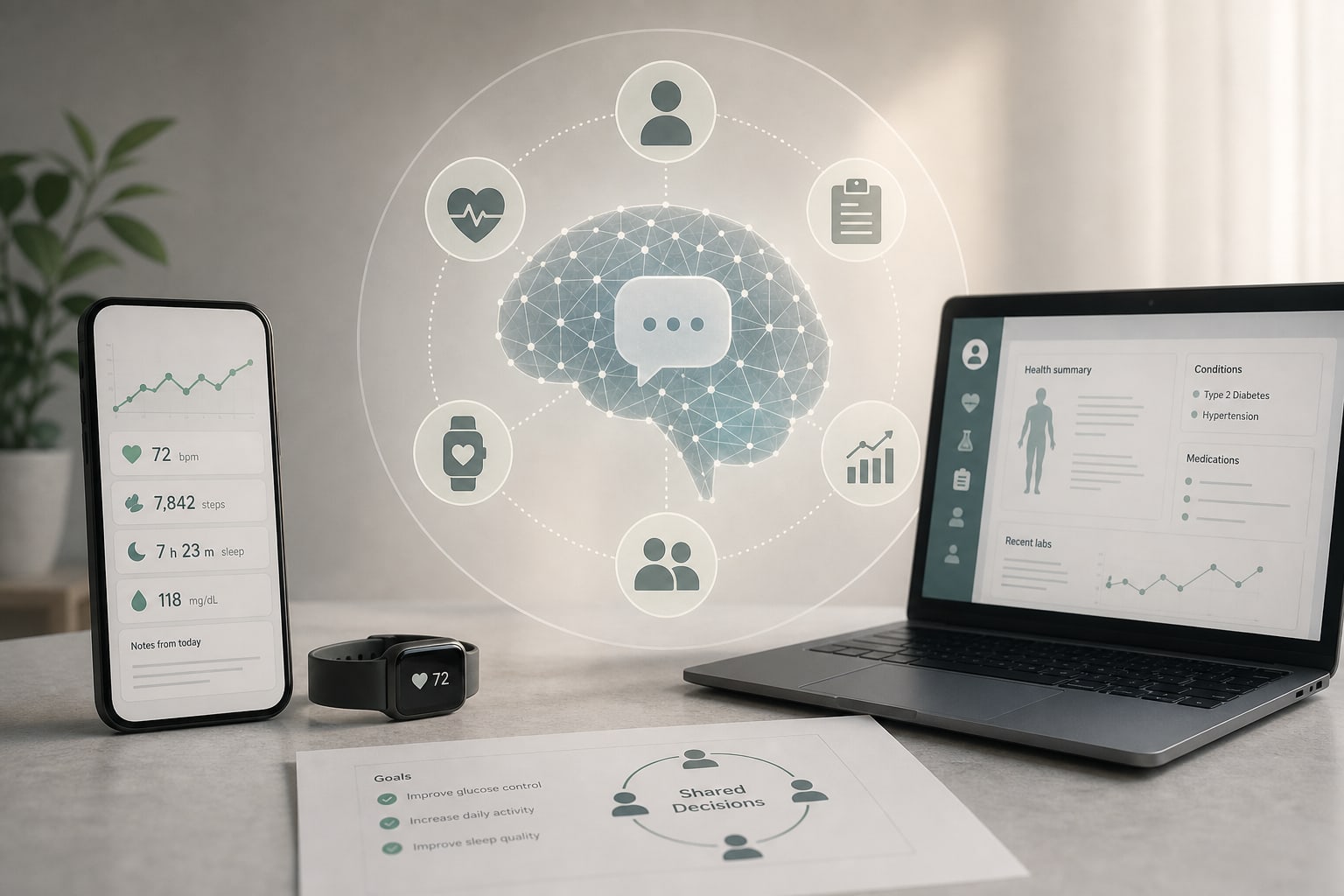
PH-LLMs differ from traditional health chatbots by providing ongoing interpretations and recommendations based on user data.
Current PH-LLMs may be vulnerable to issues such as data shift and hallucination, impacting their reliability.
Functions of PH-LLMs exist on a risk continuum, with varying implications for patient safety and clinical decision-making.
The use of PH-LLMs may shift clinician-patient interactions from a dyadic to a triadic model, involving negotiation of authority among clinicians, patients, and algorithms.
There are significant risks associated with PH-LLMs, including epistemic conflict and fragmentation of clinical truth.
Clinical Implications
Clinicians may need to adapt their approaches to accommodate the influence of PH-LLMs in patient interactions. This includes being prepared to mediate between algorithmic outputs and clinical evidence to ensure safe and effective patient care.
Conclusion
The emergence of PH-LLMs necessitates a reevaluation of medical authority and governance in clinical practice. A framework that prioritizes safety, accountability, and trust is essential for their beneficial use.