Prevalence of undernutrition at admission and associated factors among children with cancer admitted to the University Hospital of Tangier: a cross-sectional study - Report - MDSpire
Advertisement
Prevalence of undernutrition at admission and associated factors among children with cancer admitted to the University Hospital of Tangier: a cross-sectional study
Clinical Report: Assessment of Undernutrition Rates in Pediatric Cancer Patients
Overview
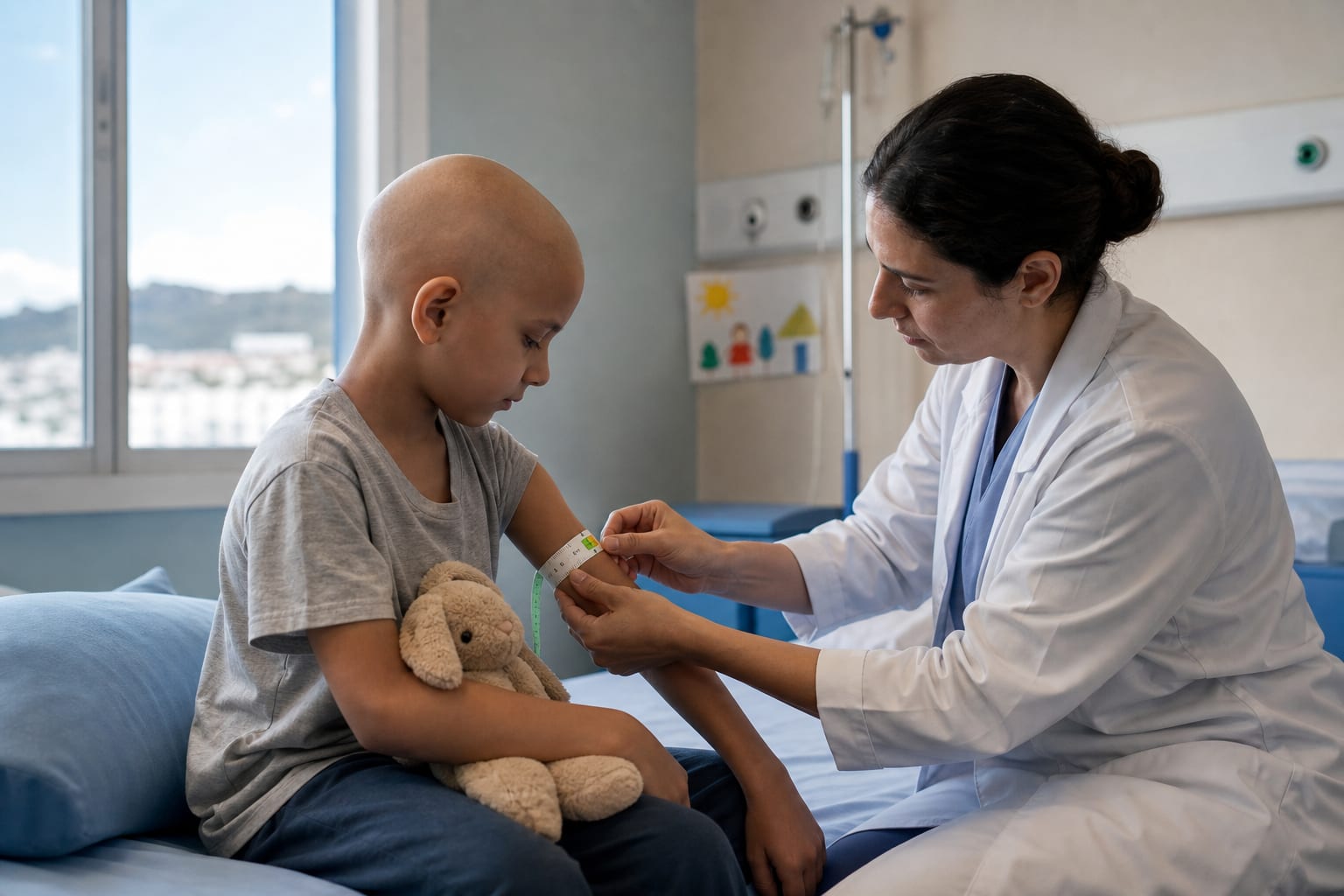
This study assesses the prevalence of undernutrition in pediatric cancer patients upon admission to a hospital in Tangier, revealing a prevalence of 35.1% based on BMI and 44.3% based on MUAC. Factors associated with undernutrition include rural origin, solid tumors, and low socioeconomic status.
Background
Undernutrition is a critical issue in pediatric oncology, particularly in developing countries where socioeconomic factors limit access to care. Understanding the prevalence and contributing factors of undernutrition is essential.
Data Highlights
Measure
Prevalence
Associated Factors
BMI/A
35.1% [95% CI (25%; 45%)]
Rural origin, Solid tumors
MUAC/A
44.3% [95% CI (34%; 54%)]
Rural origin, Solid tumors, Low socioeconomic status
Key Findings
Prevalence of undernutrition based on BMI/A is 35.1%.
Prevalence of undernutrition based on MUAC/A is 44.3%.
Rural origin is significantly associated with undernutrition (OR=3.21 for BMI/A, OR=3.40 for MUAC/A).
Solid tumors are associated with increased undernutrition risk (OR=2.31 for BMI/A, OR=2.02 for MUAC/A).
Low socioeconomic status is linked to undernutrition (OR=6.10 for MUAC/A).
No significant associations were found between undernutrition and age or gender.
Clinical Implications
Healthcare providers should prioritize nutritional assessments for pediatric cancer patients, especially those from rural areas or with solid tumors. Implementing targeted nutritional interventions may improve treatment outcomes and overall patient care.
Conclusion
The findings highlight the urgent need for nutritional support strategies in pediatric oncology to address the high rates of undernutrition and its associated factors.