Clinical Report: Distinct Functions of Dopamine D1 and D2 Receptors in Pain Regulation
Overview
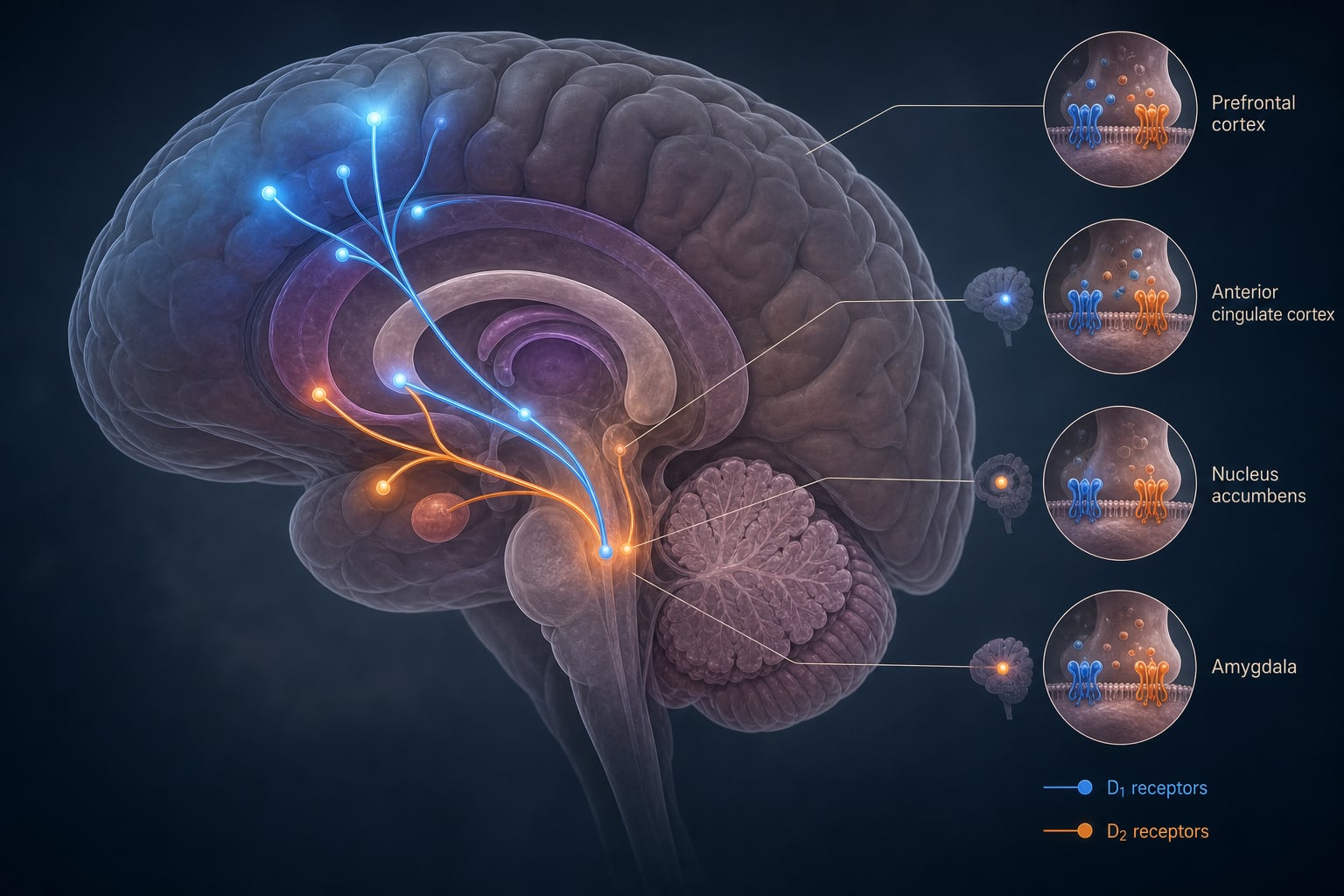
This review highlights the distinct roles of dopamine D1 and D2 receptors in pain regulation across key brain regions. It emphasizes the complexity and regional heterogeneity of these receptors, suggesting potential avenues for non-opioid pain management strategies.
Background
Dopamine receptors are integral to the central nervous system's pain processing pathways. Understanding their specific functions in pain modulation is critical, especially given the limitations of current opioid therapies. The exploration of D1 and D2 receptor roles may lead to innovative non-opioid analgesic strategies, addressing the pressing need for effective pain management.
Data Highlights
No numerical data provided in the article.
Key Findings
D1R is implicated in pain signal integration and salience encoding in the prefrontal cortex.
D2R modulates inflammatory and neuropathic pain, as well as opioid synergy and stress analgesia.
D1R provides tonic suppression under physiological conditions in the anterior cingulate cortex but may diminish in chronic pain.
D2R activation can suppress pain symptoms and restore inhibitory control in certain contexts.
The interaction between D1R and D2R can exhibit functional synergy and antagonism, influencing pain perception.
Clinical Implications
Targeting the dopamine receptor system may offer a novel approach to pain management, particularly for chronic pain and mood disorders. However, precise targeting of specific receptor subtypes and brain regions remains a challenge that requires further clinical investigation.
Conclusion
The distinct functions of D1 and D2 receptors in pain regulation underscore the complexity of pain mechanisms. Continued research is essential to translate these findings into effective clinical therapies for pain management.
A small observational study in collegiate football players found microbiome associations after nonconcussive head impacts, though findings were limited by severe underpowering and high attrition