Risk score for esophageal and gastric cancer in the over 50-year-old population based on self-reported information –the RISC-GAP project - Report - MDSpire
Advertisement
Risk score for esophageal and gastric cancer in the over 50-year-old population based on self-reported information –the RISC-GAP project
Clinical Report: Development of a Risk Assessment Tool for Esophageal and Gastric Cancer
Overview
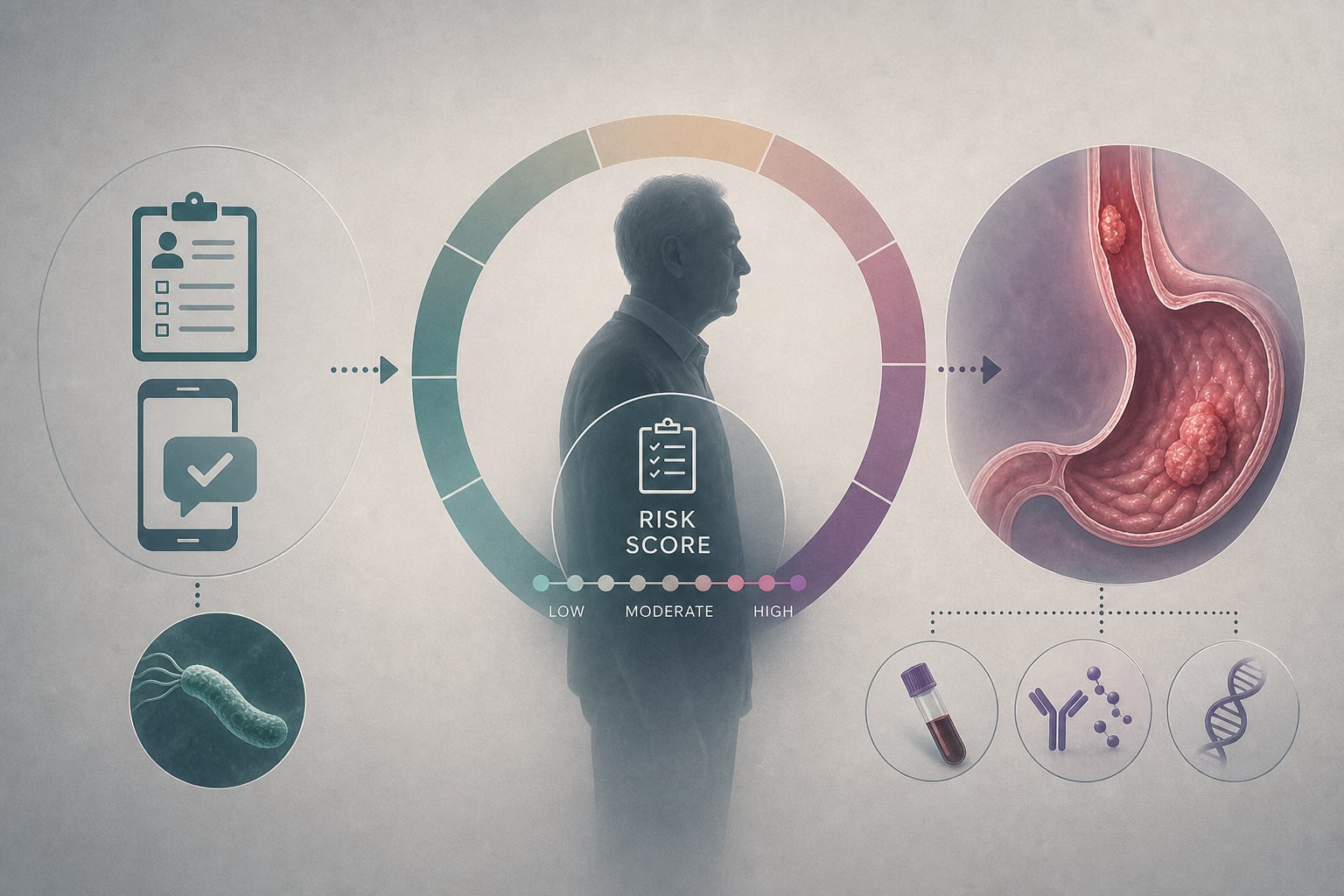
The RISC-GAP initiative aims to develop a risk assessment tool for gastric and esophageal cancer in individuals aged 50 and above using self-reported data. This tool is designed to identify high-risk individuals.
Background
Gastric and esophageal cancers are significant health threats, particularly in older populations, with high incidence and mortality rates. In Germany, approximately 7,500 cases of esophageal cancer and up to 15,000 cases of gastric cancer are diagnosed annually, leading to around 14,000 deaths due to these cancers. Late-stage diagnosis often results in poor prognoses, highlighting the need for a risk assessment tool to identify high-risk individuals.
Data Highlights
No numerical data or trial results were provided in the source material.
Key Findings
The RISC-GAP project utilizes data from the UK Biobank to develop a risk score for gastric and esophageal cancer.
Self-reported information from participants aged 50 and above is used to calculate the risk score.
Helicobacter pylori infection is identified as a significant risk factor for gastric cancer.
The project aims to establish a screening program tailored to high-risk individuals.
Current preventive strategies in countries like South Korea and Japan are referenced.
Clinical Implications
The development of a risk assessment tool could lead to more targeted screening for gastric and esophageal cancers.
Conclusion
The RISC-GAP initiative represents a step towards improving the early detection of gastric and esophageal cancers in older adults through a risk-adapted screening approach.
To better service community practitioners, Roswell Park Comprehensive Cancer Center is proud to introduce Gyn-Onc Connect, a dedicated phone number to access Roswell Park’s gynecologic oncology team.