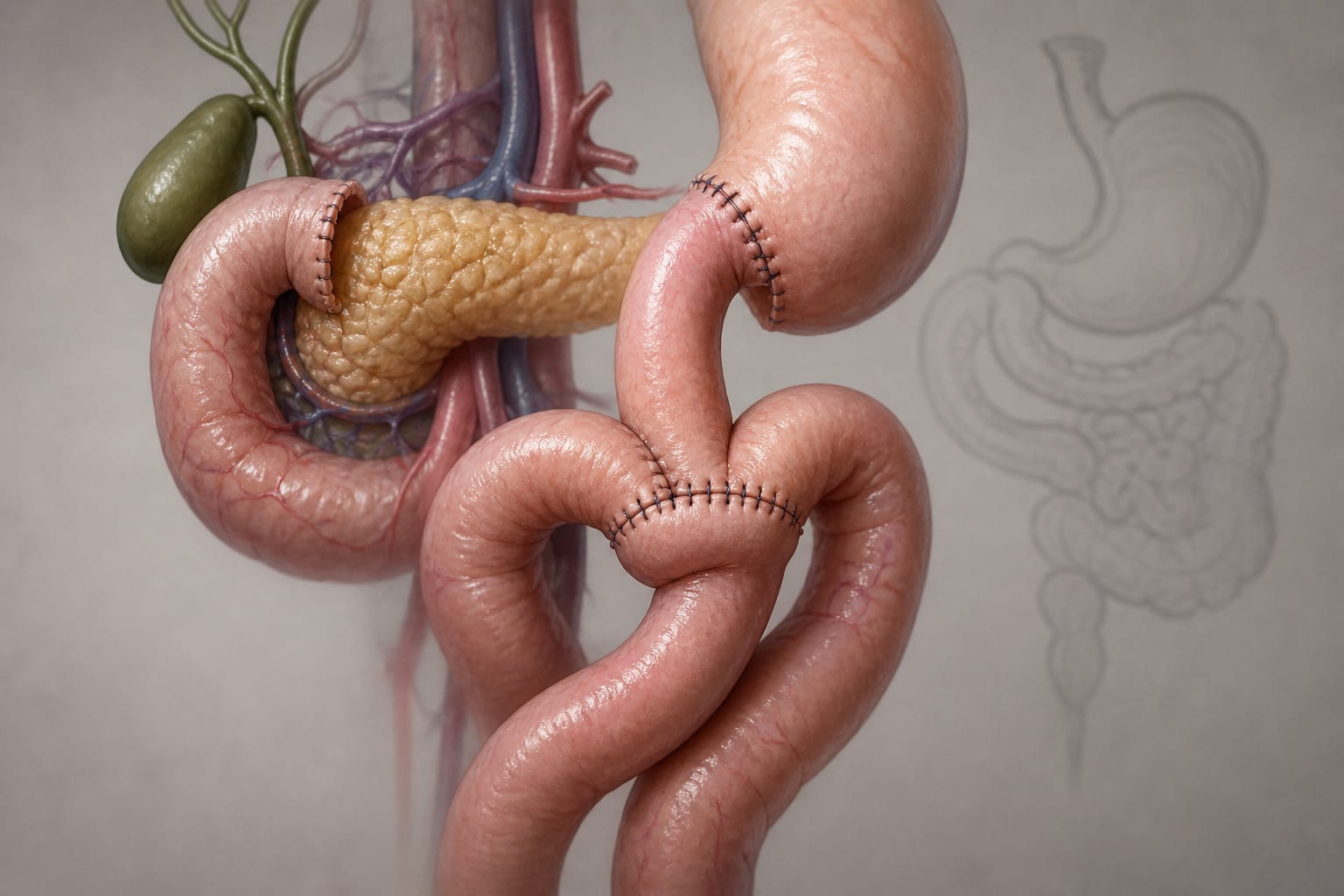
Clinical Report: Assessment of Braun enteroenterostomy's effectiveness and safety
Overview
This systematic review and meta-analysis evaluates the effectiveness of Braun enteroenterostomy (BEE) in reducing delayed gastric emptying (DGE) and postoperative morbidity in patients undergoing pancreatoduodenectomy (PD).
Background
Pancreatoduodenectomy (PD) is a standard surgical procedure for conditions affecting the pancreatic head and periampullary region, yet it is associated with significant morbidity, particularly delayed gastric emptying (DGE). DGE affects a substantial proportion of patients and can lead to prolonged hospital stays and increased healthcare costs. The role of adjunctive procedures like Braun enteroenterostomy (BEE) in mitigating DGE remains unclear, necessitating further investigation.
Data Highlights
No specific numerical data or trial results were provided in the source material.
Key Findings
Delayed gastric emptying (DGE) occurs in approximately 30-60% of patients after pancreatoduodenectomy (PD).
Incidence of DGE can reach up to 62%, with significant variability reported in studies.
Adjunctive Braun enteroenterostomy (BEE) has been proposed to reduce DGE incidence post-PD.
Previous studies have shown inconsistent results regarding the effectiveness of BEE in lowering DGE rates.
Recent systematic reviews indicate that BEE may lower overall and clinically relevant DGE, but findings are not consistent across randomized trials.
Clinical Implications
Clinicians should consider the variability in outcomes when deciding on surgical approaches for patients undergoing PD.
Conclusion
The systematic review highlights the need for further research to clarify the role of Braun enteroenterostomy in managing delayed gastric emptying following pancreatoduodenectomy.
by Marios Alogakos, Ahmed Ghani, Stefan Bitar, Georgia Angeliniades, Konstantinos Manousidis, May Y. Hajeir, Lamees M. Al Darwashi, Christian A. Than, Hayato Nakanishi, Alexandra M. Roch, Eugene P. Ceppa