Nutrient deprivation increases CD3 expression in RAW cells and augments the CD3-induced proinflammatory profile, associated with NFAT and IRF-1 - Report - MDSpire
Advertisement
Nutrient Limitation Enhances CD3 Expression in RAW Macrophages and Intensifies the Proinflammatory Response Mediated by NFAT and IRF-1
Clinical Report: Nutrient Limitation Enhances CD3 Expression in RAW Macrophages
Overview
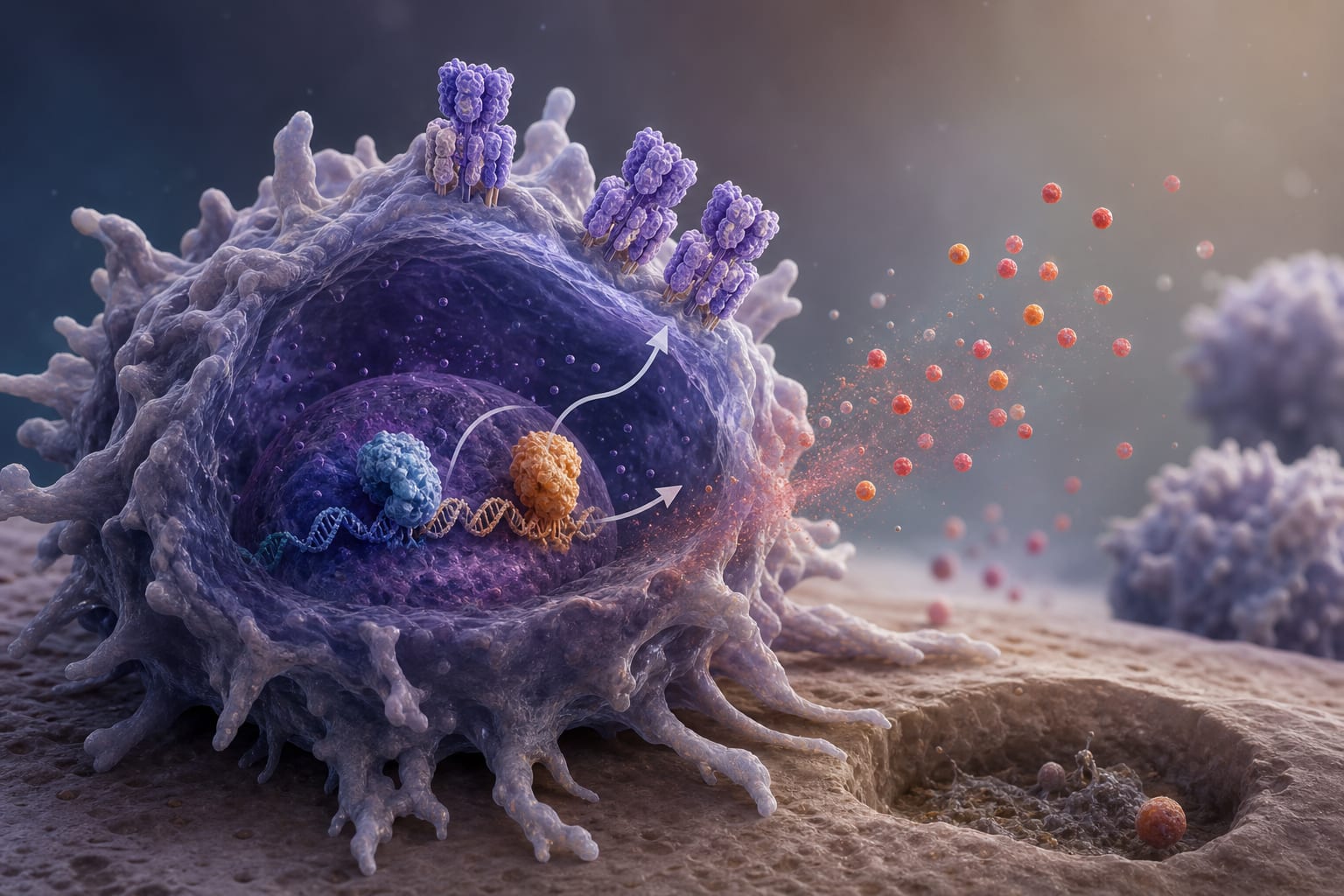
This study demonstrates that nutrient deprivation significantly increases CD3 expression in RAW macrophages, leading to an intensified proinflammatory response mediated by NFAT and IRF-1.
Background
Understanding the role of CD3+ macrophages is crucial as they have been implicated in various pathological conditions, including infections and inflammatory diseases. The ability of myeloid cells to express lymphoid markers like the CD3-TCR complex suggests a potential link between nutrient status and immune response. This study utilizes the RAW murine macrophage cell line to explore the effects of nutrient deprivation on CD3 expression.
Data Highlights
No numerical data or trial data provided in the source material.
Key Findings
Nutrient deprivation significantly upregulates CD3 expression in RAW macrophages.
CD3+ RAW cells exhibit enhanced phagocytic activity toward latex beads.
Stimulation with anti-CD3 and IgG2a induces a robust secretion of proinflammatory cytokines, including IFN-γ, TNF, and IL-6.
Activation of signaling pathways involving NFAT, c-Jun, and IKK is observed in CD3+ RAW cells.
Increased expression of IRF-1 and downregulation of MAFB are associated with the CD3-dependent proinflammatory profile.
Clinical Implications
Understanding the mechanisms by which nutrient deprivation affects CD3 expression could inform future research on macrophage activation in various diseases.
Conclusion
This study establishes RAW macrophages as a model for investigating CD3+ signaling in myeloid cells.
by Ranferi Ocaña-Guzman, Lucero A. Ramon-Luing, Jahir Mendoza-Ruiz, Guillermo López-Chávez, Alondra Hernández-Hernández, A. Yarelli Huerta-Zarco, Julio Flores-Gonzalez, Leslie Chavez-Galan
Biomarker-guided patient selection may help identify patients with sepsis who could benefit from endotoxin-targeted therapy, although confirmatory evidence is still needed.