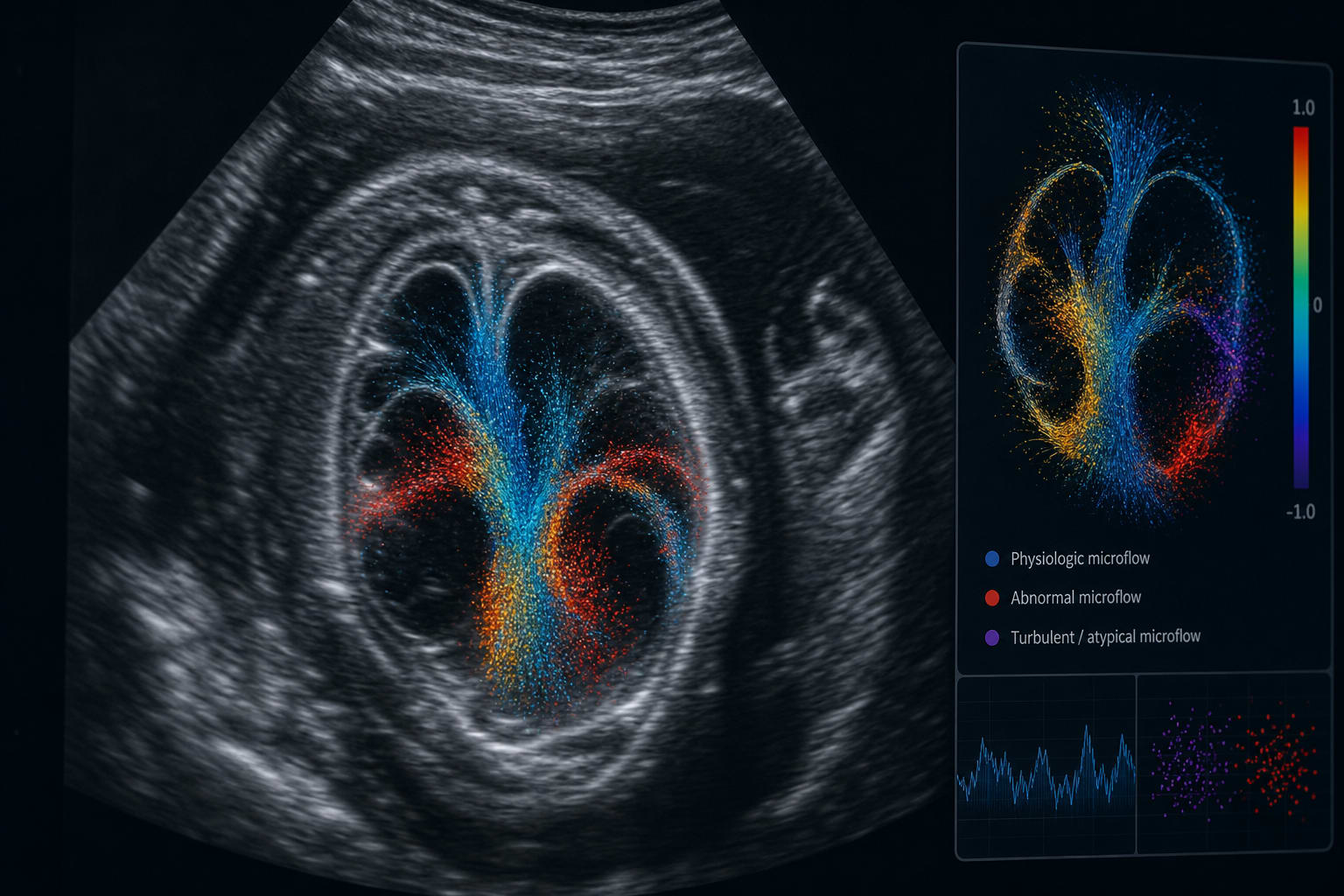
uFlowAM: an unsupervised framework for detection and visualization of abnormal intracardiac microflow on early-pregnancy fetal cardiac microflow imaging - Report - MDSpire
Advertisement
uFlowAM: an unsupervised framework for detection and visualization of abnormal intracardiac microflow on early-pregnancy fetal cardiac microflow imaging
Clinical Report: uFlowAM for Identifying Abnormal Intracardiac Microflow
Overview
The uFlowAM framework demonstrates high diagnostic accuracy in detecting abnormal intracardiac microflow patterns in early-pregnancy fetal cardiac imaging.
Background
Congenital heart disease (CHD) is a significant cause of perinatal morbidity and mortality. Early detection of CHD through fetal cardiac microflow imaging is crucial, yet challenging due to variable image quality and the transient nature of flow disturbances. The development of advanced imaging techniques like uFlowAM aims to enhance the recognition of these abnormalities.
Data Highlights
Cohort
AUC
Sensitivity
Specificity
Internal
0.94 (95% CI, 0.92–0.96)
0.92
0.88
External
0.92 (95% CI, 0.88–0.95)
0.90
0.86
Key Findings
uFlowAM achieved an AUC of 0.94 in the internal cohort and 0.92 in the external cohort.
Sensitivity and specificity were 0.92 and 0.88 in the internal cohort, and 0.90 and 0.86 in the external cohort, respectively.
Median reader-level AUC increased from 0.85 to 0.92 with uFlowAM assistance.
Weighted kappa for subtype agreement improved from 0.62 to 0.78.
Visibility scores increased significantly from 2.8 ± 0.6 to 4.3 ± 0.5.
Mean reading time decreased from 78 seconds to 59 seconds with uFlowAM.
Clinical Implications
uFlowAM serves as an assistive tool for early fetal CHD assessment, enhancing the detection of abnormal microflow patterns.
Conclusion
uFlowAM effectively identifies abnormal intracardiac microflow in early-pregnancy fetal imaging.