Clinical Report: Insights into the Developmental Mechanisms and Pathologies of the Mitral Valve
Overview
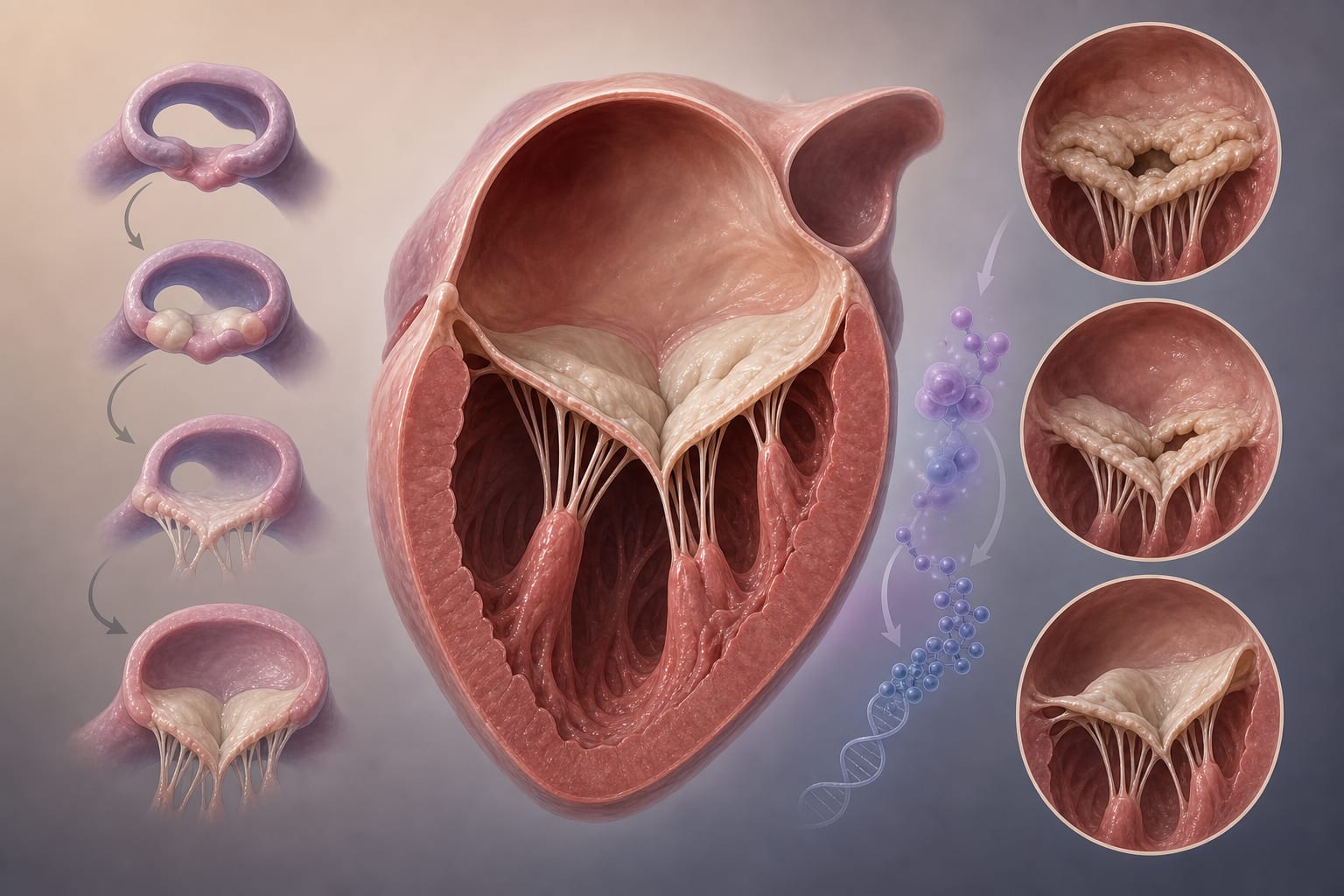
This commentary discusses the developmental biology and pathology of mitral valve (MV) disease, linking embryologic mechanisms to conditions such as rheumatic mitral stenosis, congenital mitral stenosis, and myxomatous mitral valve prolapse. It emphasizes the role of genetic syndromes and developmental signaling in MV abnormalities.
Background
Mitral valve disease (MVD) is a significant cardiac condition affecting millions worldwide, with complex mechanisms involving genetic, inflammatory, and structural factors. Understanding the developmental origins of MV pathologies is important.
Data Highlights
No numerical data or trial data presented in the source material.
Key Findings
The commentary synthesizes embryologic mechanisms with three major mitral phenotypes: rheumatic mitral stenosis, congenital mitral stenosis, and myxomatous mitral valve prolapse.
Endothelial injury, inflammatory pathways, and genetic predisposition are identified as key factors in the onset and progression of MV diseases.
Genetic syndromes, such as Down syndrome and RASopathies, are associated with specific MV abnormalities.
Mitral valve involvement in syndromic conditions may reflect broader developmental pathways linking atrioventricular patterning to valve phenotypes.
Mitral valve abnormalities are common in patients with genetic syndromes.
Clinical Implications
Clinicians should consider the developmental origins of mitral valve disease when evaluating patients with genetic syndromes.
Conclusion
The commentary discusses the integration of developmental biology with clinical practice to understand and manage mitral valve disease.