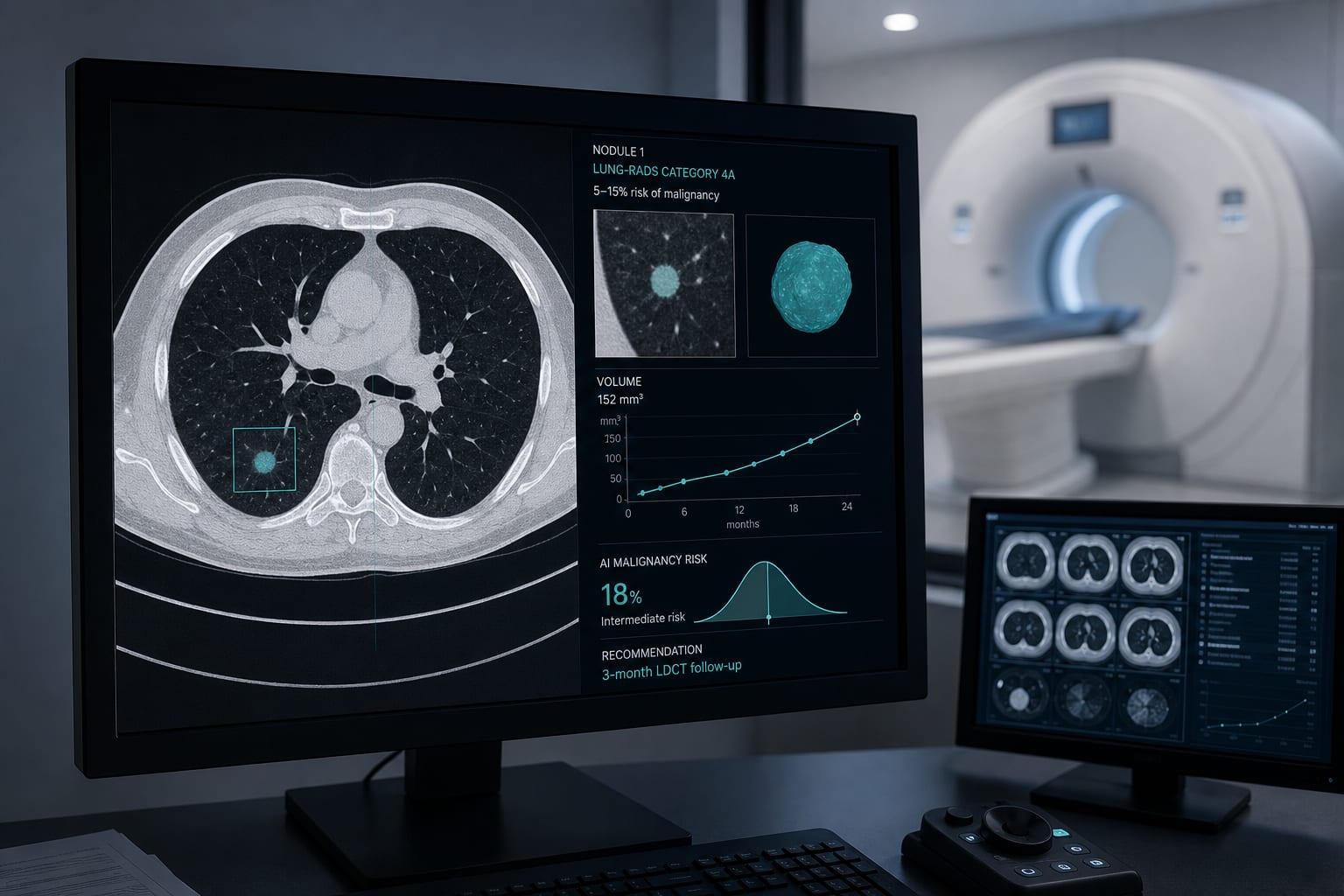
Diagnostic Accuracy of Ultra-High Resolution Photon-Counting CT in High Calcium Score CAD
Overview
This study evaluated the diagnostic performance of ultra-high resolution photon-counting detector coronary CT angiography (UHR PCD-CCTA) in patients with elevated Agatston scores (>600). Results demonstrated high sensitivity and specificity for detecting coronary stenoses compared to invasive coronary angiography (ICA), suggesting improved accuracy despite severe coronary calcifications.
Background
Coronary computed tomography angiography (CCTA) is the first-line imaging modality for patients with low to intermediate pre-test probability of coronary artery disease (CAD). However, its diagnostic accuracy decreases in patients with high coronary calcium burden due to blooming artifacts that obscure vessel lumen and overestimate stenosis severity. Conventional energy-integrated detector CT (EID-CT) shows reduced performance in patients with Agatston scores ≥600. Photon-counting detector CT (PCD-CT) offers ultra-high resolution imaging that may mitigate these limitations and improve stenosis assessment in heavily calcified vessels.
Data Highlights
Parameter
Value
Patient Age (mean ± SD)
Not specified
Agatston Score Inclusion Threshold
>600
CTDIvol (median, IQR)
41.2 mGy (25–53 mGy)
Dose Length Product (median, IQR)
672 mGy·cm (341–872 mGy·cm)
Average Heart Rate during CT
73 ± 15 bpm
Tube Voltage
120 or 140 kVp
Detector Collimation
120 × 0.2 mm
In-plane Resolution
0.11 mm
Through-plane Resolution
0.16 mm
Key Findings
UHR PCD-CCTA demonstrated high diagnostic accuracy for detecting >50% and >70% coronary stenoses in patients with Agatston scores >600.
Diagnostic performance was assessed on an intention-to-diagnose basis, with non-diagnostic segments conservatively classified as positive to avoid specificity overestimation.
ICA served as the reference standard, with stenosis severity categorized similarly to CCTA using CAD RADS 2.0 criteria.
Two experienced radiologists independently reviewed CCTA datasets blinded to ICA results, ensuring unbiased assessment.
The study cohort mainly consisted of patients undergoing pre-procedural assessment for transcatheter aortic valve replacement (TAVR), representing a high-risk population.
Clinical Implications
Ultra-high resolution PCD-CCTA can reliably assess coronary stenoses in patients with high coronary calcium burden, potentially reducing false positives caused by blooming artifacts seen in conventional CT. This improved accuracy may decrease unnecessary invasive coronary angiographies and guide better clinical decision-making in high-risk populations such as those undergoing TAVR evaluation.
Conclusion
UHR PCD-CCTA offers a promising imaging modality for accurate coronary stenosis evaluation in patients with severe calcifications, overcoming limitations of conventional CT and supporting its use in high Agatston score populations.
References
Agatston et al. 1990 -- Quantification of coronary artery calcium using ultrafast computed tomography
CAD RADS 2.0 -- Coronary Artery Disease Reporting and Data System
by Tristan T. Demmert, Konstantin Klambauer, Lukas J. Moser, Jonathan Michel, Markus Kasel, Robert Manka, Victor Mergen, Thomas Flohr, Matthias Eberhard, Hatem Alkadhi