Clinical Report: Exploring Skin Health Information Searches on Short Video Platforms
Overview
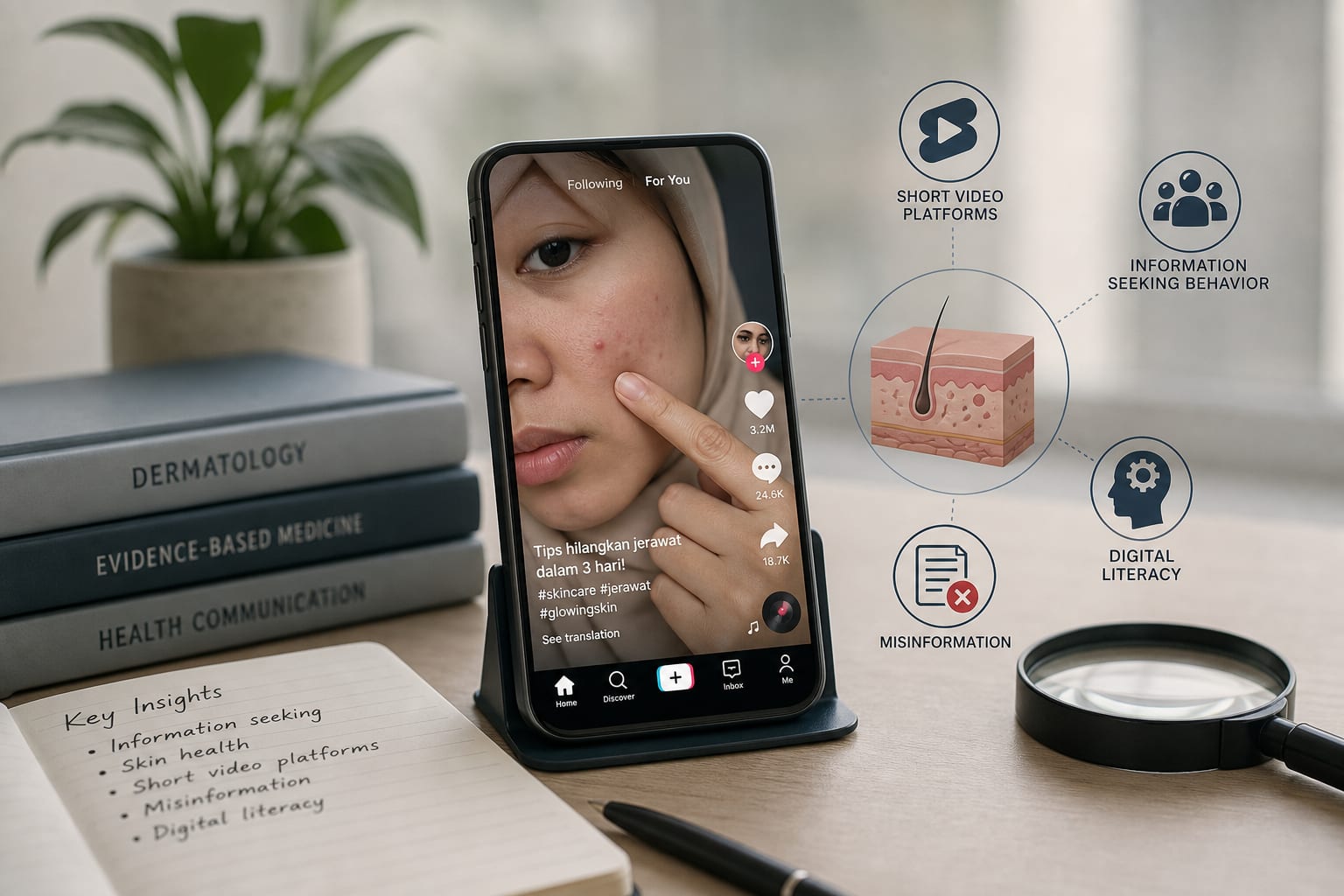
This study investigates the use of short video platforms for seeking skin health information in Indonesia, highlighting the popularity of these platforms and the associated risks of misinformation as indicated by various studies.
Background
The rise of social media has significantly changed how individuals access health information, with over 55% of adults using social media to seek health information. In Indonesia, where internet penetration is approximately 80.66%, short video platforms serve as a primary source for dermatological information, particularly among users concerned about skin conditions. However, the prevalence of misinformation on these platforms poses a challenge for users seeking reliable health information, with some studies indicating misinformation rates as high as 41%-78%.
Data Highlights
No numerical data or trial data was provided in the source material, but key findings indicate significant usage of short video platforms for health information searches.
Key Findings
Over 55% of adults use social media to seek health information.
23% of social media users utilize short video platforms like TikTok for health information searches.
Short videos effectively convey complex health information through multimedia formats.
Health misinformation is prevalent on platforms like TikTok, with some studies indicating misinformation rates as high as 41%-78%.
Personalization and interactivity on these platforms enhance user engagement in health information searches.
Clinical Implications
Healthcare professionals should be aware of the potential for misinformation on short video platforms when discussing skin health with patients.
Conclusion
Short video platforms are increasingly popular for seeking skin health information, but they also present significant risks related to misinformation.