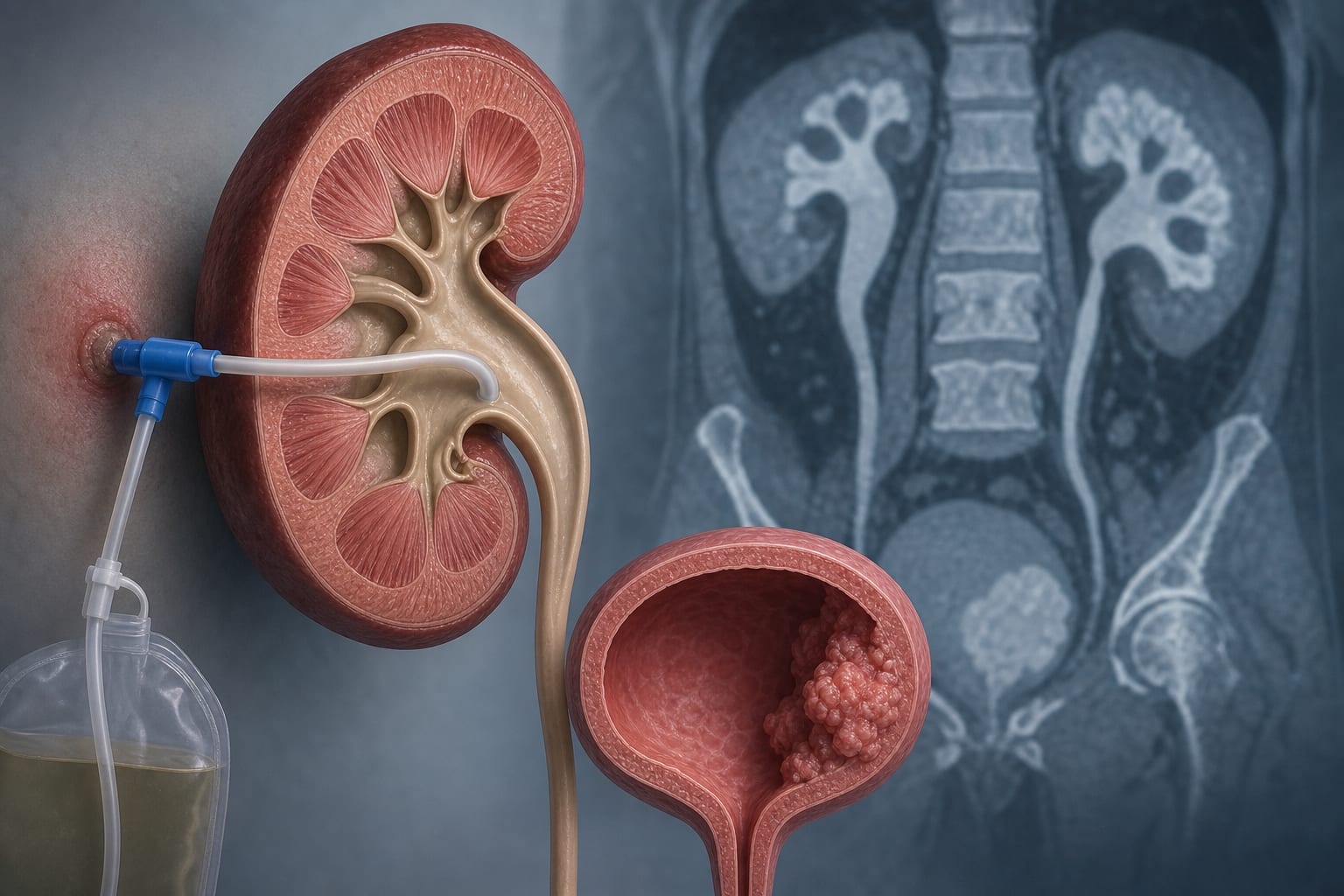
Percutaneous nephrostomy as a marker of clinical vulnerability in non-metastatic muscle-invasive bladder cancer: prognostic and infectious implications - Report - MDSpire
Advertisement
Percutaneous nephrostomy as a marker of clinical vulnerability in non-metastatic muscle-invasive bladder cancer: prognostic and infectious implications
Clinical Report: The Role of Percutaneous Nephrostomy in Non-Metastatic MIBC
Overview
Revise to clarify that the survival disadvantage observed in the PCN group reflects baseline clinical vulnerability rather than a direct effect of PCN.
Background
Muscle-invasive bladder cancer (MIBC) is a significant urological malignancy with poor prognosis. The management of malignant ureteral obstruction often necessitates interventions like percutaneous nephrostomy (PCN), which can complicate treatment pathways. Understanding the implications of PCN on survival and infection risk is crucial for optimizing patient care in this vulnerable population.
Data Highlights
Parameter
PCN Group
Non-PCN Group
p-value
Median Overall Survival (OS)
24 months
41 months
0.004
Independent Predictors of OS
ECOG, CRP, N stage
Positive Urine Cultures
OR 2.685
0.038
Infection-Related Hospitalizations
OR 13.995
<0.001
Key Findings
PCN was present in 27.1% of patients with non-metastatic MIBC.
Median OS was significantly shorter in the PCN group (24 months) compared to the non-PCN group (41 months; p = 0.004).
After adjustment, PCN did not independently predict OS (HR 0.433; p = 0.069).
ECOG performance status, CRP, and N stage were independent predictors of OS.
PCN was a strong predictor of positive urine cultures (OR 2.685; p = 0.038) and infection-related hospitalizations (OR 13.995; p < 0.001).
Clinical Implications
Strengthen the emphasis on multidisciplinary evaluation and proactive management of infection risks.
Conclusion
Reiterate the importance of careful evaluation and management strategies associated with PCN.