Accidental intravitreal injection of a veterinary inactivated FMD vaccine resulting in noninfectious intraocular inflammation: a case report - Report - MDSpire
Conexiant’s news site is now MDSpire News. Learn more
Advertisement
Unintentional Intravitreal Administration of a Veterinary Inactivated Foot-and-Mouth Disease Vaccine Leading to Noninfectious Intraocular Inflammation: A Case Study
Clinical Report: Unintentional Intravitreal Administration of a Vaccine
Overview
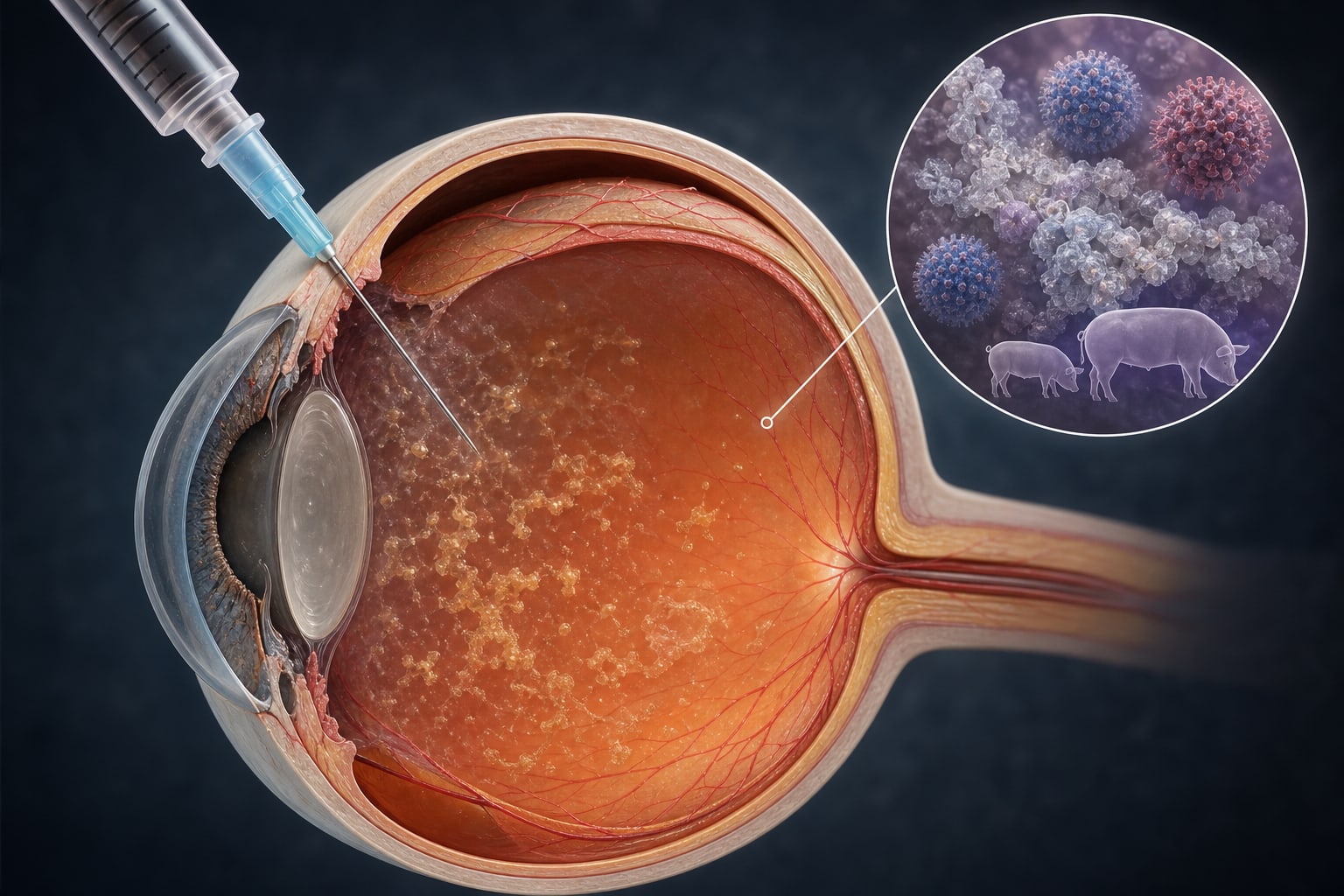
This report details a case of severe noninfectious intraocular inflammation resulting from the accidental intravitreal injection of a veterinary vaccine against foot-and-mouth disease.
Background
Accidental intravitreal injections of non-human biological agents are rare but can lead to significant ocular complications. The bivalent inactivated foot-and-mouth disease vaccine is not approved for human use, and its injection can trigger severe inflammatory responses.
Data Highlights
No numerical data or trial data is presented in the article.
Key Findings
A 48-year-old man developed severe noninfectious intraocular inflammation after accidental injection of a veterinary vaccine.
Initial symptoms included eyelid ecchymosis and blurred vision, leading to a significant decline in visual acuity.
Ophthalmic examination revealed marked inflammatory changes, including corneal edema and dense vitreous haze.
Diagnostic imaging indicated vitreous opacification and raised suspicion of an intraocular foreign body.
Routine laboratory tests showed no significant abnormalities, emphasizing the noninfectious nature of the inflammation.
Clinical Implications
Clinicians should be aware of the potential for severe intraocular inflammation following accidental exposure to veterinary vaccines. Prompt recognition and appropriate management are essential to prevent irreversible vision loss.
Conclusion
This case underscores the importance of understanding the risks associated with accidental intravitreal injections of non-human biological agents and the need for careful diagnostic evaluation.