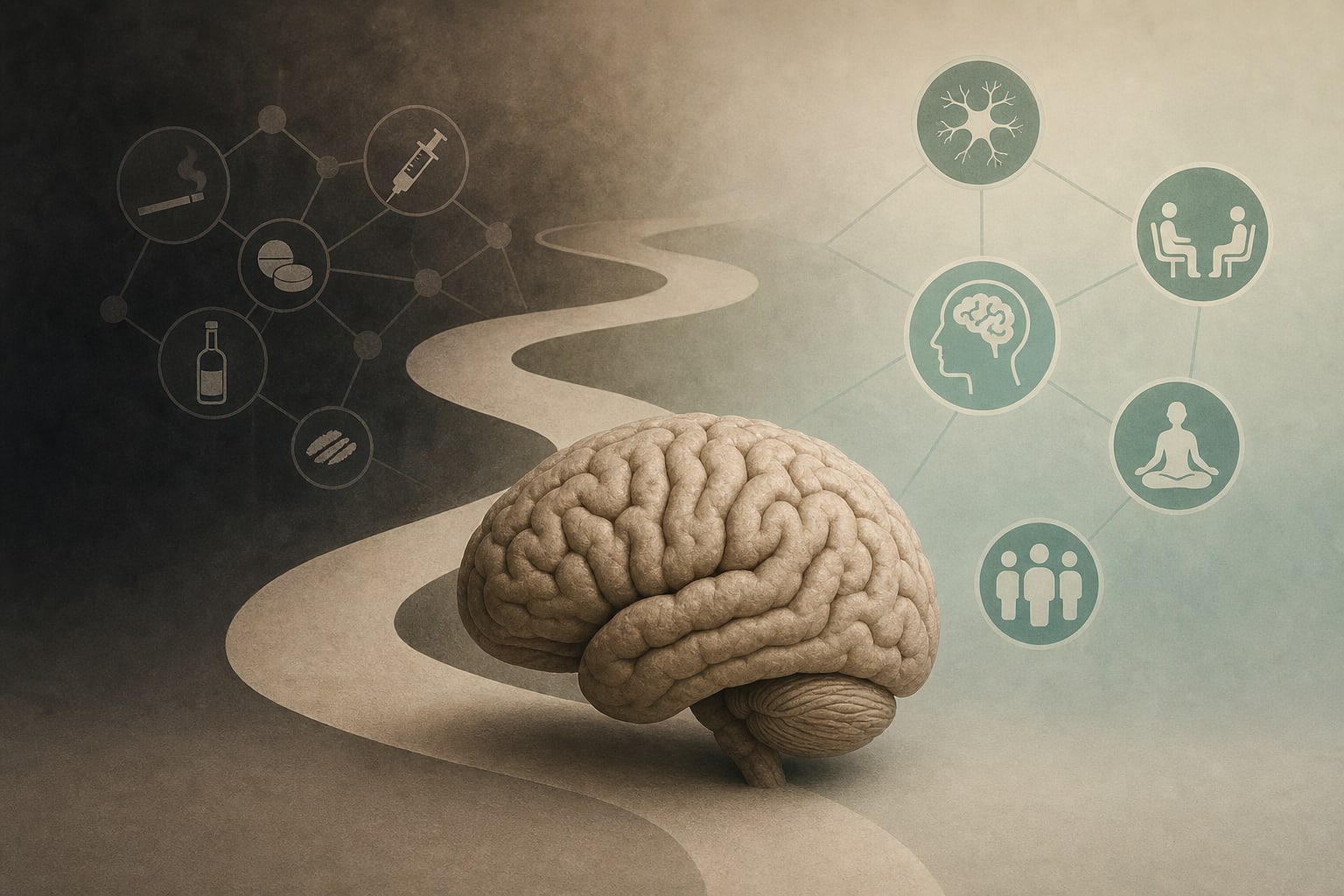
Clinical Report: New Strategies in the Management of Substance Use Disorders
Overview
This editorial discusses emerging pharmacological and psychosocial treatments for substance use disorders (SUDs), highlighting the limited current pharmacological options. It emphasizes the need for further research to evaluate the efficacy of these new strategies.
Background
Substance use disorders affect a significant portion of the population, with 16.8% of individuals aged 12 or older impacted, leading to over 700,000 deaths annually and substantial economic costs. Despite the introduction of several medications since the approval of disulfiram in 1951, the treatment options remain limited.
Data Highlights
No numerical data available in the source material.
Key Findings
Only eight medications have been FDA-approved for the treatment of SUDs since 1951.
Psychedelic treatments, particularly ketamine, have shown promise in improving outcomes for patients with SUDs, as indicated by recent studies.
Non-pharmacological interventions like cognitive behavioral therapy (CBT) and motivational interviewing have varying degrees of efficacy.
FDA-approved digital CBT programs, such as reSET® and reSET-O®, are available for SUD treatment.
Valproic acid may help reduce alcohol use and manage withdrawal in patients with co-occurring disorders.
Clinical Implications
Healthcare professionals should consider the emerging treatment strategies for managing SUDs. Ongoing research is essential to establish the efficacy and safety of these new approaches.
Conclusion
The exploration of new strategies in the management of SUDs is crucial, as current treatment options are limited.