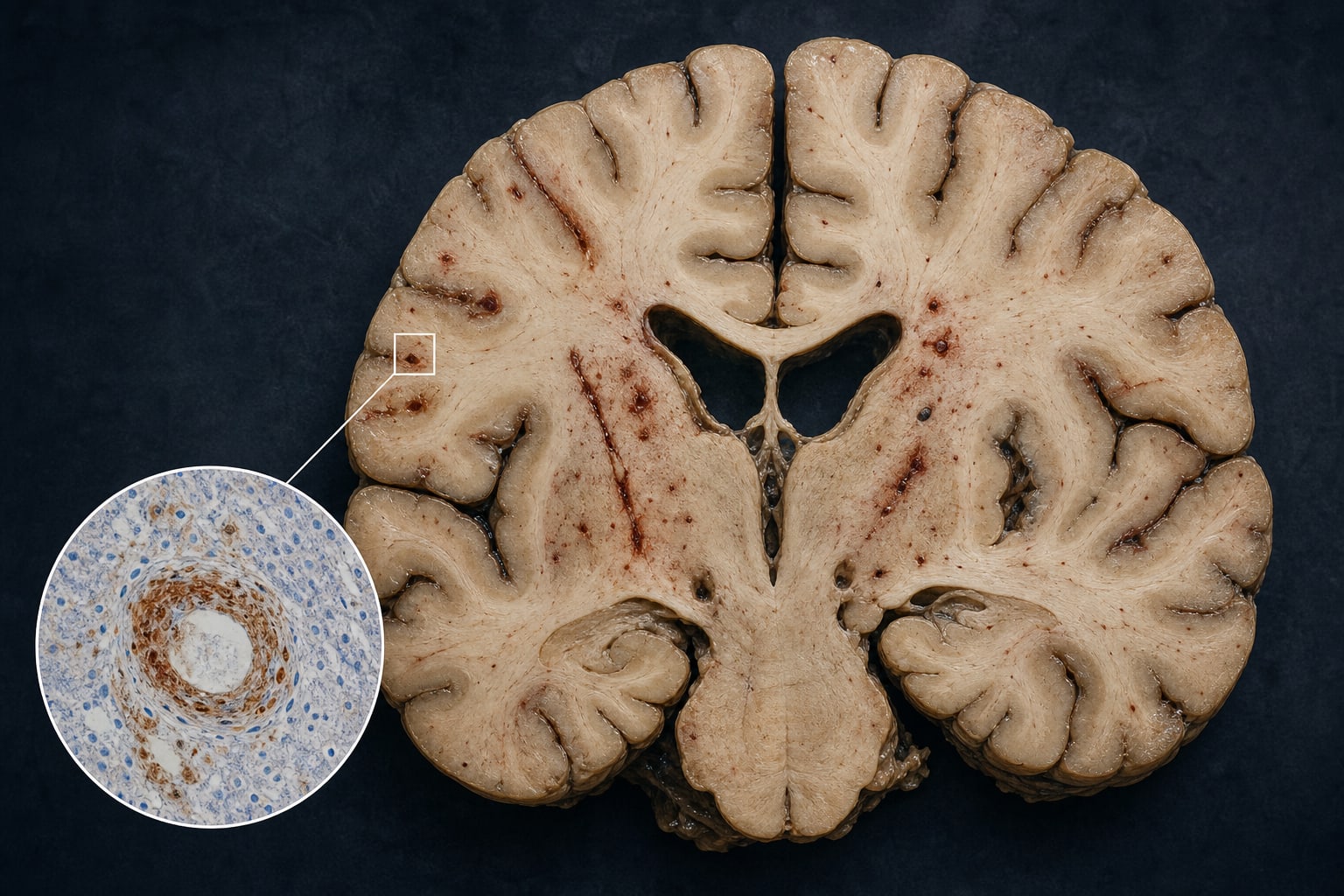
Clinical Report: Neuropathological Changes in Alzheimer Disease Induced by Iatrogenic Factors
Overview
This report details the neuropathological changes associated with iatrogenic Alzheimer disease (iAD) linked to cadaveric human growth hormone (c-hGH) treatment. It emphasizes the potential for amyloid-β (Aβ) transmission through medical procedures and the clinical implications of such findings.
Background
Understanding the mechanisms behind Alzheimer disease (AD) is critical due to its significant impact on patients and families. The prion paradigm suggests that misfolded proteins, such as Aβ, play a crucial role in neurodegenerative diseases. Recent evidence indicates that iatrogenic factors, particularly from cadaveric hormone treatments, may contribute to the development of iAD, highlighting the need for further investigation.
Data Highlights
No numerical data presented in the article.
Key Findings
Iatrogenic Alzheimer disease (iAD) has been identified in patients treated with cadaveric human growth hormone (c-hGH).
Clinical presentations of iAD may differ from sporadic and inherited forms of AD.
Patients with iAD can develop symptoms decades after exposure to c-hGH.
Limited neuropathological evidence shows only mild tauopathy in reported cases of iAD.
The association between specific c-hGH preparations and Aβ pathology raises concerns about medical practices involving cadaveric materials.
Clinical Implications
Healthcare professionals should be aware of the potential risks associated with cadaveric hormone treatments and the long latency period for developing iAD. Ongoing monitoring and research are essential to establish clearer diagnostic criteria and management strategies for affected individuals.
Conclusion
The findings underscore the importance of recognizing iAD as a distinct condition linked to iatrogenic factors, necessitating further research to understand its full clinical and pathological implications.