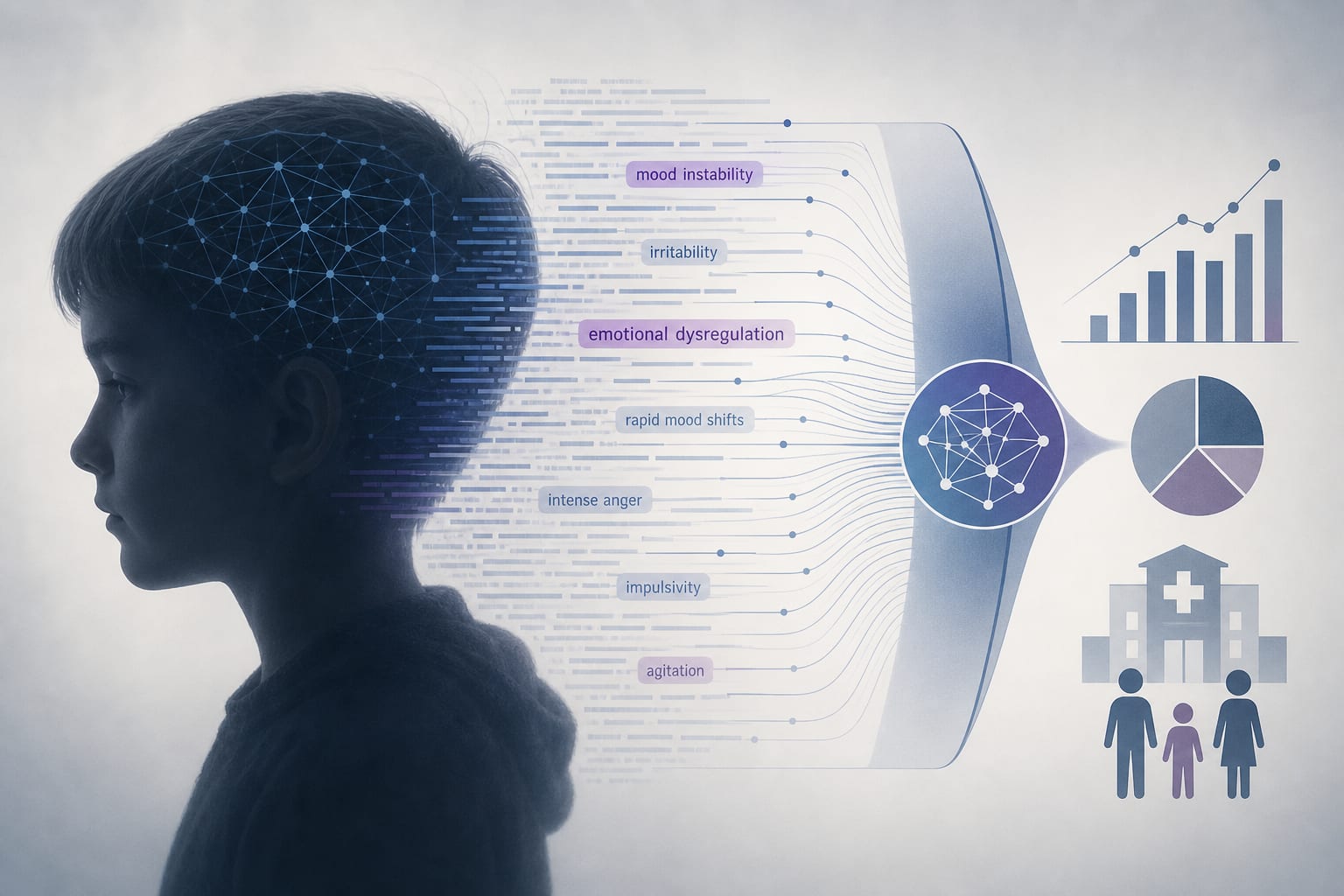
Rates of Autism Spectrum Disorder and Attention-Deficit/Hyperactivity Disorder in Japan
-
By
-
Daimei Sasayama
-
Rie Kuge
-
Tomoya Hirota
-
Kenji J. Tsuchiya
-
Hideo Honda
-
October 20, 2026
Clinical Report: ASD and ADHD Diagnosis Rates in Japan
Overview
A nationwide cohort study using Japan’s National Database of Health Insurance Claims and Specific Health Checkups examined newly recorded ASD and ADHD diagnoses from fiscal years 2010 through 2023. Diagnoses increased over time, with ADHD diagnoses exceeding ASD diagnoses among adults from 2013 in females and 2014 in males; projected cumulative diagnosis risks by age 49 using 2023 rates were 15.7% for ASD and 14.2% for ADHD.
Background
ASD and ADHD are neurodevelopmental conditions with substantial global health burdens, and earlier analyses of Japan’s claims database reported high childhood ASD incidence and increasing ADHD diagnoses, particularly among adults. However, longitudinal diagnostic patterns, the timing of comorbidity, and demographic changes after the COVID-19 pandemic had not been fully characterized. This study used nationwide claims data covering approximately 99% of Japan’s population to assess diagnosis incidence and trends across age and sex groups.
Data Highlights
| Measure | Finding |
|---|---|
| Newly diagnosed ASD cases, FY 2010–2023 | 1,621,682; 67.0% male |
| Newly diagnosed ADHD cases, FY 2010–2023 | 1,483,470; 63.5% male |
| Most frequent age group at diagnosis | 5–9 years for both disorders |
| Projected cumulative diagnosis risk by age 49, using 2023 rates: ASD | 15.7% (95% CI, 15.7%–15.8%); males, 19.4%; females, 11.9% |
| Projected cumulative diagnosis risk by age 49, using 2023 rates: ADHD | 14.2% (95% CI, 14.1%–14.3%); males, 16.9%; females, 11.4% |
| Comorbid cases diagnosed simultaneously | Approximately 46.3% (541,149 cases) |
| Adult diagnostic crossover | ADHD diagnoses exceeded ASD diagnoses in females in 2013 and males in 2014 |
Key Findings
- The primary analysis included 1,621,682 newly diagnosed patients with ASD and 1,483,470 with ADHD after a one-year washout period.
- For both disorders, diagnosis incidence peaked consistently among children aged 5 to 9 years; among people aged 0 to 19 years, ASD diagnoses outnumbered ADHD diagnoses.
- Among adults aged 20 years or older, ADHD diagnoses exceeded ASD diagnoses beginning in 2013 for females and 2014 for males.
- Females showed a bimodal ADHD incidence pattern, with a childhood peak and a secondary peak at ages 20 to 24 that emerged around 2017; young adult female rates neared the childhood peak in 2020, a pattern not observed in males.
- Upward diagnosis trends were interrupted during 2019–2020 and rebounded in 2021.
- Approximately 46.3% of comorbid cases received both diagnoses simultaneously; among sequentially diagnosed cases, ASD-first sequencing predominated across age cohorts.
Clinical Implications
The study authors report that frequent concurrent diagnoses imply a need for holistic assessments, while the predominance of ASD-first sequencing among sequential diagnoses indicates variation in diagnostic pathways. The observed adult ADHD increase and young-adult female pattern describe trends in claims-based diagnoses; the study does not establish their causes.
Conclusion
In Japan’s nationwide claims data, ASD and ADHD diagnoses increased across the study period, with age- and sex-specific patterns and a crossover in adult diagnoses favoring ADHD. Comorbidity was common, and simultaneous diagnosis occurred in approximately 46.3% of comorbid cases.
Related Resources & Content
- JAMA Network Open, Year not specified — Incidence of Autism Spectrum Disorder and Attention-Deficit/Hyperactivity Disorder in Japan
- JAMA Pediatrics, Year not specified — Percentage Errors in Results Section of Abstract and Text
- Frontiers in Psychiatry, 2026 — Assessment of Reliability and Convergent Validity for the Japanese Adaptation of the Adult ADHD Investigator Symptom Rating Scale: A Multicenter Longitudinal Non-Interventional Study
- Frontiers in Psychiatry, 2026 — Autistic- and attention-deficit/hyperactivity disorder-like traits: differential associations with burnout, depression and anxiety, and empathy among Japanese junior residents
- MDSpire News — ADHD Rates Climb: 7.1M U.S. Children Affected
- Incidence of Autism Spectrum Disorder and Attention-Deficit/Hyperactivity Disorder in Japan
- Attention deficit hyperactivity disorder: diagnosis and management (NICE guideline NG87)
- Comparative efficacy and acceptability of pharmacological, psychological, and neurostimulatory interventions for ADHD in adults: a systematic review and component network meta-analysis - The Lancet Psychiatry
Based on findings from:
Incidence of Autism Spectrum Disorder and Attention-Deficit/Hyperactivity Disorder in Japan
Daimei Sasayama, Rie Kuge, Tomoya Hirota, Kenji J. Tsuchiya, Hideo Honda. Jama Network Open, 2026.
https://jamanetwork.com/journals/jamanetworkopen/fullarticle/2855501
This content is an AI-generated, fully rewritten summary based on a published scholarly article. It does not reproduce the original text and is not a substitute for the original publication. Readers are encouraged to consult the source for full context, data, and methodology.