VANGL1 links angiogenesis–stemness programs and tumor microenvironment remodeling: a pan-cancer, multi-omics study with translational validation - Report - MDSpire
Advertisement
VANGL1 links angiogenesis–stemness programs and tumor microenvironment remodeling: a pan-cancer, multi-omics study with translational validation
Clinical Report: VANGL1's Role in Linking Angiogenesis and Stemness Pathways
Overview
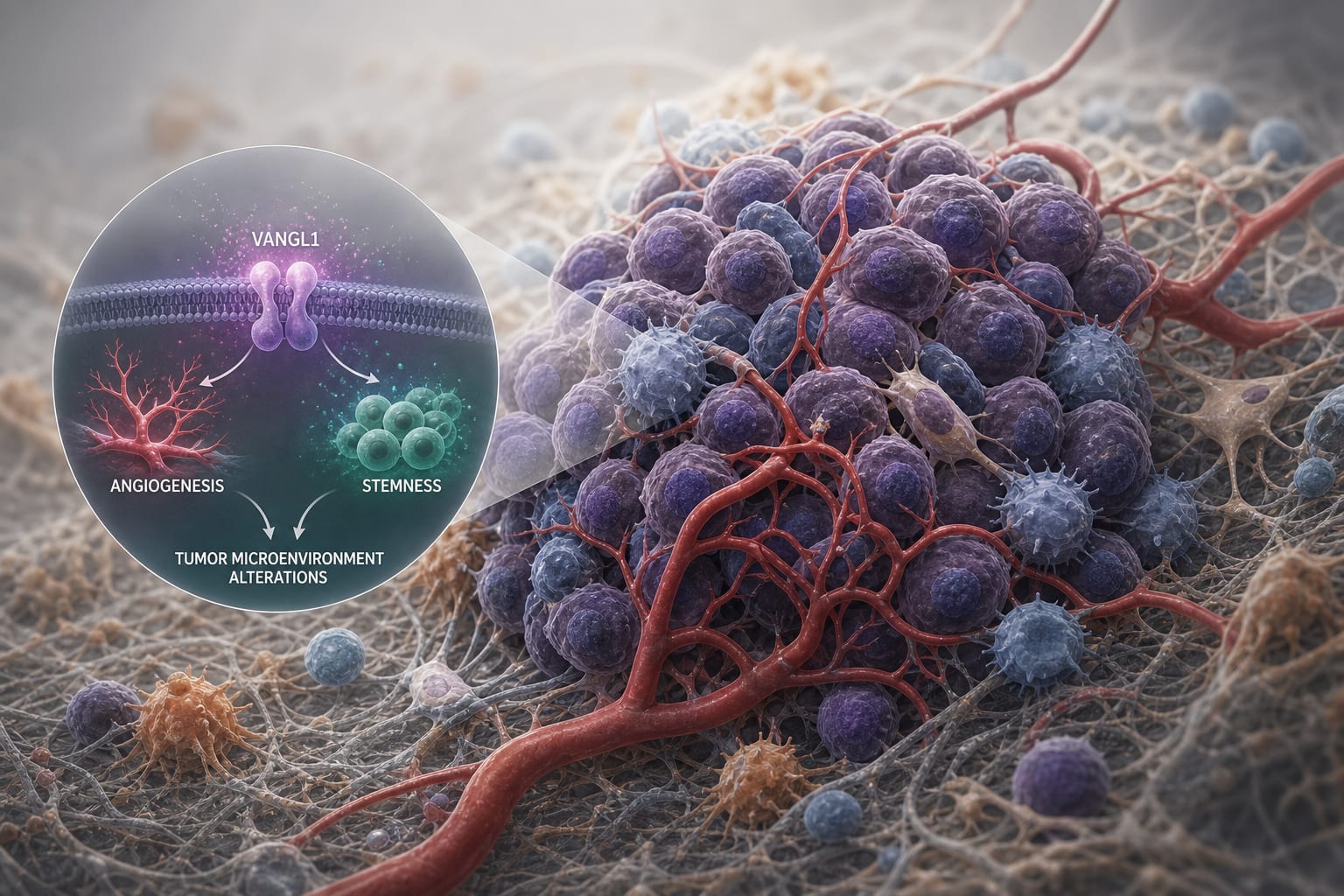
This study identifies VANGL1 as a significant regulator in the tumor microenvironment (TME) across various cancers, linking cancer stemness and angiogenesis.
Background
The tumor microenvironment plays a crucial role in cancer progression and treatment response. This study aims to elucidate the role of VANGL1 in integrating various cellular processes across multiple cancer types.
Data Highlights
No specific numerical data or trial data provided in the source material.
Key Findings
['VANGL1 is significantly upregulated in solid tumors.', 'Single-cell analysis shows VANGL1+ malignant cells have enhanced communication with fibroblasts, endothelial cells, and immune cells.', 'VANGL1 integrates Wnt/Notch/mTOR signaling with cancer stemness and angiogenesis.', 'Knock-down of VANGL1 suppresses proliferation, migration, and invasion in vitro.', 'In vivo studies show VANGL1 knock-down attenuates tumor growth and angiogenesis.']
Clinical Implications
Targeting VANGL1 may offer a novel therapeutic strategy to disrupt the tumor microenvironment and inhibit cancer progression. Further research is needed to validate VANGL1 as a clinical biomarker and therapeutic target across different malignancies.
Conclusion
VANGL1 is identified as a regulator of the tumor microenvironment, linking cancer stemness and angiogenesis.