Steroid-resistant bilateral facial nerve palsies, ophthalmoparesis, and multilevel thoracic radiculopathy as immune effector cell-associated late-onset neurotoxicity after cilta-cel CAR-T therapy: a case report and review of similar cases - Report - MDSpire
Advertisement
Steroid-resistant bilateral facial nerve palsies, ophthalmoparesis, and multilevel thoracic radiculopathy as immune effector cell-associated late-onset neurotoxicity after cilta-cel CAR-T therapy: a case report and review of similar cases
Late-Onset Neurotoxicity Following Cilta-Cel CAR-T Therapy: A Case Report
Background
Chimeric antigen receptor T-cell (CAR-T) therapy has revolutionized treatment for hematologic malignancies, particularly relapsed/refractory multiple myeloma. However, neurotoxic side effects, including immune effector cell-associated neurotoxicities (IEC-NPs), have been increasingly recognized.
Data Highlights
No numerical data or trial data presented in the article.
Key Findings
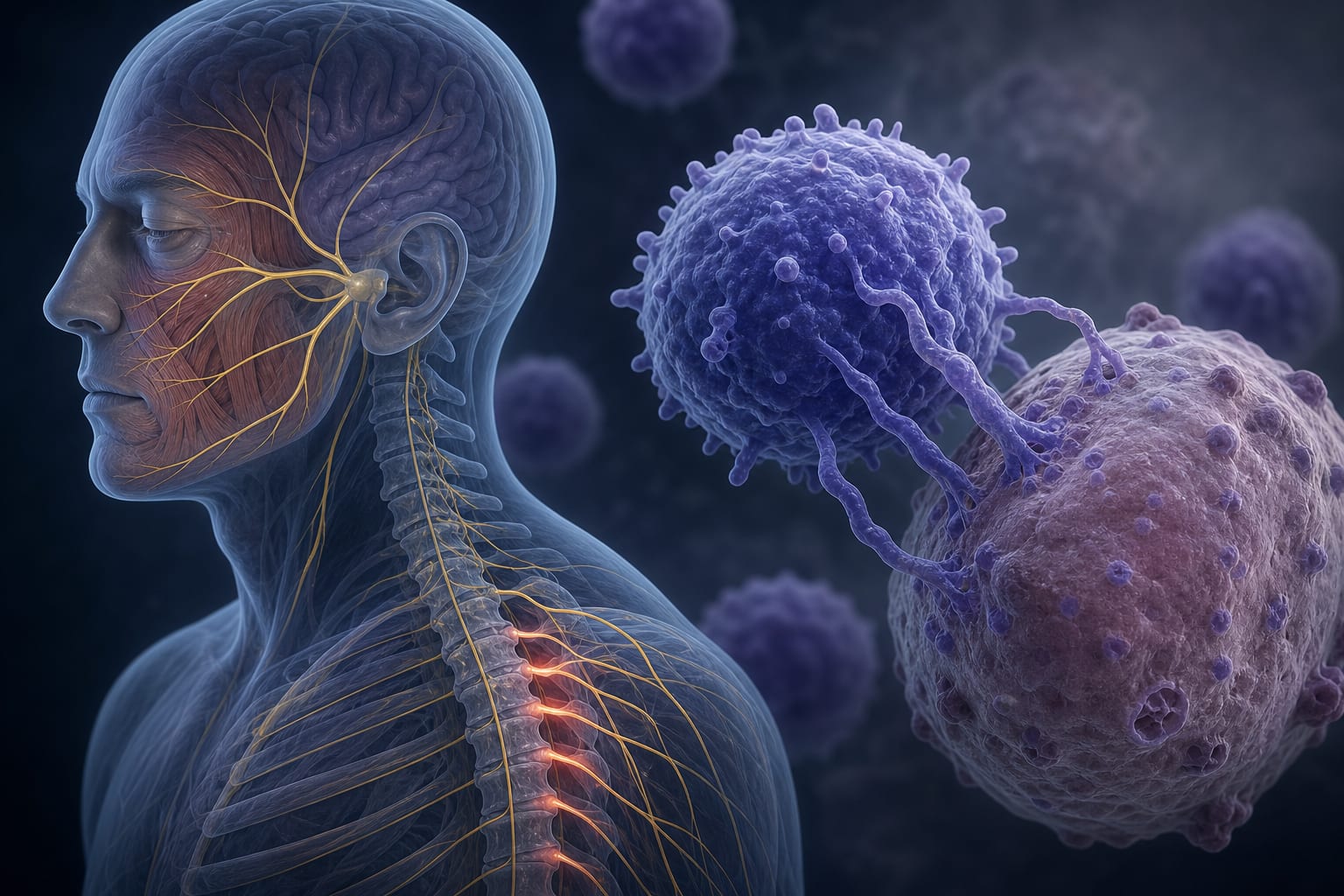
The patient developed multiple neurological symptoms, including diplopia and bilateral facial nerve palsies, post-CAR-T therapy.
Symptoms were suspected to be delayed immune effector cell-associated nerve palsies (IEC-NPs).
Initial treatment with steroids was ineffective.
Intrathecal methotrexate and systemic cyclophosphamide led to significant symptomatic improvement.
This case provides insights into treatment strategies for steroid-resistant IEC-NPs.
Clinical Implications
Clinicians should be vigilant for delayed neurotoxicities in patients receiving CAR-T therapy.
Conclusion
This case highlights the management of neurotoxicities associated with CAR-T therapy.
Harold Burstein, MD, PhD, and Ana C. Garrido-Castro, MD discuss results from the Pumitamig + DB-1305/BNT325 trial, which were presented at the 2026 ESMO Breast Cancer Congress.