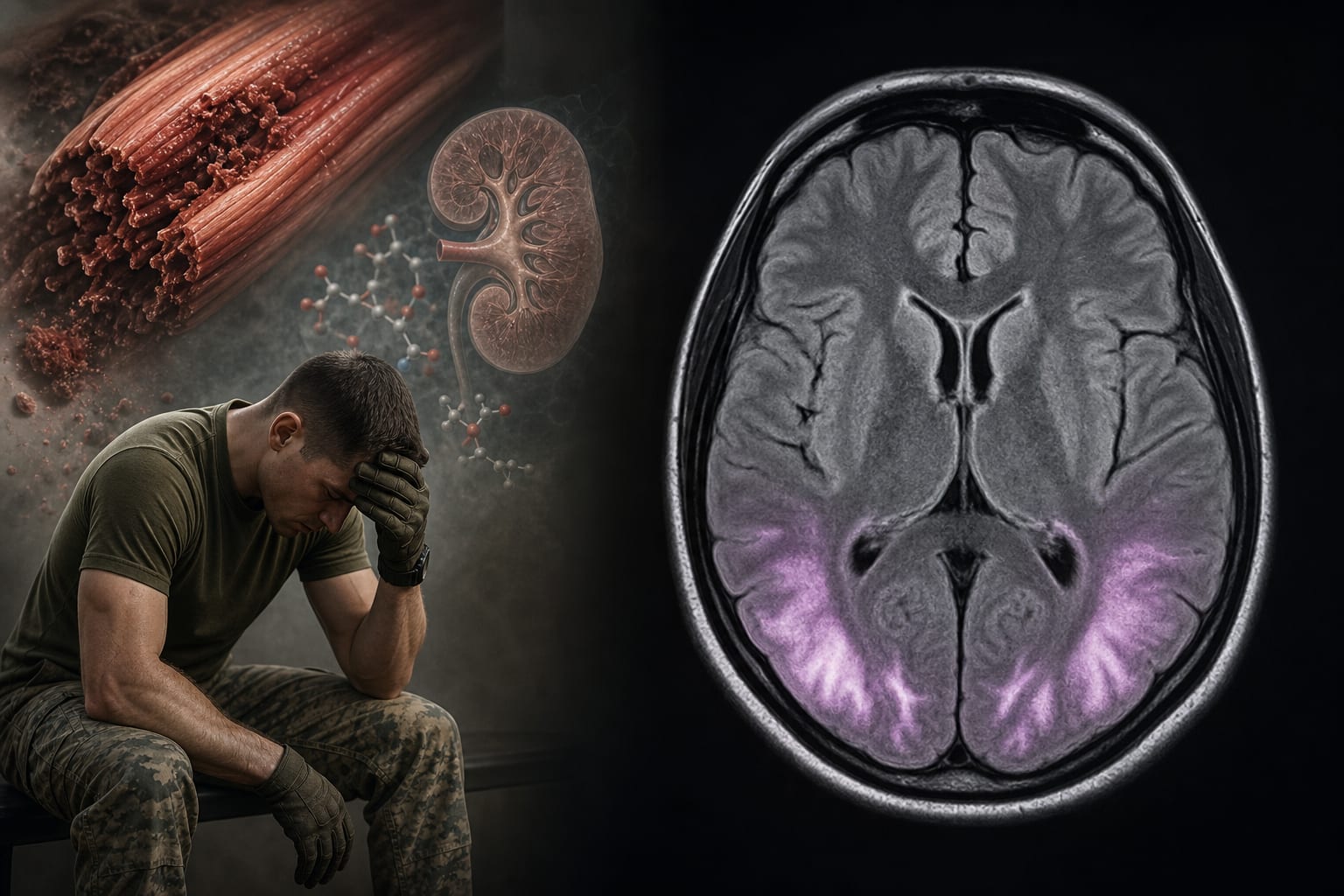
Acute Neurological Complications of Rhabdomyolysis: A Case of Posterior Reversible Encephalopathy Syndrome in a Military Personnel
-
July 7, 2026
Clinical Report: Acute Neurological Complications of Rhabdomyolysis
Background
Rhabdomyolysis is a syndrome of skeletal muscle breakdown, classically described as a triad of myalgia, weakness, and dark red-brown colored urine. Exertional rhabdomyolysis (ER) is rhabdomyolysis resulting from excessive or prolonged physical exertion, and it is typically associated with elevated creatine kinase (CK) from myonecrosis as well as acute kidney injury due to nephrotoxic myoglobin spillage. Although ER is relatively uncommon, it has been closely studied in the U.S. Armed Forces due to the elevation of inherent risk factors for ER in active duty service members, particularly in the recruit population. Well-known complications of ER include compartment syndrome, kidney injury and failure, and cardiac arrhythmias. However, there is a paucity of literature on the development of posterior reversible encephalopathy syndrome (PRES) in patients with rhabdomyolysis, and guidelines addressing neurologic complications remain undercharacterized in ER populations. Posterior reversible encephalopathy syndrome involves the development of acute or subacute vasogenic edema leading to encephalopathy, hypertension, seizures, and visual disturbances. With military service members being at higher risk for ER compared to the general population, understanding significant, however rare, complications of ER is imperative.
Data Highlights
No numerical data or trial data was provided in the article.
Key Findings
- A 19-year-old active-duty service member developed PRES after treatment for rhabdomyolysis.
- PRES is characterized by acute neurologic symptoms and vasogenic edema, often precipitated by factors such as hypertension and renal failure.
- The patient experienced severe headaches, blurred vision, and confusion, which progressed to bilateral vision loss.
- Magnetic resonance imaging confirmed the diagnosis of PRES.
- Management included fluid resuscitation and antihypertensive therapy, leading to symptom resolution.
Clinical Implications
Healthcare providers should be aware of the potential for PRES in patients with rhabdomyolysis, particularly in military settings.
Conclusion
This case highlights the need for increased awareness of neurological complications like PRES in patients with rhabdomyolysis, especially among military personnel.
Related Resources & Content
- Author(s)/Org, Source, Year -- Title
- Author(s)/Org, Source, Year -- Title
- Author(s)/Org, Source, Year -- Title
- Author(s)/Org, Source, Year -- Title
- Medical Surveillance Monthly Report | Health.mil
- Medical Surveillance Monthly Report | Health.mil
- Checking your browser - reCAPTCHA
Based on findings from:
Posterior Reversible Encephalopathy Syndrome in a Military Service Member: A Rare Neurologic Sequela of Rhabdomyolysis
Annals Of Internal Medicine: Clinical Cases, 2026.
https://www.acpjournals.org/doi/10.7326/aimcc.2026.0048
This content is an AI-generated, fully rewritten summary based on a published scholarly article. It does not reproduce the original text and is not a substitute for the original publication. Readers are encouraged to consult the source for full context, data, and methodology.