Clinical Report: Extended Survival and Late Recurrence in IDH-Wildtype GBM
Overview
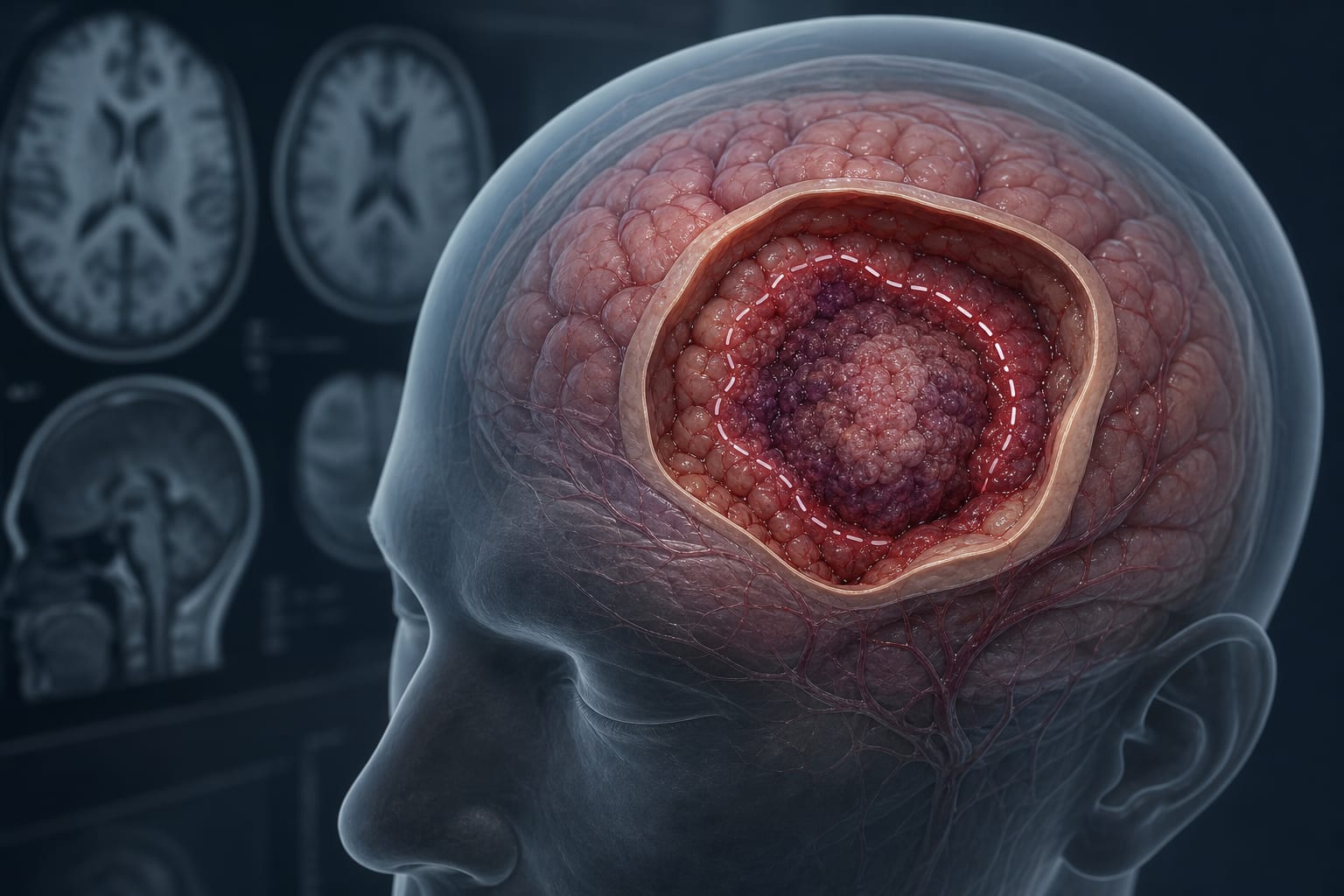
This report examines the rare cases of prolonged survival and late recurrence in IDH-wildtype glioblastoma multiforme (GBM), highlighting the role of neurosurgical intervention. A case study illustrates a 67-year-old female patient who survived 42 months post-gross total resection, emphasizing the importance of surgical techniques and patient management.
Background
IDH-wildtype glioblastoma multiforme is the most aggressive primary brain tumor in adults, with a median survival of only 12-15 months despite aggressive treatment. A small subset of patients, however, can survive beyond two years, prompting investigation into the factors contributing to these exceptional outcomes. Understanding the surgical and biological determinants of prolonged survival is crucial for improving patient care and outcomes.
Data Highlights
Parameter
Value
Incidence of IDH-wildtype GBM
3.19 per 100,000 individuals
Median survival
12-15 months
Prolonged survival rate
1%-5%
Postoperative infarction rate
2%-5%
Key Findings
Prolonged survival in IDH-wildtype GBM is linked to gross-total resection (GTR) and favorable molecular profiles such as methylated MGMT.
Late recurrence occurs in a small percentage of patients, presenting unique diagnostic challenges.
Postoperative complications, including cerebral infarction, can significantly impact patient outcomes.
Maximal safe resection improves survival rates by 61% compared to subtotal resection.
Utilization of neuronavigation techniques can reduce postoperative complications by 30%.
Clinical Implications
Neurosurgeons should prioritize gross-total resection and consider advanced imaging techniques to enhance surgical outcomes in IDH-wildtype GBM. Awareness of the potential for late recurrence and the associated diagnostic challenges is essential for ongoing patient management.
Conclusion
This report underscores the critical role of surgical intervention in extending survival for patients with IDH-wildtype GBM. Continued refinement of surgical techniques and patient management strategies is necessary to improve outcomes in this challenging disease.