Clinical Report: Roxadustat Therapy Following PCI in STEMI
Overview
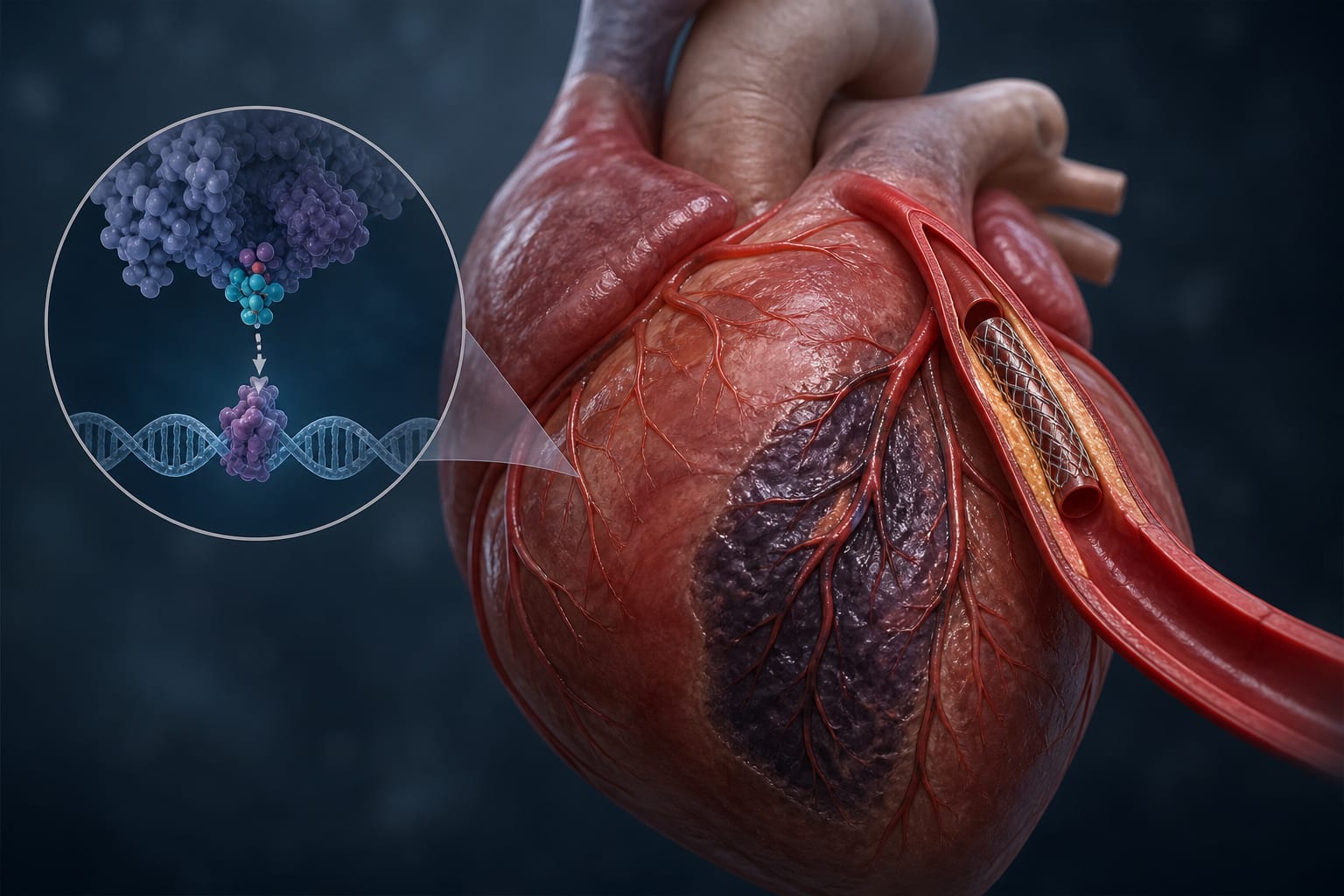
The ROXAMI trial evaluated whether roxadustat started soon after primary PCI could reduce infarct size and improve functional outcomes in patients with STEMI. The supplied article text describes the trial rationale and design but ends before reporting outcomes; therefore, treatment effects and safety results cannot be summarized from the provided material.
Background
Despite lower mortality associated with prompt reperfusion and advances in postinfarction care, progression to heart failure remains substantial among STEMI survivors. Infarct size is described as an important prognostic determinant and an endpoint for cardioprotection studies, while pharmacologic approaches targeting ischemia-reperfusion injury have not consistently translated from preclinical models into clinical benefit. Hypoxia-inducible factor (HIF) supports adaptive responses to hypoxia, but prolyl hydroxylase domain (PHD) enzymes can rapidly degrade HIF-1α after reperfusion. Roxadustat is an oral PHD inhibitor approved for anemia associated with chronic kidney disease, and ROXAMI tested its use after reperfusion in STEMI.
Data Highlights
Trial feature
Details reported
Design and setting
Prospective, investigator-initiated, open-label, randomized trial at Ruijin Hospital in Shanghai, China
Enrollment period and follow-up
April 1, 2021, through March 31, 2024; follow-up for 1 year
Eligibility
Age 18 years or older; acute STEMI within 12 hours of symptom onset; primary PCI
Allocation
Equal 1:1 randomization after primary PCI
Intervention
Roxadustat 100 mg three times weekly for 2 weeks, initiated within 2 hours after primary PCI
Comparator
Standard care without roxadustat
Outcome information
The supplied article excerpt ends before the outcome definitions and results are provided
Key Findings
ROXAMI was designed to assess whether roxadustat initiated immediately after primary PCI could lessen infarct size and improve functional outcomes in STEMI.
Participants were randomized 1:1 to roxadustat or standard care without roxadustat after primary PCI.
The intervention was roxadustat 100 mg three times weekly for 2 weeks, beginning within 2 hours after PCI.
The trial enrolled at a single hospital in Shanghai from April 2021 through March 2024, with 1-year follow-up planned.
The article rationale cites experimental evidence that PHD inhibition may reduce infarct size and improve cardiac function, while noting that clinical translation of cardioprotective strategies has been inconsistent.
The supplied excerpt does not include participant numbers, outcome results, or adverse-event findings; no efficacy or safety conclusion can be drawn from it.
Clinical Implications
The provided material establishes the rationale and randomized design for testing post-PCI roxadustat but does not report results that would support a clinical treatment conclusion. Roxadustat use for STEMI should not be inferred from its stated approval for anemia associated with chronic kidney disease or from the preclinical evidence described.
Conclusion
ROXAMI tested a short course of roxadustat begun soon after primary PCI in patients with STEMI. The supplied text does not provide trial outcomes, so its effects on infarct size, cardiac function, or safety remain unreported here.
A structured overview of recent FDA recalls, corrections, and alerts involving medications, ventilators, insulin delivery systems, cardiovascular devices, anesthesia products, and other equipment used in clinical practice.
As ASE convenes its 37th Scientific Sessions near Denver, the meeting will spotlight echocardiographic AI and big data, contrast-enhanced ultrasound, evolving guidelines, the Feigenbaum Lecture, and the future of the sonographer workforce.