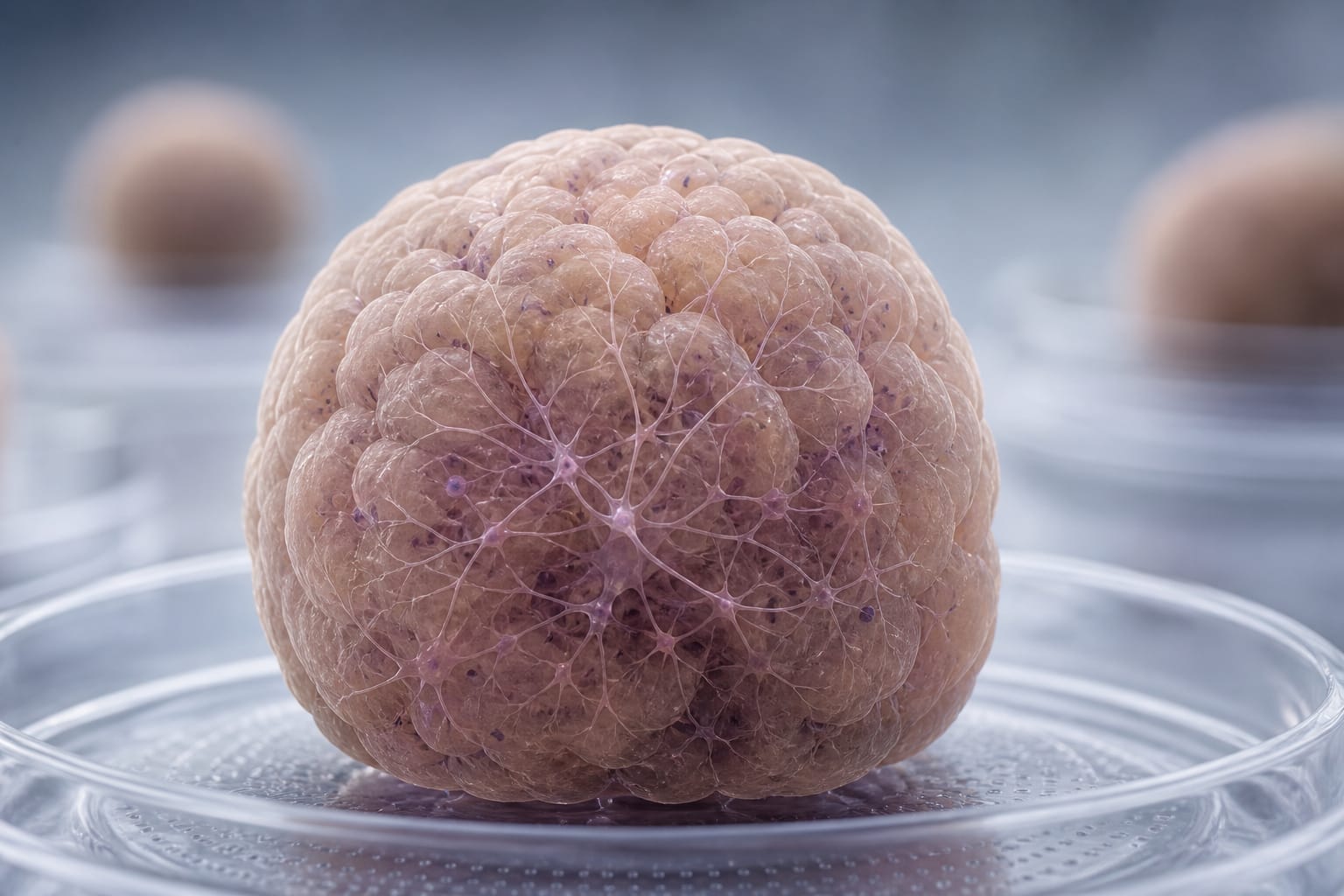
Maturation of Brain Organoids Influenced by a Realistic Developmental Timeline
-
August 19, 2026
Clinical Report: Maturation of Brain Organoids Influenced by a Realistic Developmental Timeline
Overview
This study demonstrates that brain organoids can mature over nearly six years, exhibiting characteristics of advanced brain development.
Background
The development of brain organoids offers an alternative to traditional animal models for studying human brain development and neurodevelopmental disorders. Previous organoid models have been limited in their longevity and developmental representation, making it challenging to investigate long-term neurodevelopmental processes. This research addresses these limitations by demonstrating the capacity for organoids to mature in a lifelike manner over an extended period.
Data Highlights
No numerical data or trial data was provided in the source material.
Key Findings
- Organoids were maintained for nearly six years, showing advanced brain development characteristics.
- Gene expression and biological age of organoids were analyzed, indicating a convergence of molecular and chronological ages.
- Functional maturation was demonstrated through sustained electrical signals in organoids for at least two years.
- Transplantation experiments showed older neurons retained their developmental characteristics even in younger organoid environments.
- The organoids developed at a realistic pace, mirroring human brain development processes.
Clinical Implications
The ability of brain organoids to mature over extended periods may enhance research into neurodevelopmental disorders, providing insights into their emergence and progression. This advancement could facilitate the modeling of complex brain conditions and the evaluation of potential interventions.
Conclusion
The findings from this study highlight the maturation of brain organoids over an extended period.
Related Resources & Content
- NIH, National Institutes of Health, 2026 -- Maturation of Brain Organoids Influenced by a Realistic Developmental Timeline
- the medicine maker — Growing a Whole Brain Organoid
- the analytical scientist — Next-Generation Brain Organoids Mimic Whole-Brain Networks
- the pathologist — Organoids: Only as Useful as Our Analysis
- Brain — Exploring the Pathophysiology of Neurodevelopmental Disorders Through Brain Organoid Models
- Growing a Whole Brain Organoid
- Next-Generation Brain Organoids Mimic Whole-Brain Networks
- Organoids: Only as Useful as Our Analysis
- Exploring the Pathophysiology of Neurodevelopmental Disorders Through Brain Organoid Models
- International Society for Stem Cell Research Guidelines
- Patient-derived organoids predict personalized drug response and reveal alternative therapeutic options in glioblastoma
- Air-Liquid interface midbrain organoids model the pathological features of Parkinson’s disease
Based on findings from:
Brain organoid maturation is driven by a lifelike developmental clock
National Institutes Of Health (Nih), 2026.
https://www.nih.gov/news-events/news-releases/brain-organoid-maturation-driven-lifelike-developmental-clock
This content is an AI-generated, fully rewritten summary based on a published scholarly article. It does not reproduce the original text and is not a substitute for the original publication. Readers are encouraged to consult the source for full context, data, and methodology.