Development of multi-algorithm machine learning models integrating novel serum biomarkers for survival prediction in colorectal cancer: a retrospective cohort study - Report - MDSpire
Conexiant’s news site is now MDSpire News. Learn more
Advertisement
Creation of Collaborative Machine Learning Models Incorporating Innovative Serum Biomarkers for Survival Forecasting in Colorectal Cancer: A Retrospective Cohort Analysis
Clinical Report: Collaborative Machine Learning Models for CRC Survival Forecasting
Overview
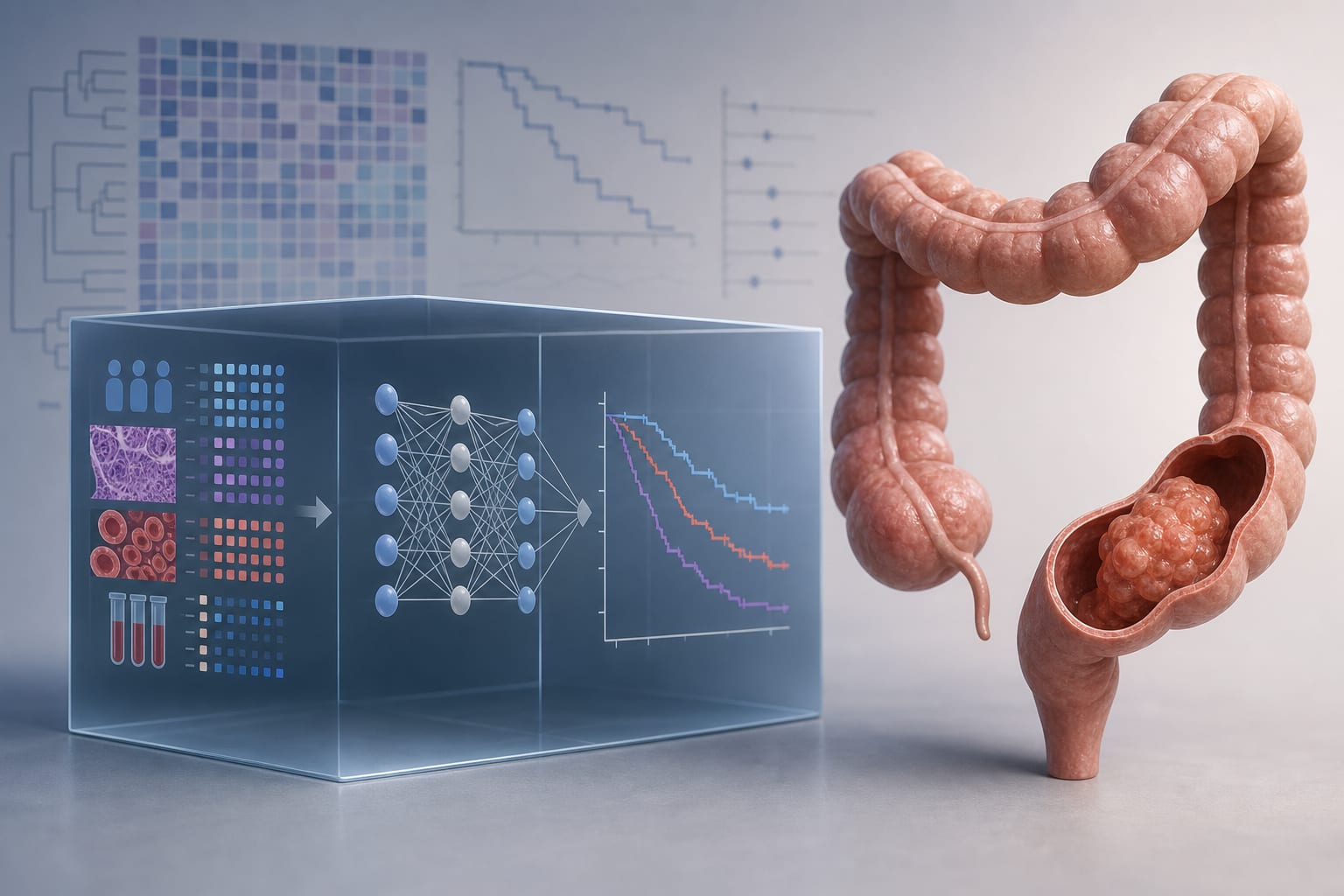
This study developed a collaborative machine learning approach to identify key prognostic factors in colorectal cancer (CRC) patients, integrating clinical, pathological, serological, and demographic variables.
Background
Colorectal cancer (CRC) presents significant challenges in prognostic prediction due to tumor heterogeneity and limitations of the conventional TNM staging system. Accurate prognostic tools are essential for tailoring individualized treatment strategies.
Data Highlights
Feature
Type
M stage
Pathological
N stage
Pathological
Cystatin C
Serological
Homocysteine
Serological
γ-Glutamyl Transferase
Serological
Age
Demographic
Key Findings
Six central prognostic features identified: M stage, N stage, Cystatin C, Homocysteine, γ-Glutamyl Transferase, and age.
Cox regression confirmed independent associations of these features with overall survival (OS) and progression-free survival (PFS).
Nomograms for OS and PFS demonstrated calibration and discrimination (OS C-index: 0.730; PFS C-index: 0.722).
AUCs for OS and PFS exceeded 75% and 77%, respectively.