Machine learning-based prediction of gout flares during hospitalization in patients with upper gastrointestinal bleeding: a retrospective cohort study - Report - MDSpire
Clinical Report: Predicting Gout Flares in Hospitalized Patients with UGIB
Overview
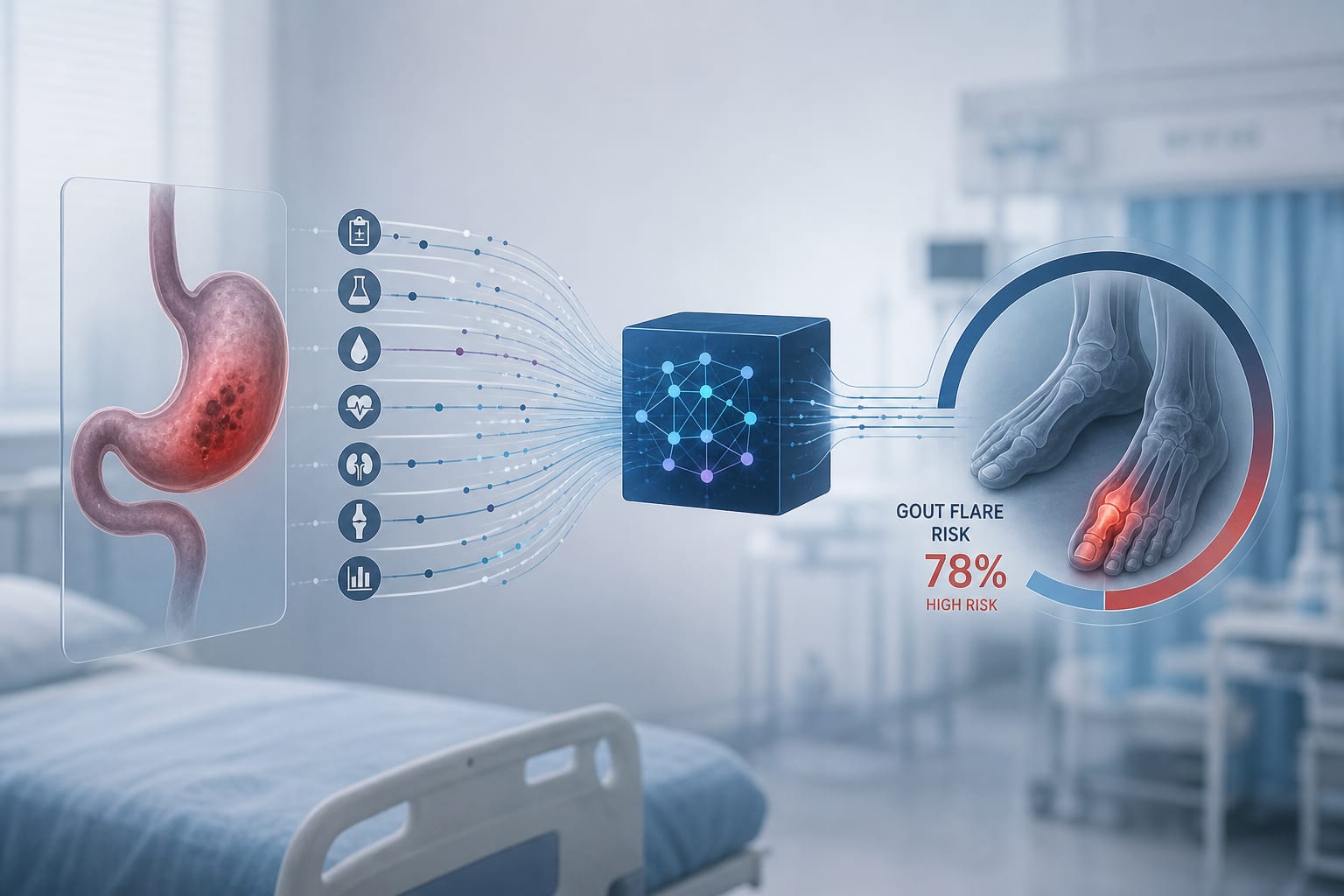
This study developed a machine learning model to predict gout flares in hospitalized patients with upper gastrointestinal bleeding (UGIB). The Random Forest algorithm demonstrated superior predictive performance, achieving an AUC of 0.951, enabling early identification of high-risk patients.
Background
Gout flares in hospitalized patients with UGIB present significant management challenges due to the contraindications of standard anti-inflammatory treatments. The lack of effective risk-stratification tools complicates early detection and preventive interventions, which are crucial for improving patient outcomes. Machine learning offers a promising approach to enhance prediction accuracy in this complex clinical scenario.
Data Highlights
Model
AUC
Accuracy
Sensitivity
Specificity
Random Forest
0.951
0.901
0.929
0.873
Key Findings
22.0% of patients experienced a gout flare during hospitalization.
The Random Forest model was the most effective, with an AUC of 0.951.
Key predictors identified included serum uric acid, creatinine, hemoglobin, blood urea nitrogen, body mass index, and alcohol consumption history.
Machine learning models outperformed traditional statistical techniques in predicting gout flares.
Decision curve analysis confirmed the clinical utility of the predictive models.
Clinical Implications
The developed machine learning model can assist healthcare providers in identifying hospitalized patients at high risk for gout flares, facilitating timely preventive measures. This approach may improve patient comfort and reduce the length of hospital stays by addressing gout flares proactively.
Conclusion
The study successfully demonstrates the potential of machine learning in predicting gout flares among UGIB patients, highlighting the need for tailored risk stratification tools in acute care settings.