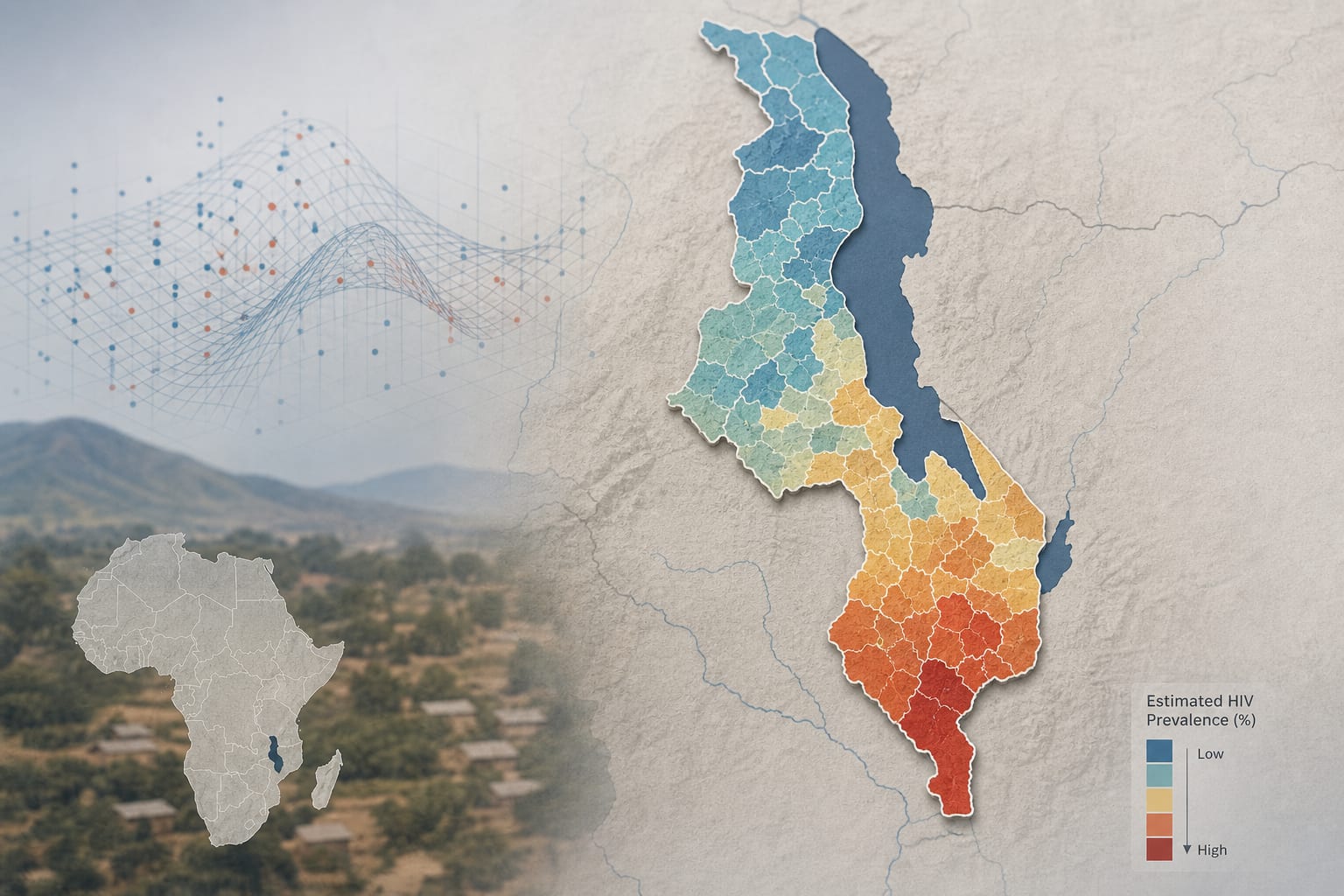
Clinical Report: Geospatial Analysis of HIV Prevalence in Malawi Utilizing Generalized Additive Models
Overview
This study analyzes HIV prevalence in Malawi using individual-level data from the 2016 Demographic and Health Survey. It highlights geographic disparities in HIV prevalence.
Background
Malawi faces a high burden of HIV, with prevalence rates exceeding 6% among adults aged 15-64 years. Understanding sub-national variations in HIV prevalence is crucial for effective intervention planning. This study employs modeling techniques to provide insights into the geographic and sociodemographic determinants of HIV risk.
Data Highlights
No numerical data provided in the source material.
Key Findings
HIV prevalence is highest in southern Malawi, with varied patterns in central and northern regions.
Sociodemographic factors such as age, education, sex, and household characteristics are observed in most districts.
Geographic factors were contributors to HIV prevalence in only 18% of areas analyzed.
The study utilized generalized additive models (GAMs) to capture relationships between HIV risk and predictors.
High-resolution maps generated from the analysis provide a visual understanding of HIV risk heterogeneity.
Clinical Implications
The findings emphasize the need for targeted HIV prevention and treatment strategies that consider both geographic and sociodemographic contexts. Policymakers can utilize this data to allocate resources more effectively in areas with higher prevalence.
Conclusion
This study underscores the importance of integrating spatial and sociodemographic analyses to inform HIV intervention strategies in Malawi.
A cross-sectional metagenomic study found greater oral microbiome richness among adults with chronic rhinosinusitis, particularly nonallergic chronic rhinosinusitis, while associations with asthma, airway inflammation, and most lung-function measures were inconsistent.