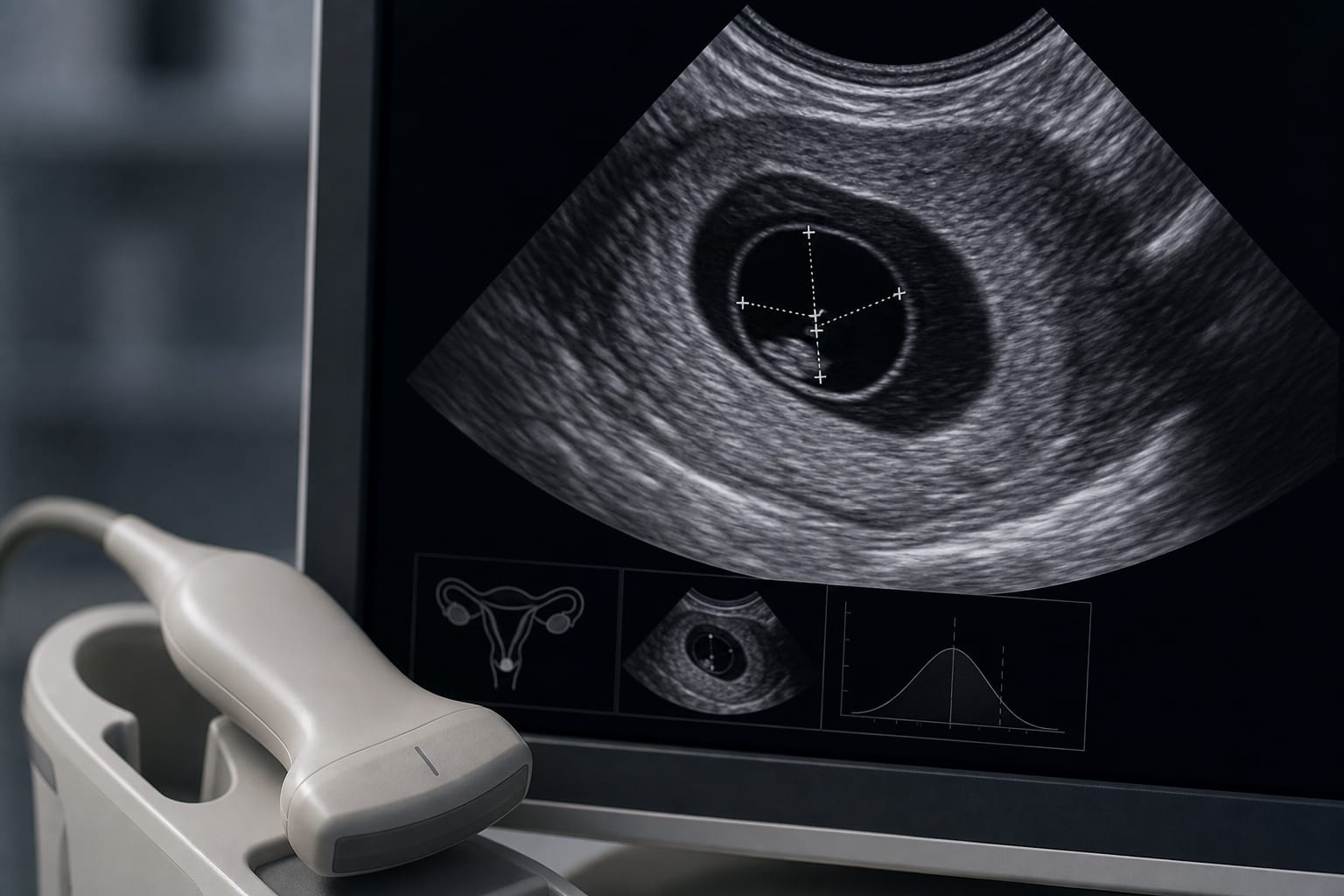
A case series: thirty-three cases with heterotopic pregnancy after assisted reproductive technology - Report - MDSpire

A case series: thirty-three cases with heterotopic pregnancy after assisted reproductive technology

  • By

  • Xinyang Li

  • Han Zhang

  • Qi Xi

  • Ninglu Yuan

  • Di Su

  • Linlin Liu

  • Zhuo Li

  • Jiayi Tian

  • July 14, 2026

Share

Clinical Report: Analysis of Thirty-Three Cases of Heterotopic Pregnancy Following Assisted Reproductive Techniques

Overview

This study analyzed 33 cases of heterotopic pregnancy to assess factors influencing intrauterine pregnancy outcomes. Key findings include that 66.67% of patients achieved viable ongoing intrauterine gestation or live birth.

Background

Heterotopic pregnancy is a rare condition characterized by the presence of both intrauterine and ectopic gestational sacs. Its incidence has increased with advancements in assisted reproductive technologies.

Data Highlights

OutcomePercentage
Viable ongoing intrauterine gestation or live birth66.67%

Key Findings

  • 66.67% of patients achieved viable ongoing intrauterine gestation or live birth.
  • Sequential identification of an intrauterine gestational sac, embryo, and fetal cardiac activity was associated with higher odds of successful intrauterine pregnancy (P < 0.001).
  • Fetal cardiac activity had the strongest predictive value for sustained pregnancy (OR = 22.00, P < 0.001).
  • No significant differences in outcomes were observed between blastocyst and cleavage-stage embryo transfers.
  • Better intrauterine embryonic development correlated with higher odds of favorable pregnancy outcomes (OR = 28.75, P = 0.003).

Clinical Implications

Ultrasound markers indicating intrauterine development were observed in this study.

Conclusion

The study presents findings on ultrasound assessment in heterotopic pregnancy.

Related Resources & Content

  1. Frontiers in Medicine, 2026 -- New insights gained from a decade long multi-center retrospective study on the management strategy for heterotopic pregnancy: expectant management is worth considering in patients without vaginal bleeding
  2. Frontiers in Medicine, 2026 -- Clinical pregnancy after ICSI: an exploratory transfer-day analysis of female age, AMH, sperm source, and transfer stage
  3. conexiant -- 31 Live Births Reported Following Uterus Transplant
  4. NICE, 2026 -- Diagnosis of viable intrauterine pregnancy and of tubal ectopic pregnancy | Ectopic pregnancy and miscarriage: diagnosis and initial management | Guidance
  5. ESHRE -- Ectopic pregnancy
  6. The Journal of Clinical Endocrinology & Metabolism — Outcomes of Perinatal and Maternal Health Following Transfer of Blastocysts from Nonpronuclear and Monopronuclear Embryos
  7. Laparoscopy versus laparotomy for the treatment of heterotopic pregnancy: a systematic review and meta-analysis
  8. Diagnosis of viable intrauterine pregnancy and of tubal ectopic pregnancy | Ectopic pregnancy and miscarriage: diagnosis and initial management | Guidance | NICE
  9. Ectopic pregnancy
  10. Prise en charge thérapeutique des grossesses extra-utérines tubaires : recommandations pour la pratique clinique du Collège national des gynécologues et obstétriciens français et de la Société de chirurgie gynécologique et pelvienne - ScienceDirect
  11. L26/P-900 Outcomes of uterine heterotopic pregnancies after in vitro fertilisation–embryo transfer | Human Reproduction | Oxford Academic
  12. Intrauterine pregnancy outcomes after laparoscopic heterotopic pregnancy management: a retrospective study of identifying risk factors and prognostic indicators | BMC Pregnancy and Childbirth | Springer Nature Link
  13. Full article: The association between endometrial thickness and ectopic pregnancy among women who underwent in vitro fertilization, systematic review and meta-analysis
  14. Management of tubal ectopic pregnancy | Ectopic pregnancy and miscarriage: diagnosis and initial management | Guidance | NICE

Original Source(s)

Related Content