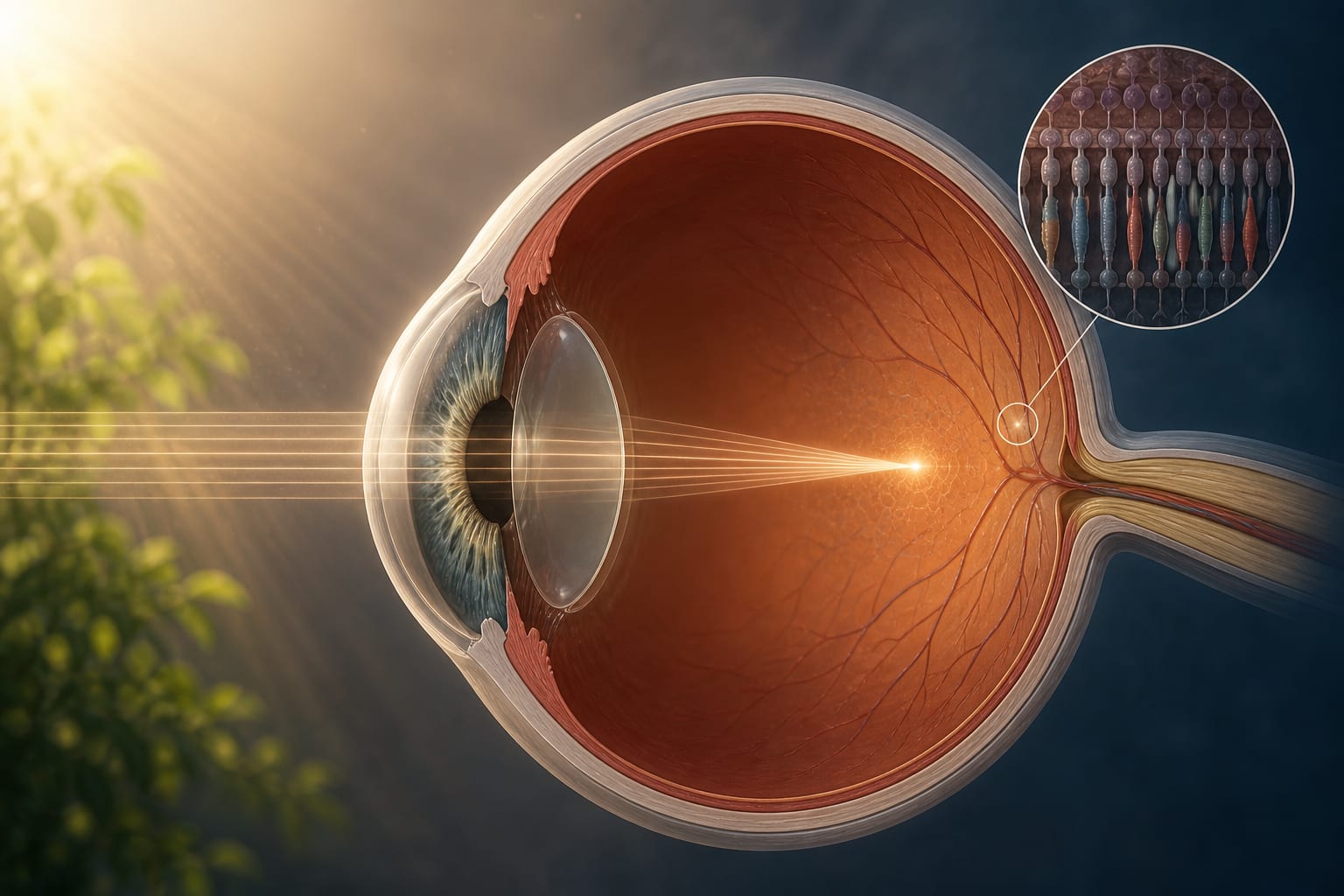
Clinical Report: The Impact of Light Exposure on Myopia Development
Overview
This editorial discusses the role of light exposure in the development and progression of myopia, highlighting environmental and biological factors.
Background
Myopia is a growing global health concern due to its increasing prevalence and associated complications, such as myopic maculopathy and retinal detachment. While genetic factors play a role, environmental influences, particularly light exposure, have been identified as critical in myopia development.
Data Highlights
No specific numerical data provided in the editorial.
Key Findings
Outdoor exposure duration is protective against myopia onset.
Light intensity, spectral composition, exposure duration, and timing influence ocular growth and refractive development.
CUVAF may serve as a non-invasive biomarker for cumulative ultraviolet exposure and myopia severity.
Low-level red-light therapy shows promise in reducing myopia progression.
Environmental factors, such as green spaces, encourage outdoor activity and visual stimuli diversity.
Clinical Implications
Healthcare professionals should consider the role of outdoor activities among children in relation to myopia risk.
Conclusion
The editorial underscores the importance of light exposure in myopia development and highlights the need for continued research into environmental and therapeutic interventions.