Clinical Report: The Interaction Between Estrogen Receptors and the NRF2 Pathway
Overview
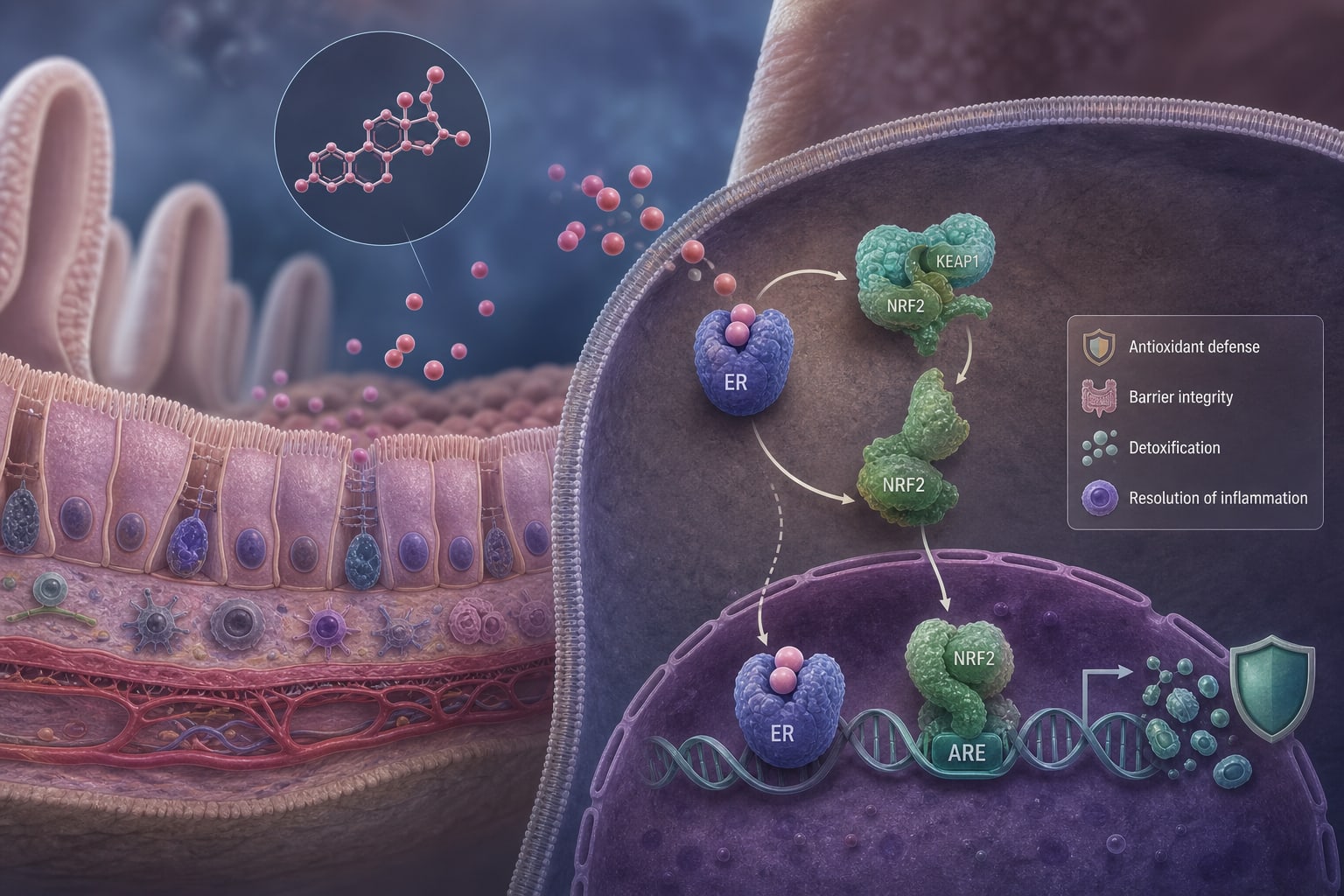
This review explores the interplay between estrogen signaling and the NRF2 pathway in the intestinal system, highlighting their roles in maintaining gut homeostasis and potential implications for gastrointestinal disorders.
Background
Estrogen receptors are present in nearly all tissues, including the intestine, where they influence various physiological processes such as motility and barrier integrity. The intersection of estrogen signaling with NRF2, a key regulator of cellular stress responses, suggests a complex relationship that may be crucial for intestinal health.
Data Highlights
No numerical data or trial data provided in the source material.
Key Findings
Estradiol influences intestinal motility, barrier integrity, and nutrient absorption.
Estrogen signaling intersects with NRF2, impacting cellular stress responses and detoxification.
Sex-related differences in intestinal function and disease incidence, such as inflammatory bowel disease, are influenced by estrogen levels.
NRF2 is a master regulator of the oxidative stress response, relevant to maintaining intestinal homeostasis.
Clinical Implications
The findings suggest that estrogen receptor signaling may play a significant role in gut health and disease, particularly in conditions like inflammatory bowel disease. Clinicians should consider hormonal influences when evaluating intestinal disorders and their management.
Conclusion
The review emphasizes the importance of understanding the crosstalk between estrogen receptors and the NRF2 pathway in the intestine.