Clinical Report: Evaluation of a guided ultrasound navigation system for surgical intervention in pediatric tumors
Overview
This study evaluates the accuracy and precision of a novel ultrasound navigation system designed for pediatric tumor surgeries. The findings indicate that the system can significantly enhance intraoperative navigation, potentially improving surgical outcomes in pediatric oncology.
Background
Pediatric tumors present unique challenges in surgical management, particularly due to the effects of neoadjuvant chemotherapy, which can render tumors non-palpable and difficult to visualize. Accurate tumor localization is crucial for achieving complete resection and minimizing complications. Enhanced surgical navigation techniques, such as the one evaluated in this study, may improve surgical precision and outcomes in this vulnerable population.
Data Highlights
No numerical data was provided in the source material.
Key Findings
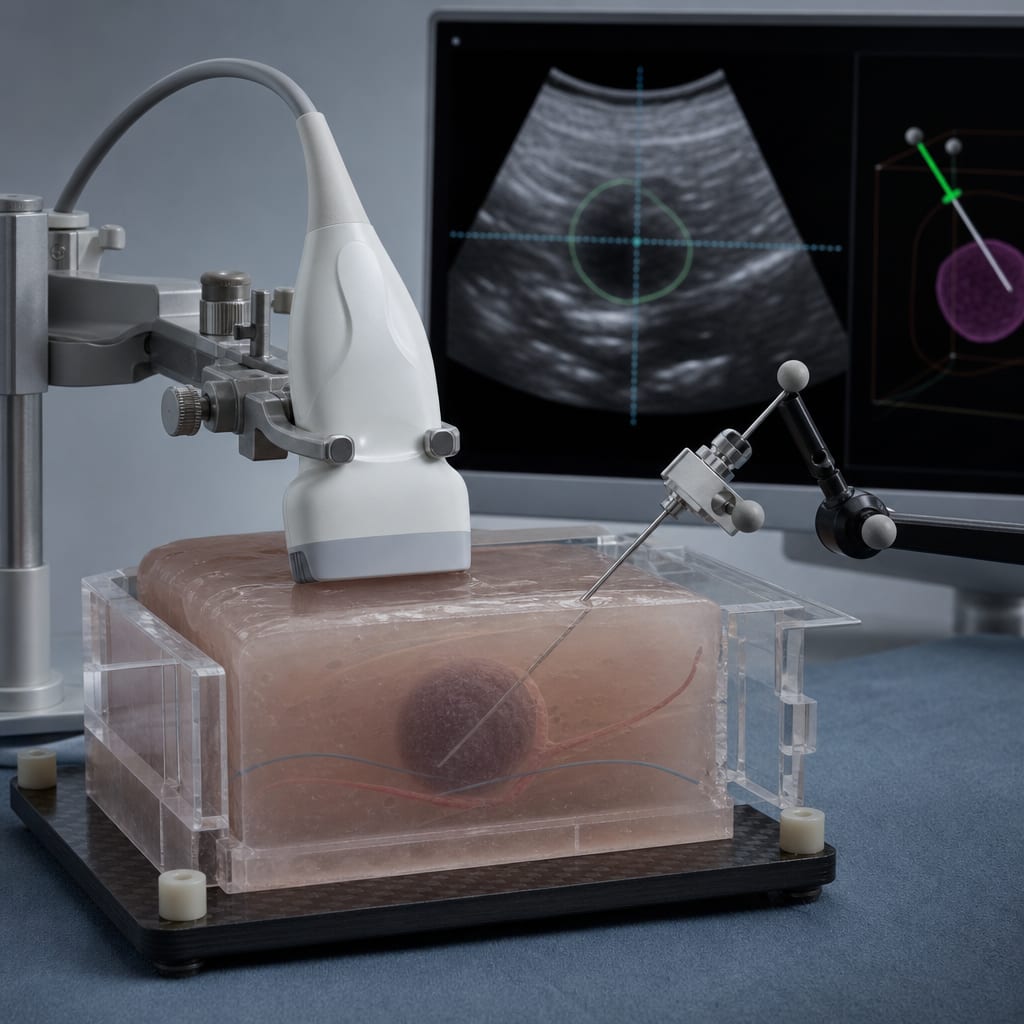
The navigation system utilizes an electromagnetic tracking mechanism for real-time tracking during surgery.
Spatial accuracy and precision were assessed in a controlled phantom environment.
Customized 3D printed devices were developed to secure sensors to ultrasound probes.
The system aims to address challenges specific to pediatric anatomy, such as reduced body size and immature bone structure.
Prior studies indicate that surgical navigation can improve radical resection rates in adult oncology.
Clinical Implications
The development of this ultrasound navigation system could lead to improved surgical outcomes in pediatric oncology by enhancing tumor localization during procedures. Clinicians may consider integrating such technologies to optimize surgical interventions and minimize the risks associated with incomplete resections.
Conclusion
The study highlights the potential of a guided ultrasound navigation system to improve surgical precision in pediatric tumor surgeries. Further clinical validation is necessary to confirm its efficacy in real-world settings.