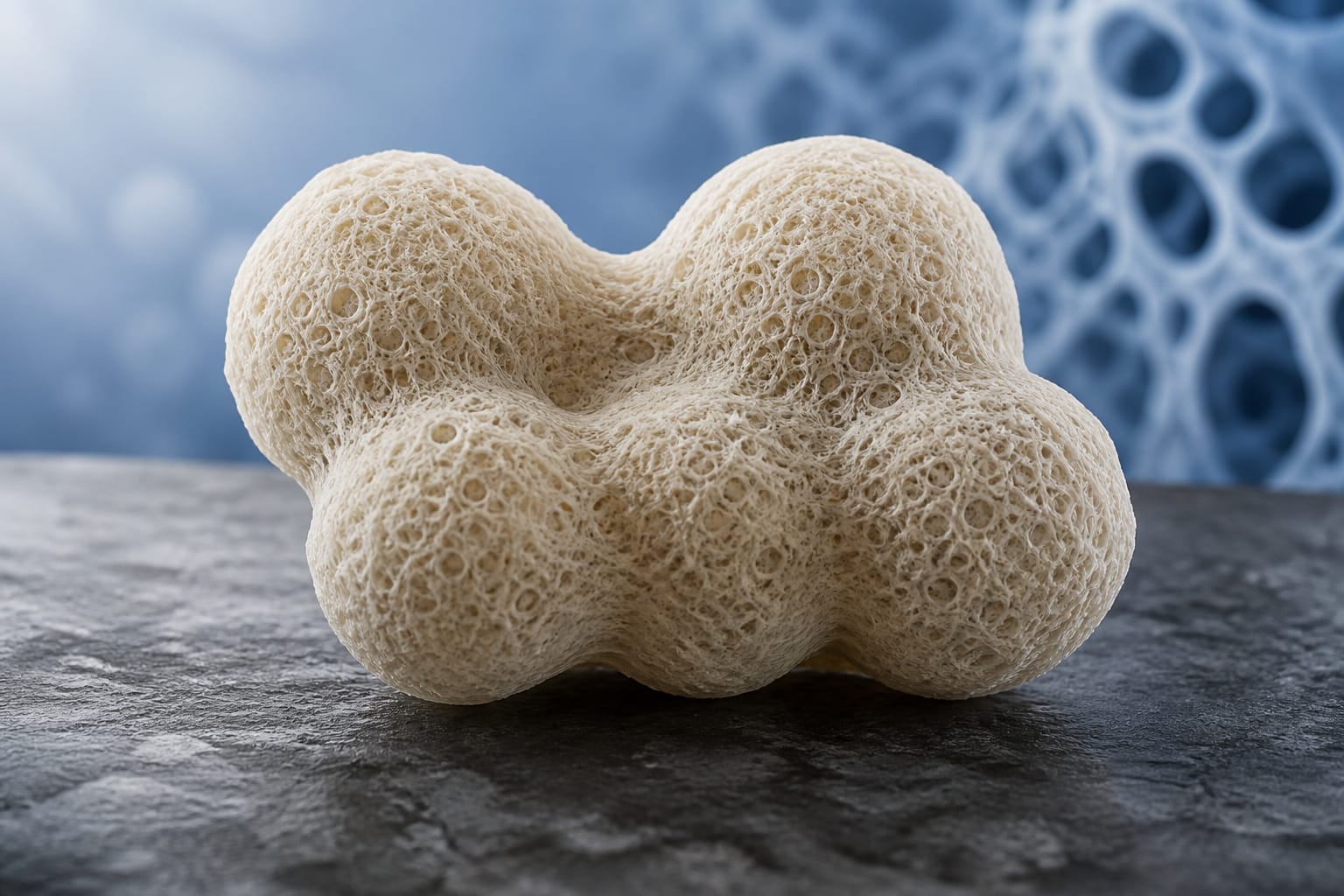
Development of Multi-Spheroid Bone Constructs via the Combination of Large MSC Spheroids
-
By
-
Peter Zastawny
-
Stephen D. Waldman
-
September 21, 2026
Clinical Report: Development of Multi-Spheroid Bone Constructs via MSC Spheroids
Overview
This study presents a methodology for scaffold-free bone tissue engineering using large mesenchymal stem cell (MSC) spheroids formed from 5 × 10^5 cells each.
Background
The incidence of bone fractures is increasing globally, with 178 million new cases reported in 2019. Current treatments, including autografts and allografts, have limitations such as infection and donor site morbidity. Bone tissue engineering (BTE) offers a promising alternative by creating biomimetic materials that can replicate the properties of natural bone grafts.
Data Highlights
No numerical data or trial results were provided in the source material.
Key Findings
- Large MSC spheroids (5 × 10^5 cells) can be formed to create modular bone constructs.
- Spheroids can be differentiated into hypertrophic states for endochondral bone formation or solely in osteogenic media.
- The methodology allows for the fusion of individual spheroids into larger constructs while exposed to osteogenic media.
- Biochemical and histological analyses were conducted to assess mineralization and fusion efficiency.
- Larger spheroids may facilitate host bone infiltration and vascular ingrowth, essential for graft survival.
Clinical Implications
The development of larger MSC spheroids may provide a more effective strategy for addressing bone defects, potentially reducing the number of spheroids required for treatment. This approach could enhance the efficiency of bone tissue engineering and improve patient outcomes.
Conclusion
The study demonstrates a scalable method for creating multi-spheroid constructs that may advance scaffold-free bone tissue engineering techniques.
Related Resources & Content
- Global, regional, and national burden of bone fractures in 204 countries and territories, 1990-2019: a systematic analysis from the Global Burden of Disease Study 2019 - PubMed
- Current Management of Acute and Posttraumatic Critical Bone Defects - PubMed
- AO Spine Guideline for the Use of Osteobiologics (AOGO) in Anterior Cervical Discectomy and Fusion for Spinal Degenerative Cases - PMC
- FDA Approves First Mesenchymal Stromal Cell Therapy to Treat Steroid-refractory Acute Graft-versus-host Disease | FDA
- Knee Surgery, Sports Traumatology, Arthroscopy — A multilayered biomaterial demonstrates enhanced efficacy compared to microfracture techniques for treating osteochondral lesions: Results from a two-year multicenter randomized study.
- Knee Surgery, Sports Traumatology, Arthroscopy — Innovative multi-layered nano-composite biomaterial for addressing multifocal degenerative cartilage injuries
- the medicine maker — The Scalability Challenge in MSC Therapies
- Knee Surgery, Sports Traumatology, Arthroscopy — The Quality of Bone Marrow Aspirate Concentrate is Influenced by Age and Collection Location
- Global, regional, and national burden of bone fractures in 204 countries and territories, 1990-2019: a systematic analysis from the Global Burden of Disease Study 2019 - PubMed
- Current Management of Acute and Posttraumatic Critical Bone Defects - PubMed
- AO Spine Guideline for the Use of Osteobiologics (AOGO) in Anterior Cervical Discectomy and Fusion for Spinal Degenerative Cases - PMC
- Premarket Approval (PMA)
- FDA Approves First Mesenchymal Stromal Cell Therapy to Treat Steroid-refractory Acute Graft-versus-host Disease | FDA
- Frequently Asked Questions — Developing Potential Cellular and Gene Therapy Products | FDA
- Important Patient and Consumer Information About Regenerative Medicine Therapies | FDA
- Experts Achieve Consensus on a Majority of Statements Regarding Ethics, Transparency, Regulation, and Best Practices for the Use of Orthobiologics - PubMed
- https://bmcmusculoskeletdisord.biomedcentral.com/counter/pdf/10.1186/s12891-025-08365-w.pdf
- Orthobiologics in delayed union and non-union of adult long bones fractures: A systematic review - ScienceDirect
- Bone Regeneration with Mesenchymal Stem Cells in Scaffolds: Systematic Review of Human Clinical Trials - PMC
Based on findings from:
Engineering Multi-Spheroid Bone Constructs Through the Fusion of Large MSC Spheroids
Peter Zastawny, Stephen D. Waldman. Journal Of Orthopaedic Research, 2026.
https://onlinelibrary.wiley.com/doi/10.1002/jor.70280
This content is an AI-generated, fully rewritten summary based on a published scholarly article. It does not reproduce the original text and is not a substitute for the original publication. Readers are encouraged to consult the source for full context, data, and methodology.