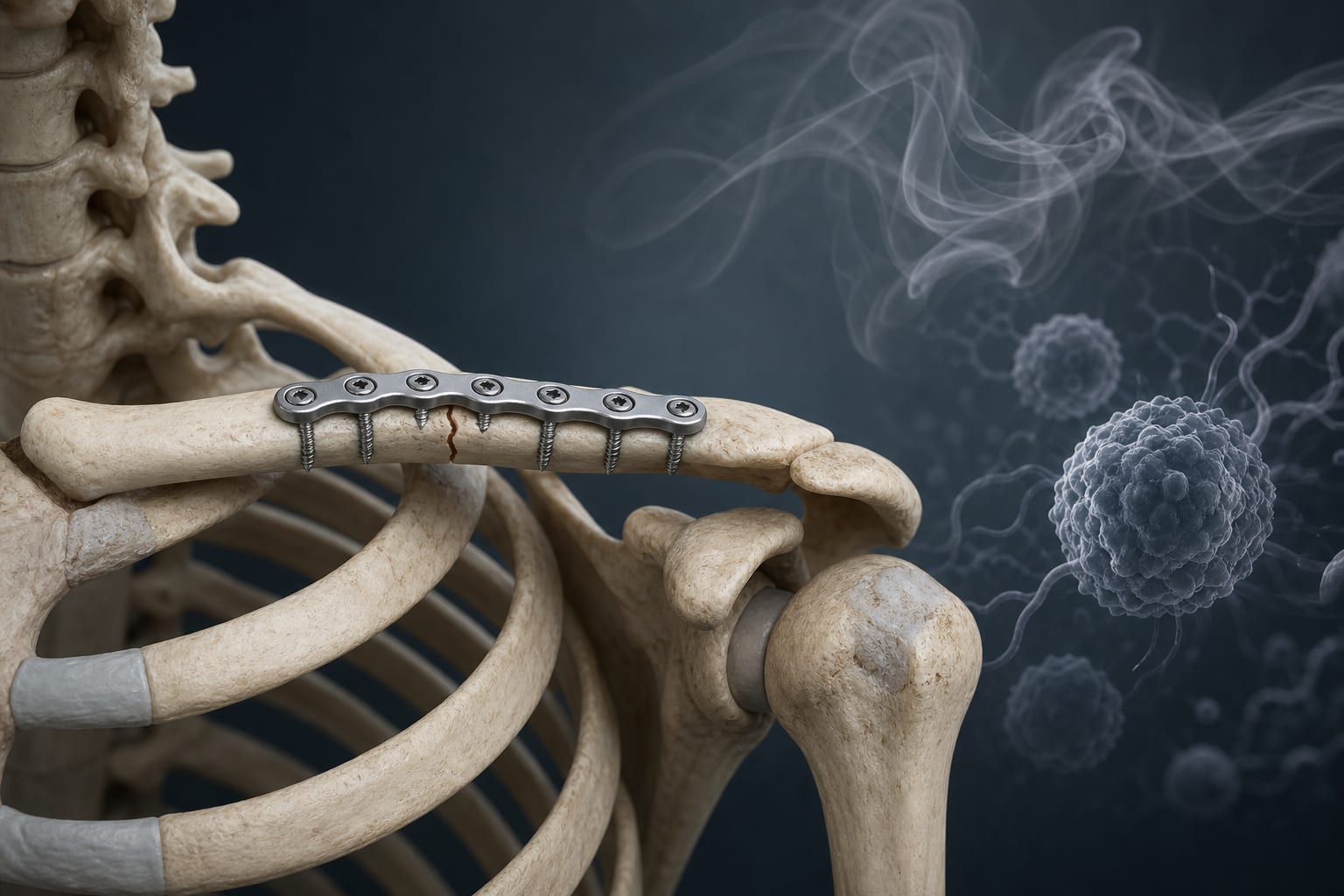
Dependence on Non-Tobacco Nicotine Linked to Higher Complication Rates After Clavicle Open Reduction Internal Fixation
Overview
This study investigates the impact of non-tobacco nicotine dependence on complication rates following open reduction and internal fixation (ORIF) of clavicle fractures. Findings indicate that patients with non-tobacco nicotine dependence experience higher rates of postoperative complications compared to controls.
Background
Clavicle fractures are prevalent orthopedic injuries, particularly among adolescents and young adults. The rise in surgical fixation rates necessitates understanding factors that may lead to complications, including nicotine dependence. While tobacco use is known to adversely affect surgical outcomes, the implications of non-tobacco nicotine use are less understood but increasingly relevant due to its rising popularity.
Data Highlights
No numerical data available in the provided source material.
Key Findings
Non-tobacco nicotine dependence is associated with increased complication rates after ORIF of clavicle fractures.
The study utilized a large database (TriNetX) to analyze outcomes in patients with and without nicotine dependence.
Patients were categorized into three cohorts: non-tobacco nicotine dependence, tobacco dependence, and controls without nicotine exposure.
Complications were assessed at 90 days and 1 year post-surgery.
Findings suggest that non-tobacco nicotine may impair wound healing and increase infection risk.
Clinical Implications
Healthcare providers should be aware of the potential risks associated with non-tobacco nicotine use in patients undergoing surgical fixation of clavicle fractures. Screening for nicotine dependence, including non-tobacco forms, may be beneficial in preoperative assessments to mitigate complications.
Conclusion
The study highlights the need for further investigation into the effects of non-tobacco nicotine on surgical outcomes, emphasizing the importance of considering all forms of nicotine dependence in clinical practice.
These 10 states have paid family or medical leave programs and health, wellness, peer support, or monitoring resources available to physicians or other health professionals.