Development, simplification, and prospective methodological exploration of a Chinese endoscopy patient experience scale and a decision support system - Report - MDSpire
Creation, refinement, and future methodological investigation of a patient experience scale for endoscopy in China along with a decision support tool
Overview
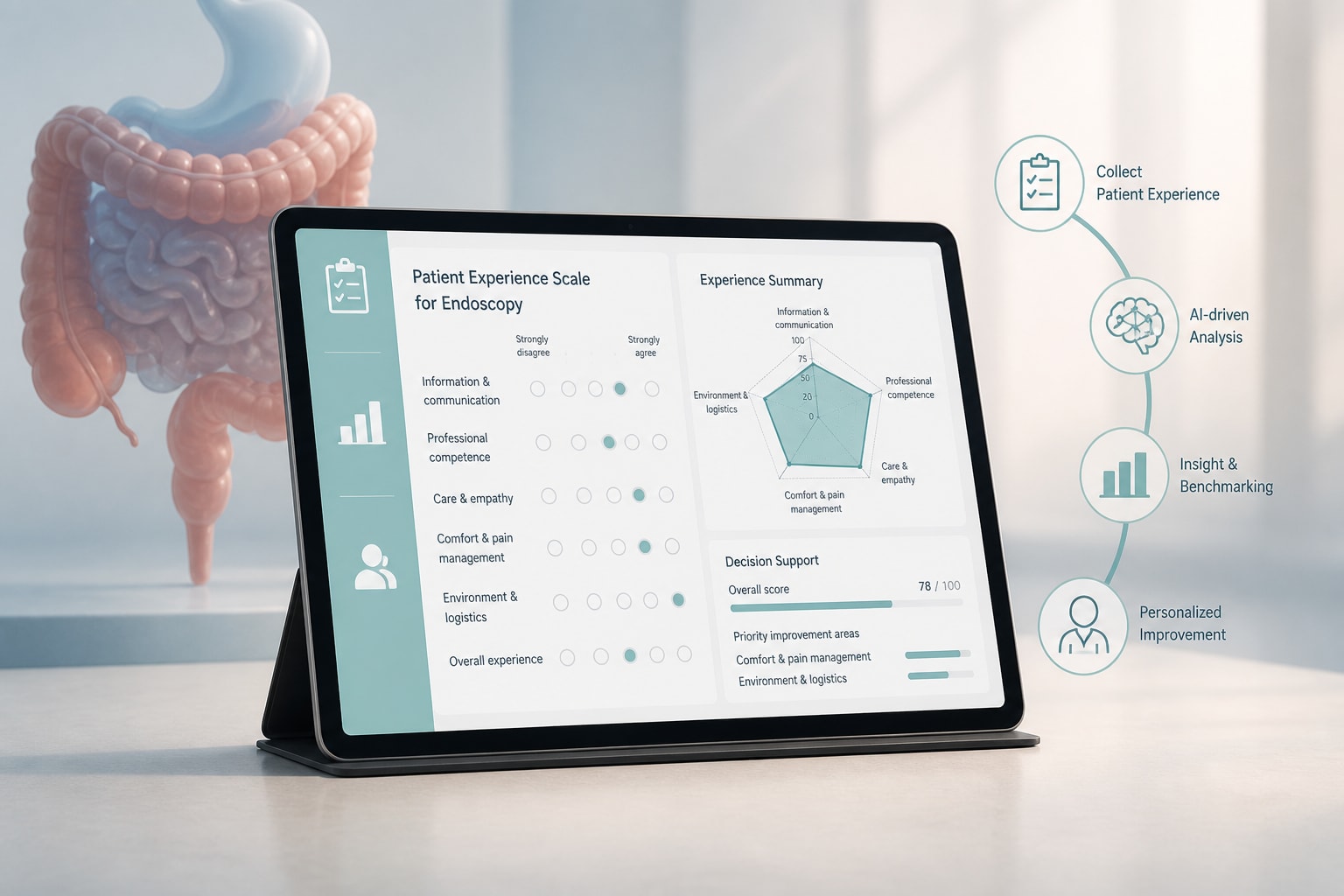
This study developed and validated the Endoscopy Patient Experience Scale (EPES) tailored for the Chinese context, addressing the need for a patient-reported experience measure (PREM) in gastrointestinal endoscopy. Additionally, a decision support tool, the Endoscopy Patient Experience Decision Support System (EPE-DSS), was created to enhance clinical decision-making.
Background
Gastrointestinal endoscopy is crucial for cancer screening and managing gastrointestinal disorders, with around 40 million procedures performed in China in 2023. The development of a PREM is essential for improving patient experience and healthcare quality, as recognized by the European Society of Gastrointestinal Endoscopy (ESGE). This study aims to fill the gap in endoscopy-specific PREMs by creating a standardized tool suitable for the Chinese population.
Data Highlights
The original EPES, comprising 54 items, achieved a valid-response rate of 99.28% from 972 questionnaires collected across two hospitals, indicating strong engagement from participants.
Key Findings
The Endoscopy Patient Experience Scale (EPES) was developed to capture patient perceptions during gastrointestinal procedures.
The study utilized a multi-objective black-winged kite algorithm (MOBKA) for scale simplification.
The Simplified Endoscopy Patient Experience Scale (S-EPES) was generated to retain predictive accuracy while reducing item count.
The Endoscopy Patient Experience Decision Support System (EPE-DSS) was created to assist in clinical decision-making.
Clinical Implications
The EPES and EPE-DSS provide healthcare practitioners with tools to assess patient experiences in gastrointestinal endoscopy.
Conclusion
The development of the EPES and EPE-DSS represents a significant advancement in measuring patient experiences in gastrointestinal endoscopy in China.
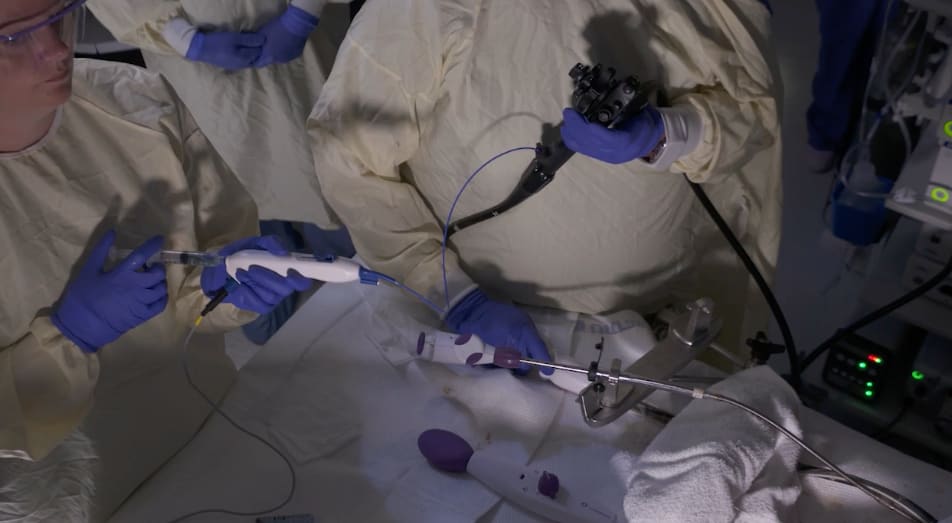
In this video Dr. Molham Abdulsamad of Geisinger Health demonstrates how Lumendi’s DiLumen™ C1 overtube and IgE Grasper improve access, stability and provide independent, multidirectional traction during resection of an ascending colon polyp adjacent to the hepatic flexure.
An updated clinical practice guideline from the American Society for Radiation Oncology substantially expands and modernizes recommendations for the use of radiation therapy in pancreatic cancer.