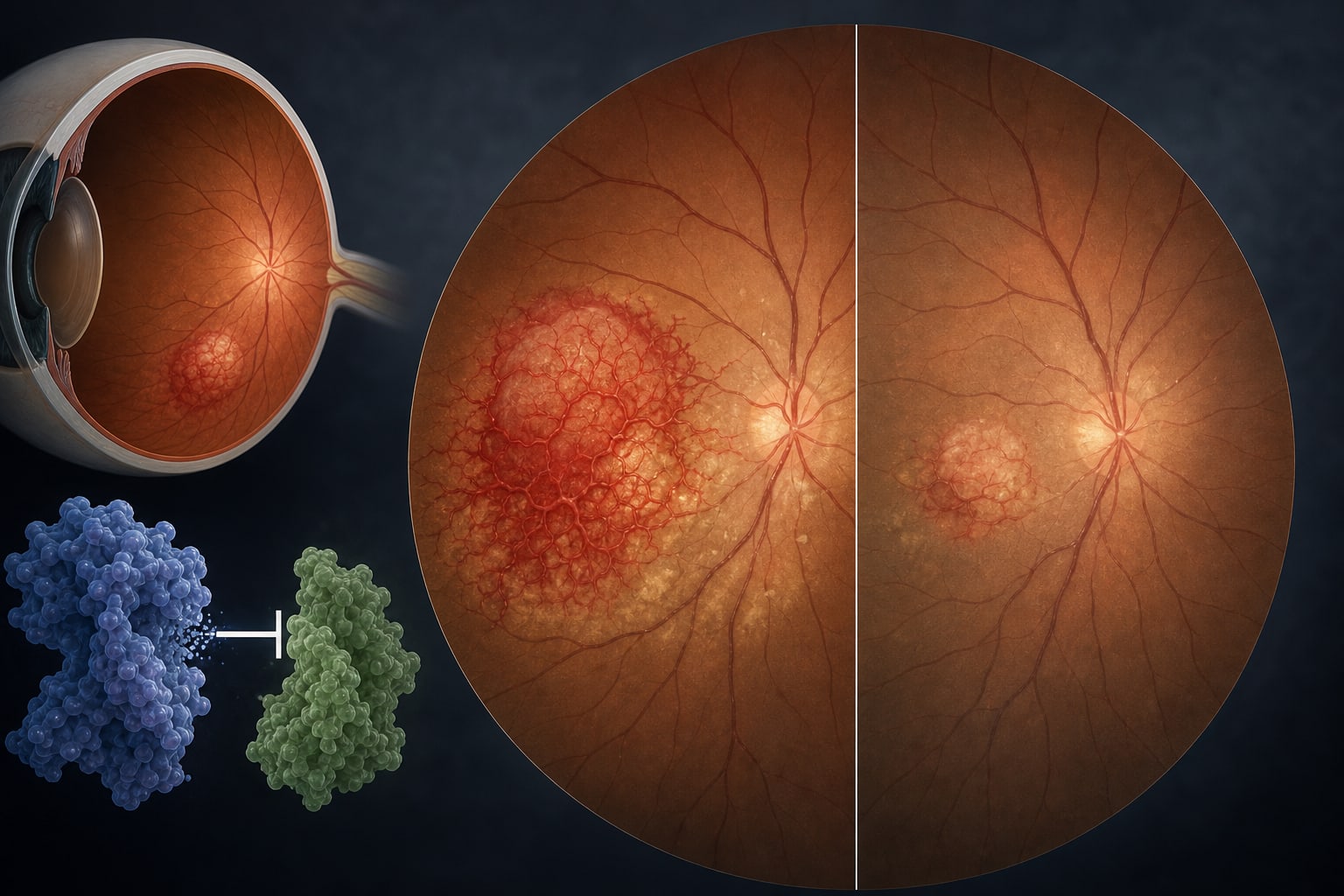
Clinical Report: Systemic Belzutifan Induces Regression of Retinal Capillary Hemangioblastoma
Overview
This case study reports the regression of retinal capillary hemangioblastoma in a patient with von Hippel–Lindau disease following treatment with systemic belzutifan. Notable reductions in lesion size, perfusion, and vascularity were observed four months after treatment initiation.
Background
Von Hippel–Lindau disease is a hereditary tumor syndrome that predisposes individuals to various tumors, including retinal capillary hemangioblastomas. These benign tumors are commonly associated with VHL and can lead to vision impairment. Effective treatment options are crucial for managing these lesions, particularly in patients with progressive disease.
Data Highlights
No numerical data or trial data presented in the article.
Key Findings
A 49-year-old female with VHL disease experienced regression of retinal capillary hemangioblastoma after systemic belzutifan treatment.
Four months post-treatment, a reduction in the size of retinal lesions was noted.
Decreased perfusion and vascularity of the lesions were observed following belzutifan therapy.
Belzutifan is a HIF-2α inhibitor approved for VHL-related tumors not requiring urgent surgery.
Previous treatment options for retinal capillary hemangioblastoma include laser therapy and cryotherapy.
Clinical Implications
Clinicians should consider the findings regarding systemic belzutifan for managing retinal lesions in patients with VHL.
Conclusion
Systemic belzutifan therapy may induce regression of retinal capillary hemangioblastomas in patients with von Hippel–Lindau disease.