Clinical Report: Exploring AI's Role in Colorectal Cancer Immunotherapy
Overview
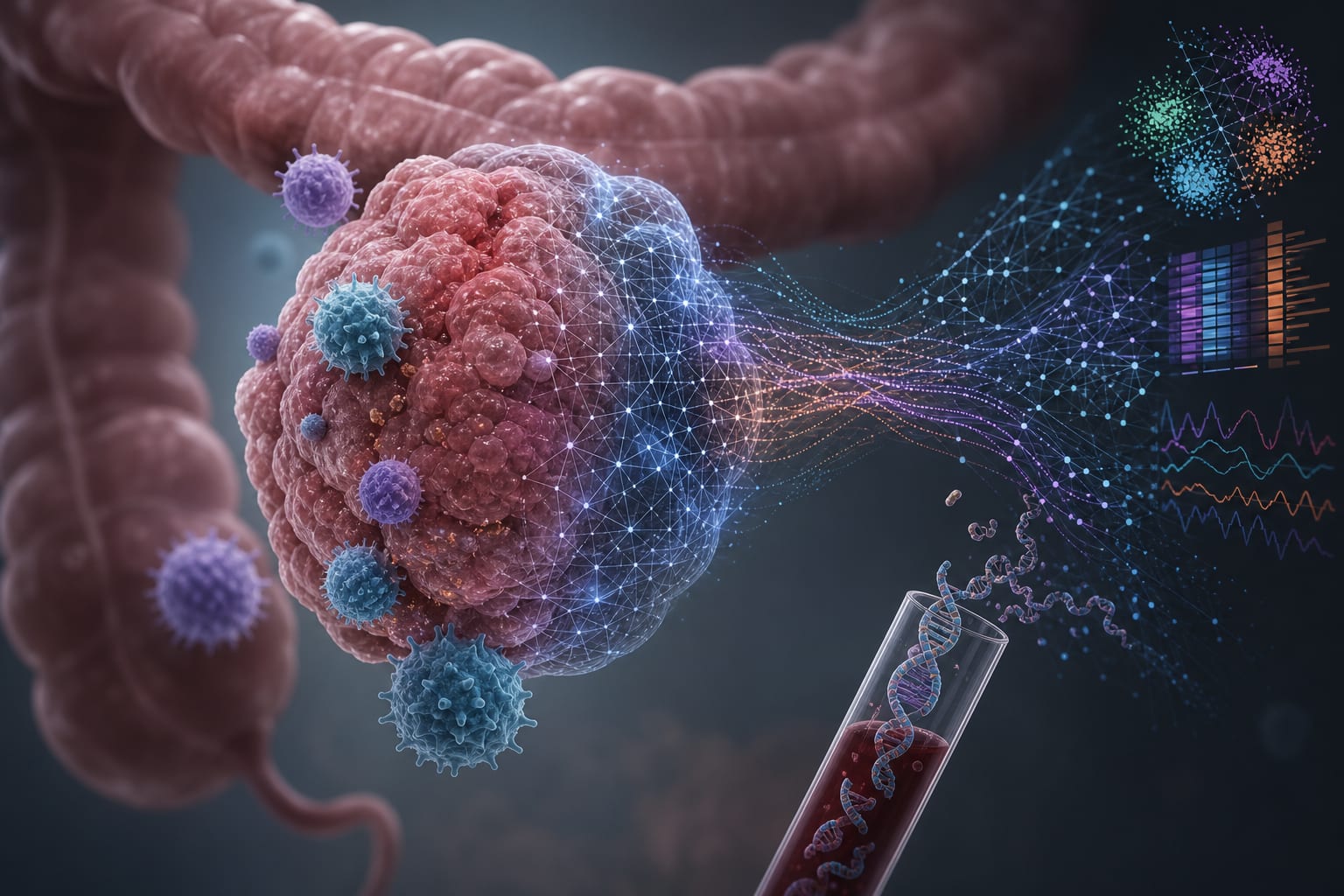
This review discusses the potential of artificial intelligence (AI) to enhance colorectal cancer (CRC) immunotherapy by serving as a mechanistic microscope and digital twin. It highlights the need for dynamic models to better predict treatment responses and address the limitations of current biomarkers.
Background
Colorectal cancer is a leading cause of cancer-related mortality, with immune checkpoint inhibitors showing limited efficacy in most patients. Current biomarkers fail to capture the complexity of tumor-immune interactions, necessitating innovative approaches to improve treatment outcomes. AI presents an opportunity to transform CRC immunotherapy by providing deeper insights into tumor biology and facilitating personalized treatment strategies.
Data Highlights
No numerical data or trial data was provided in the source material.
Key Findings
AI can decode tumor-immune interactions from multimodal data, enhancing understanding of CRC biology.
AI serves as a digital twin, modeling patient-specific therapeutic trajectories and resistance evolution.
Current biomarkers provide static snapshots, while AI can support dynamic treatment decisions.
AI may facilitate the transition of immunologically 'cold' tumors to 'hot' tumors, improving treatment responses.
Key translational barriers for AI in CRC immunotherapy include generalizability and interpretability.
Clinical Implications
Integrating AI into CRC immunotherapy could lead to more personalized treatment approaches, improving patient outcomes. Clinicians should consider the potential of AI to inform adaptive trial designs and enhance biomarker-driven therapies.
Conclusion
AI has the potential to revolutionize CRC immunotherapy by shifting from static predictions to dynamic, individualized treatment strategies. Continued exploration of AI's capabilities is essential for advancing precision oncology in colorectal cancer.