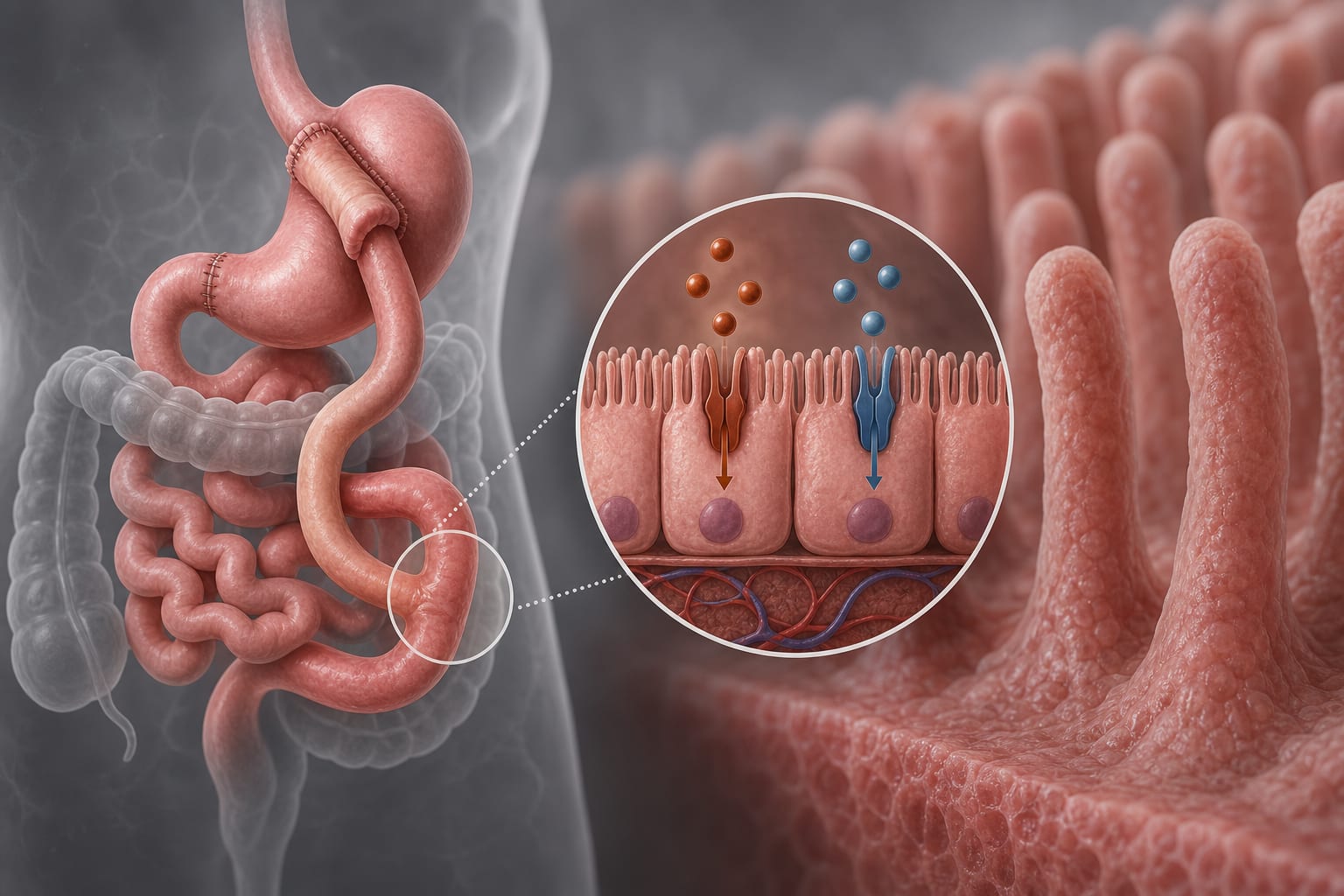
Clinical Report: Prevalence and Determinants of Excessive Fat-Free Mass Loss Post-Bariatric Surgery
Overview
This study analyzed fat-free mass (FFM) loss up to 3 years after bariatric surgery in a large Dutch cohort, revealing that significant FFM loss occurs predominantly within the first 6 months post-surgery. The prevalence of excessive FFM loss was substantial, with factors such as age, sex, preoperative BMI, and surgery type influencing the magnitude of FFM loss.
Background
Bariatric surgery is the most effective treatment for morbid obesity, leading to sustained weight loss and improved comorbidities. However, it is associated with nutritional deficiencies and excessive loss of fat-free mass, which includes muscle mass critical for metabolic functions and physical capacity. Excessive FFM loss can impair daily activities, reduce quality of life, and increase risks of sarcopenia and osteoporosis, potentially undermining long-term surgical success. Understanding the time course, prevalence, and determinants of FFM loss is essential for optimizing patient outcomes.
Data Highlights
Time Post-Surgery
FFM Loss (kg)
Prevalence of Excessive FFM Loss (%)
3 months
Data not specified
Data not specified
6 months
Majority of FFM loss occurs
Substantial prevalence at cutoffs ≥25%, ≥30%, and ≥35%
12 months
Average FFM loss 3–14 kg reported in literature
Large interindividual variation observed
24–36 months
Data not specified
Longitudinal data scarce due to measurement limitations
Key Findings
FFM loss is most pronounced within the first 6 months following bariatric surgery.
Excessive FFM loss is common, with varying prevalence depending on cutoff thresholds (≥25%, ≥30%, ≥35% of total weight loss).
Age, sex, preoperative BMI, and type of bariatric procedure (RYGB vs. SG) are associated with the degree of FFM loss.
Excessive FFM loss may lead to adverse outcomes including reduced functional capacity, weight regain, and increased risk of sarcopenia and osteoporosis.
Regular monitoring of FFM is conducted via bioelectrical impedance analysis during perioperative care, but no standardized treatment protocol for excessive FFM loss currently exists.
Clinical Implications
Clinicians should closely monitor FFM loss, especially within the first 6 months post-bariatric surgery, to identify patients at risk of excessive muscle mass depletion. Individualized interventions, including nutritional and physical therapy support, may be necessary to mitigate adverse effects. Awareness of patient-specific factors such as age and surgery type can guide risk stratification and tailored follow-up care.
Conclusion
Excessive fat-free mass loss is a prevalent and clinically significant issue following bariatric surgery, predominantly occurring early postoperatively and influenced by multiple patient and procedural factors. Proactive monitoring and management strategies are essential to preserve muscle mass and optimize long-term surgical outcomes.
References
NOK Bariatric Care Programme 2015-2016 -- Perioperative care and body composition monitoring
IFSO Guidelines -- Eligibility criteria for bariatric surgery
Quarter FFM Rule -- Proportion of fat-free mass loss in healthy weight loss
Patients with preoperative vitamin D deficiency had higher postoperative pain scores and opioid use after mastectomy, including more than triple the odds of moderate to severe pain within 24 hours of surgery.
A four-factor staging system stratified response rates from 90.9% to 37.5% in a retrospective cohort study, although the model showed only moderate discrimination (C statistic, 0.68) and requires external validation