Clinical Report: Effects of Various Thermal Ablation Techniques on Patients with Oligometastatic Colorectal Cancer and Lung Metastases
Overview
This study evaluates the impact of treatment sequencing of thermal ablation and systemic therapy on survival and local tumor control in patients with oligometastatic colorectal cancer and lung metastases.
Background
Oligometastatic colorectal cancer represents a subset of patients who are treated with multimodal treatment strategies. The integration of image-guided thermal ablation (IGTA) with systemic therapy is becoming more common, yet the optimal timing for these interventions remains uncertain.
Data Highlights
Group
Patients
Overall Survival Hazard Ratio (HR)
Progression-Free Survival Hazard Ratio (HR)
Local Tumor Progression Hazard Ratio (HR)
Delayed-ablation
118
1.00
-
-
Simultaneous-ablation
87
0.51 (95% CI, 0.27-0.96; P = 0.037)
0.75 (95% CI, 0.55-1.03; P = 0.076)
-
Instant-ablation
84
-
-
2.62 (95% CI, 1.28-5.37; P = 0.008)
Key Findings
The primary technical success rate of thermal ablation was 97.5%.
Simultaneous ablation was associated with a lower risk of death compared to delayed ablation (HR, 0.51).
Instant ablation was linked to a higher risk of local tumor progression (HR, 2.62).
No treatment-related deaths occurred in the study cohort.
The findings suggest that the timing of thermal ablation in relation to systemic therapy can significantly influence patient outcomes in oligometastatic colorectal cancer. Clinicians should consider the sequencing of these treatments to optimize overall survival and local control.
Conclusion
Simultaneous thermal ablation is associated with longer overall survival in patients with oligometastatic colorectal lung metastases, while instant ablation may be associated with poorer local control.
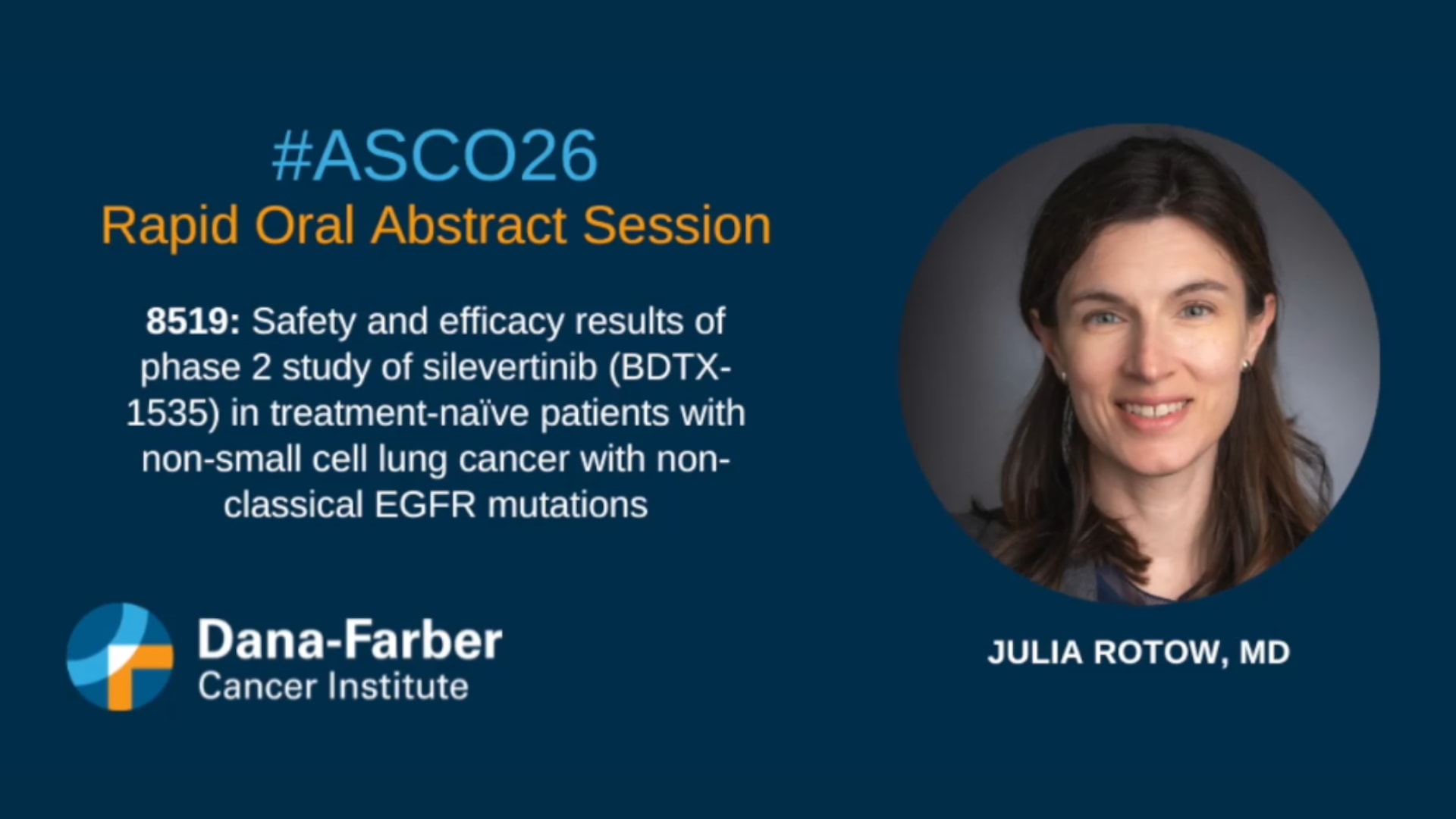
Dana-Farber Cancer Institute's Dr. Julia Rotow reported on a study looking at silevertinib, with data showing it may offer a new first-line option for hard-to-treat EGFR non-small cell lung cancer variants, with encouraging brain activity and manageable side effects.