Incidence, prevalence, and prognostic impact of sarcopenia on hepatic and cardiovascular outcomes in non-cirrhotic metabolic dysfunction–associated steatotic liver disease - Report - MDSpire
Advertisement
Incidence, prevalence, and prognostic impact of sarcopenia on hepatic and cardiovascular outcomes in non-cirrhotic metabolic dysfunction–associated steatotic liver disease
Clinical Report: Epidemiology and Prognostic Significance of Sarcopenia in MASLD
Overview
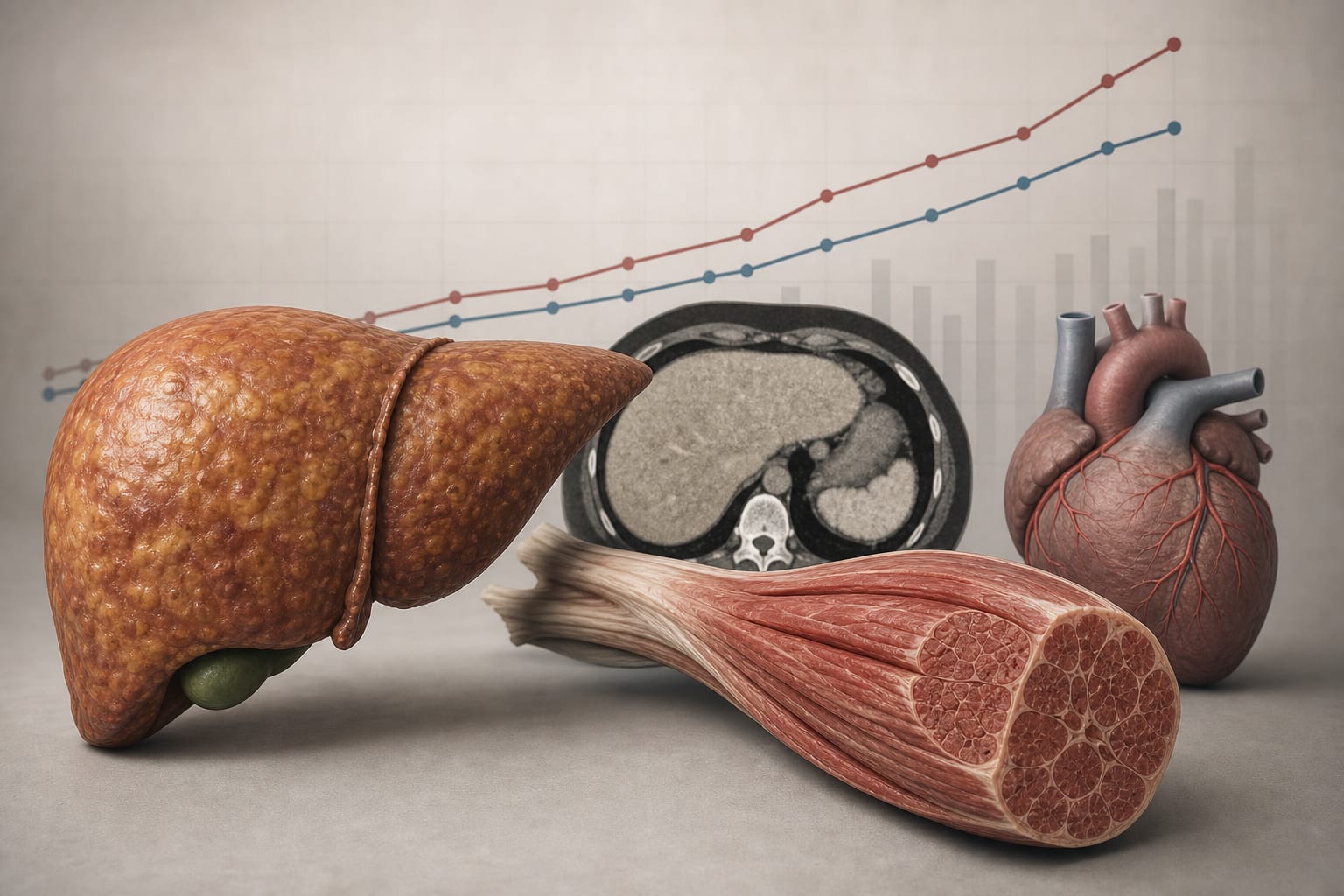
Sarcopenia prevalence among patients with metabolic dysfunction-associated steatotic liver disease (MASLD) has increased significantly from 2005 to 2024. It is independently associated with higher risks of hepatic decompensation, mortality, and major adverse cardiovascular events.
Background
Incorporate statistics on morbidity and mortality rates linked to sarcopenia and MASLD.
Data Highlights
Measure
Value
Patients with MASLD
1,232,337
Patients with Sarcopenia
714
Odds of Cirrhosis (OR)
4.46
Odds of Hepatic Decompensation (OR)
5.18
Odds of All-Cause Mortality (OR)
2.36
Hazard Ratio for Hepatic Outcomes (HR)
5.03
Hazard Ratio for Cardiovascular Outcomes (HR)
2.24
Key Findings
Sarcopenia prevalence among MASLD patients increased steadily from 2005 to 2024.
Patients with sarcopenia had significantly higher odds of developing cirrhosis (OR 4.46) and hepatic decompensation (OR 5.18).
All-cause mortality was also higher in sarcopenic patients (OR 2.36).
Sarcopenia was linked to an increased risk of major adverse cardiovascular events.
Time-to-event analysis indicated that sarcopenia independently predicted both hepatic (HR 5.03) and cardiovascular outcomes (HR 2.24).
Clinical Implications
Routine assessment of muscle health in patients with MASLD is essential for early identification of those at high risk for adverse outcomes. Integrating exercise and nutritional interventions may improve both hepatic and cardiovascular health in these patients.
Conclusion
The findings highlight the critical role of sarcopenia in predicting adverse outcomes in MASLD, emphasizing the need for targeted management strategies to enhance patient care.