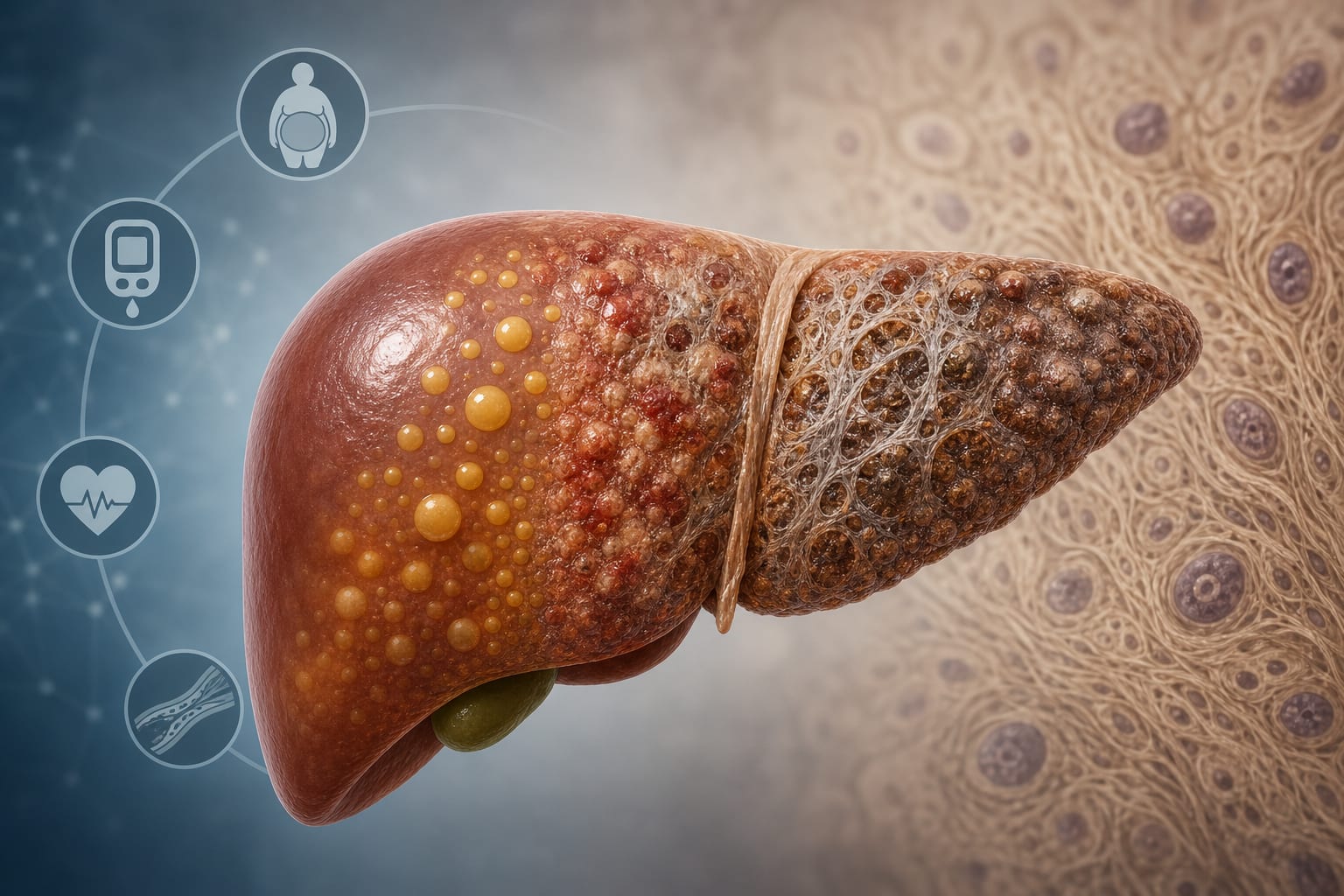
Clinical Report: Fibrosis of the Liver in Metabolic Dysfunction-Related Steatotic Liver Disease
Overview
Metabolic dysfunction-associated steatotic liver disease (MASLD) is the most prevalent chronic liver disease globally, significantly linked to cardiometabolic comorbidities. The detection of hepatic fibrosis is crucial as it predicts liver-related events and mortality.
Background
MASLD, previously known as non-alcoholic fatty liver disease (NAFLD), affects over 30% of the adult population worldwide. It is associated with increased risks of cardiovascular diseases and liver-related complications, particularly in patients with advanced fibrosis.
Data Highlights
Recent studies indicate that the prevalence of MASLD is rising, with estimates suggesting that it affects approximately 25% of adults in the United States. Additionally, the progression of fibrosis occurs in 20% to 30% of patients with MASLD, and the risk of developing cirrhosis is significantly higher in those with metabolic syndrome. Furthermore, the economic burden of MASLD-related complications is substantial, with healthcare costs projected to exceed $100 billion annually in the U.S. alone.
Key Findings
MASLD is the most common etiology of chronic liver disease, affecting over 30% of adults globally.
The pooled incidence rate for all-cause mortality among individuals with MASLD is 12.6 per 1000 person-years.
Among patients with metabolic dysfunction-associated steatohepatitis (MASH), 25%-33% will experience fibrosis progression.
Fibrosis staging is critical for predicting liver-related events and mortality.
Clinical Implications
Healthcare professionals should prioritize the detection of hepatic fibrosis in patients with MASLD to guide treatment decisions. The integration of lifestyle modifications and emerging pharmacotherapies may improve management strategies for patients with moderate to advanced fibrosis.
Conclusion
The rising prevalence of MASLD necessitates a comprehensive approach to its management, focusing on fibrosis detection and innovative therapeutic options.
Related Resources & Content
EASL-EASD-EASO Clinical Practice Guidelines on the management of metabolic dysfunction-associated steatotic liver disease (MASLD), 2024 -- EASL CPGs on MASLD
Frontiers in Immunology — Targeting macrophages in liver fibrosis
Frontiers in Medicine — The role of mitochondrial dynamics in metabolic dysfunction–associated steatotic liver disease
Frontiers in Pediatrics — Gut microbiota and pediatric metabolic dysfunction–associated steatotic liver disease: clinical evidence and therapeutic implications
The New Gastroenterologist — Addressing NAFLD: Strategies to Alleviate the Effects of Nonalcoholic Fatty Liver Disease
FDA Approves Treatment for Serious Liver Disease Known as ‘MASH’
Phase 3 Trial of Semaglutide in Metabolic Dysfunction–Associated Steatohepatitis
EASL-EASD-EASO Clinical Practice Guidelines on the management of metabolic dysfunction-associated steatotic liver disease (MASLD)
Global Consensus Recommendations for Metabolic Dysfunction-Associated Steatotic Liver Disease and Steatohepatitis - PubMed
Comparing FIB-4, VCTE, pSWE, 2D-SWE, and MRE Thresholds and Diagnostic Accuracies for Detecting Hepatic Fibrosis in Patients with MASLD: A Systematic Review and Meta-Analysis - PMC
Drug Trials Snapshots: REZDIFFRA | FDA
Clinical Assessment and Management of Metabolic Dysfunction-Associated Steatotic Liver Disease | AASLD
Tirzepatide for Metabolic Dysfunction–Associated Steatohepatitis with Liver Fibrosis | New England Journal of Medicine
A Phase 3, Randomized, Controlled Trial of Resmetirom in NASH with Liver Fibrosis | New England Journal of Medicine
Ahead of HPLC 2026, Eli Lilly’s Sarah O’Keeffe reflects on leadership, collaboration, and the analytical advances helping bring increasingly complex medicines to patients