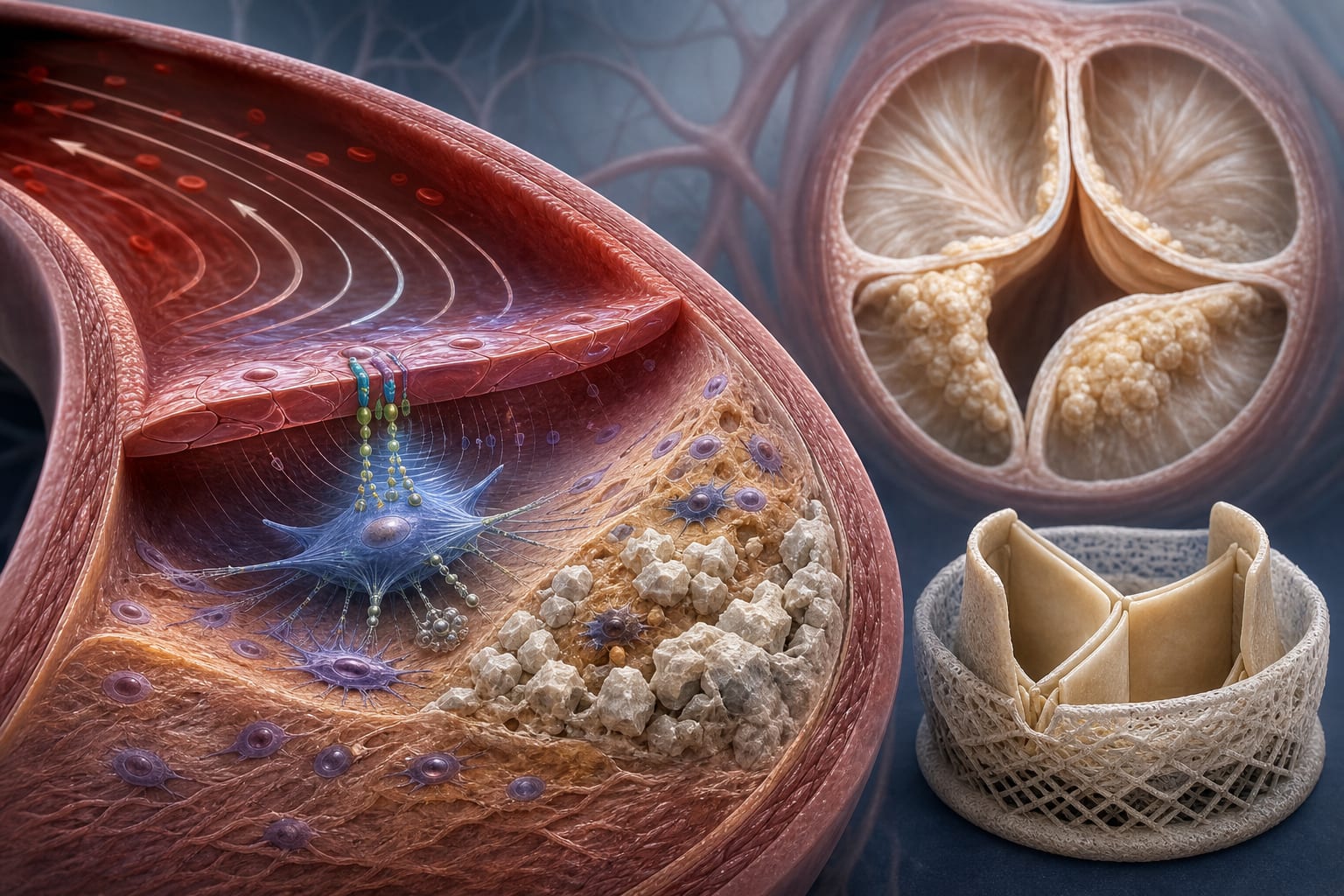
Clinical Report: The Role of Biomechanics and Mechanotransduction in Cardiovascular Calcification
Overview
This editorial discusses the critical role of biomechanics and mechanotransduction in cardiovascular calcification, emphasizing their impact on disease progression and clinical decision-making. It highlights recent studies that connect imaging metrics to calcification and systemic disease relationships.
Background
Cardiovascular calcification is a significant pathological process linked to various cardiovascular diseases, including coronary artery disease and calcific aortic valve disease. Understanding the biomechanical forces and mechanotransduction pathways involved is essential for developing effective diagnostic and therapeutic strategies. This editorial synthesizes recent research that illustrates the importance of integrating biomechanics into clinical practice.
Data Highlights
No numerical data presented in the editorial.
Key Findings
Mechanotransduction influences inflammation, lipid handling, and calcification in cardiovascular tissues.
Ran et al. demonstrated a correlation between Hounsfield unit ratios and CCTA-ICA concordance in calcified plaques.
Ferrières et al. found an inverse relationship between coronary calcification and vertebral volumetric bone mineral density.
Jansen et al. reported that microcalcifications reduce mechanical properties in atherosclerotic plaque caps.
Integrating biomechanics with clinical tools can enhance diagnostic accuracy and risk assessment in cardiovascular diseases.
Clinical Implications
Clinicians should consider the biomechanical aspects of cardiovascular calcification when interpreting imaging results and making treatment decisions. Understanding the relationship between calcification and systemic conditions may improve risk stratification and patient management strategies.
Conclusion
The integration of biomechanics and mechanotransduction into cardiovascular medicine is crucial for advancing diagnostic and therapeutic approaches. Continued research in this area may bridge existing translational gaps and enhance patient outcomes.
A prespecified exploratory analysis of the FIND-CKD clinical trial examined kidney function, albuminuria, and kidney failure outcomes in 903 patients with glomerular diseases.