Gut microbiota composition in responders vs. non-responders with hepatocellular carcinoma under ICI therapy: a systematic review and meta-analysis - Report - MDSpire
Conexiant’s news site is now MDSpire News. Learn more
Advertisement
Comparative Analysis of Gut Microbiome Profiles in Hepatocellular Carcinoma Patients Responding and Not Responding to Immune Checkpoint Inhibitor Therapy: A Systematic Review and Meta-Analysis
Clinical Report: Comparative Analysis of Gut Microbiome Profiles in HCC Patients
Overview
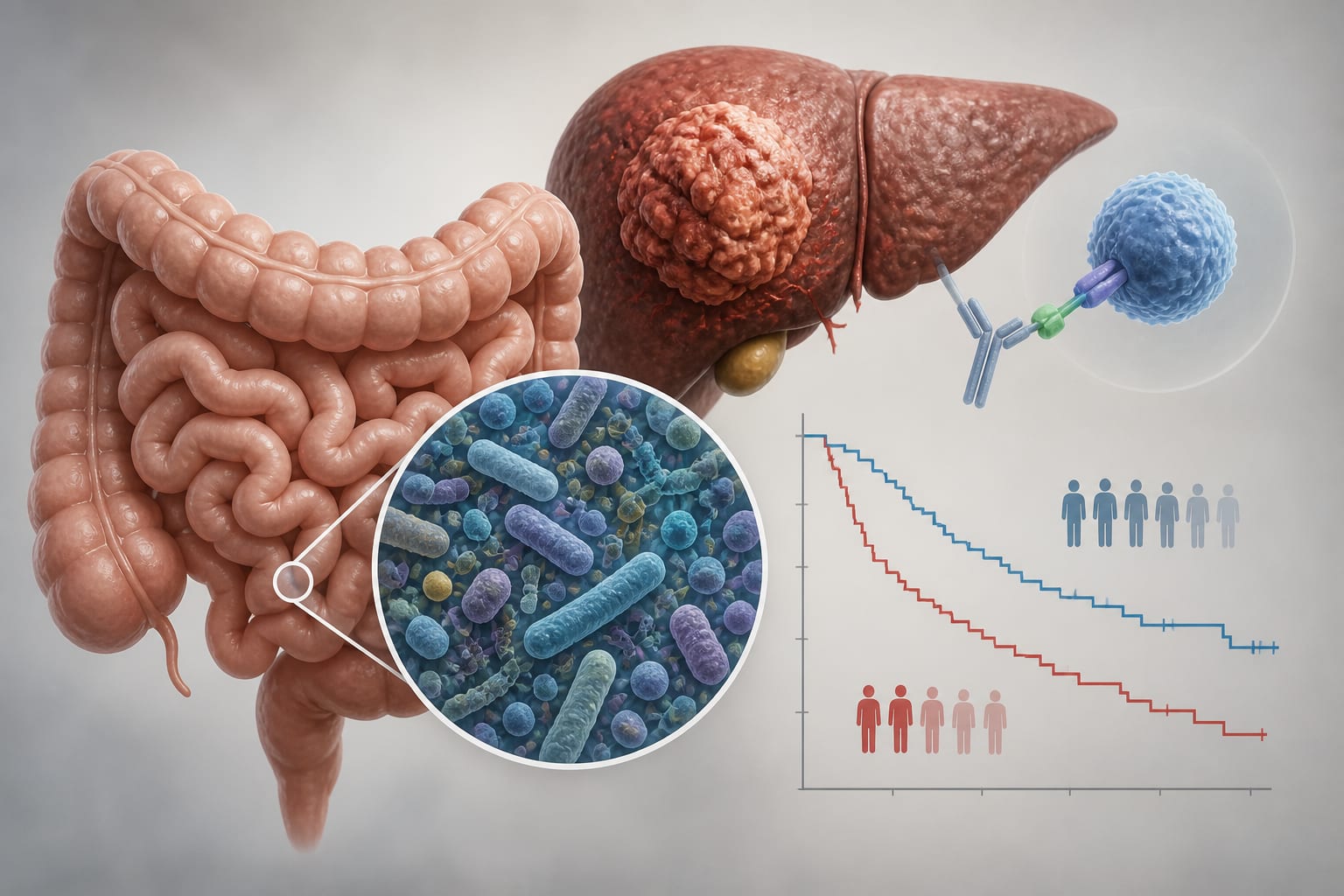
This systematic review and meta-analysis investigates the gut microbiome differences in hepatocellular carcinoma (HCC) patients undergoing immune checkpoint inhibitor (ICI) therapy. Key findings indicate distinct microbial profiles associated with treatment response.
Background
Hepatocellular carcinoma (HCC) is a prevalent malignancy with significant morbidity and mortality. The advent of immune checkpoint inhibitors (ICIs) has transformed treatment paradigms, yet response rates vary widely among patients. Understanding the role of gut microbiota in influencing treatment outcomes is an area of ongoing research.
Data Highlights
Finding
Details
Beta Diversity
Significantly differed in over 68% of studies.
Alpha Diversity
No significant difference between responders (R) and non-responders (NR).
Enriched Taxa in R
Actinobacteriota at the phylum level.
Depleted Taxa in NR
Bacteroides at the genus level.
Protective Taxa
Collinsella, Ruminococcus.AF25_28AC, and others correlated with lower mortality risk.
Risky Taxa
Bacteroides.AF20_13LB, Veillonella atypica, and others associated with worse OS outcomes.
Key Findings
Beta diversity significantly differed in over 68% of studies analyzed.
Alpha diversity indices did not show significant differences between responders and non-responders.
Actinobacteriota was enriched among responders, while Bacteroides was depleted in non-responders.
Specific taxa such as Collinsella and Ruminococcus were linked to lower mortality risk.
Taxa associated with worse overall survival included Bacteroides.AF20_13LB and Veillonella atypica.
Distinct microbial pathways were enriched in responders compared to non-responders.
Clinical Implications
The findings indicate differences in gut microbiome composition between responders and non-responders to ICI therapy in HCC patients.
Conclusion
This study highlights the significant differences in gut microbiome profiles between HCC patients responding and not responding to ICI therapy.