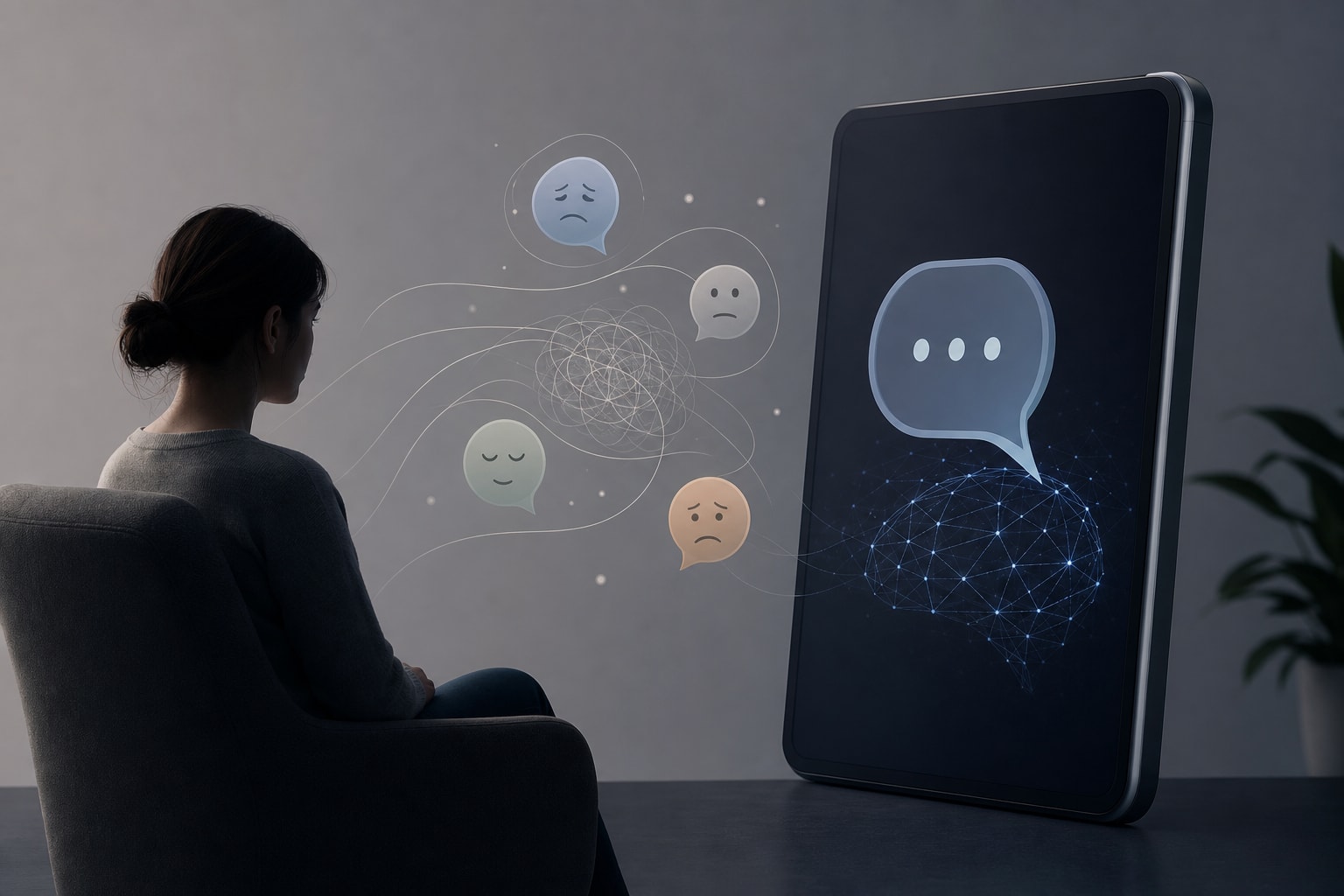
Clinical Report: What Emotions Are Evoked by Large Language Models?
Overview
The use of large language models (LLMs) for mental health support is growing, despite limited data on their safety and effectiveness. Experts emphasize the need for more research.
Background
The integration of large language models into mental health support raises important questions about their efficacy and safety. As many individuals turn to these AI tools for assistance, it is crucial to evaluate their impact on mental health outcomes.
Data Highlights
In a survey of over 1800 US adults, 35% reported using AI tools for mental health support more than once a week, including those already seeing a human provider.
Key Findings
Many individuals are using LLMs for mental health support, often alongside traditional therapy.
Experts call for more research to assess the safety and effectiveness of LLMs in mental health contexts.
General-purpose LLMs may not be designed for crisis management.
Some companies are developing clinically validated chatbots, but comparisons with general-purpose LLMs are lacking.
Simulation studies may not accurately reflect real-world interactions with chatbots.
Clinical Implications
Clinicians should be aware of the increasing use of LLMs among patients. Ongoing research is necessary to understand the safety and effectiveness of these tools.
Conclusion
As the use of LLMs in mental health support continues to rise, further research is needed to ensure their safe application in clinical settings.