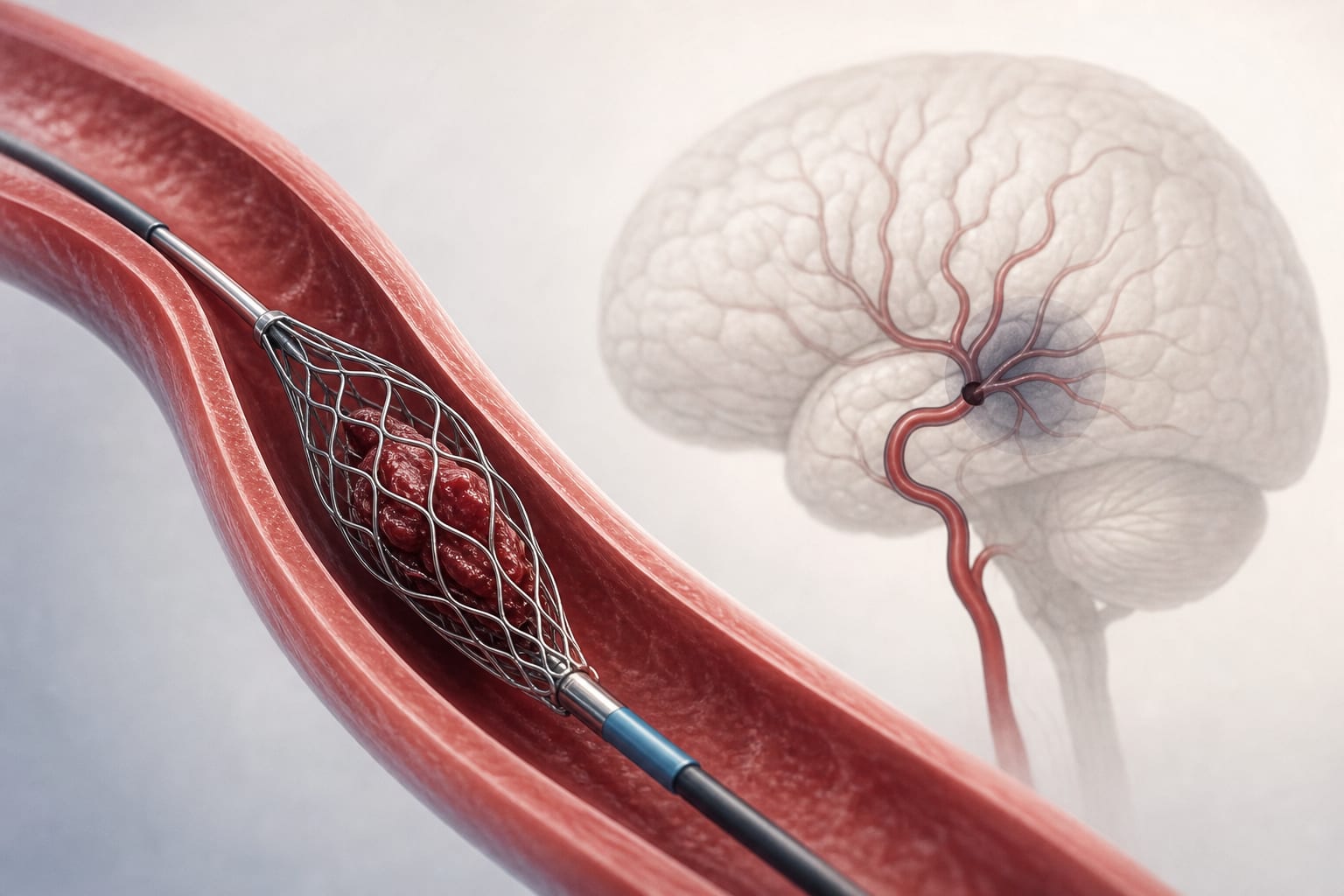
Quality of Life Outcomes Following Direct Endovascular Thrombectomy Versus Bridging Therapy
Overview
This study evaluates health-related quality of life (HRQoL) outcomes at 90 days following endovascular thrombectomy (EVT) alone versus bridging therapy in patients with large-vessel occlusion stroke. The findings indicate differences based on baseline stroke severity.
Background
Endovascular thrombectomy (EVT) is a critical intervention for acute ischemic stroke due to large-vessel occlusion, yet the impact of treatment strategies on health-related quality of life (HRQoL) remains uncertain.
Data Highlights
No numerical data presented in the source material.
Key Findings
Overall HRQoL at 90 days was similar between EVT alone (median EQ-5D 0.84) and bridging therapy (median EQ-5D 0.85).
Bridging therapy was associated with higher EQ-5D scores in patients with moderate-to-severe stroke (NIHSS 16–20) and severe stroke (NIHSS 21–42).
In exploratory analyses, bridging therapy favored patients with near-complete independence (BI 91–100).
EVT alone was linked to lower EQ-5D scores among patients with favorable functional outcomes (mRS 0–2).
Dimension-level analyses indicated lower odds of symptom-free mobility and usual activities with EVT alone in near-independent patients.
A significant interaction was found for anxiety/depression based on treatment and baseline severity.
Clinical Implications
The findings suggest that treatment strategies for acute ischemic stroke should consider baseline stroke severity when evaluating HRQoL outcomes. Clinicians may need to tailor approaches to optimize patient-centered outcomes based on individual patient profiles.
Conclusion
HRQoL outcomes at 90 days were comparable between EVT alone and bridging therapy, with variations based on baseline stroke severity.