Clinical Report: The Role of the ANGPT1–GABARAP Pathway in Crohn’s Disease
Overview
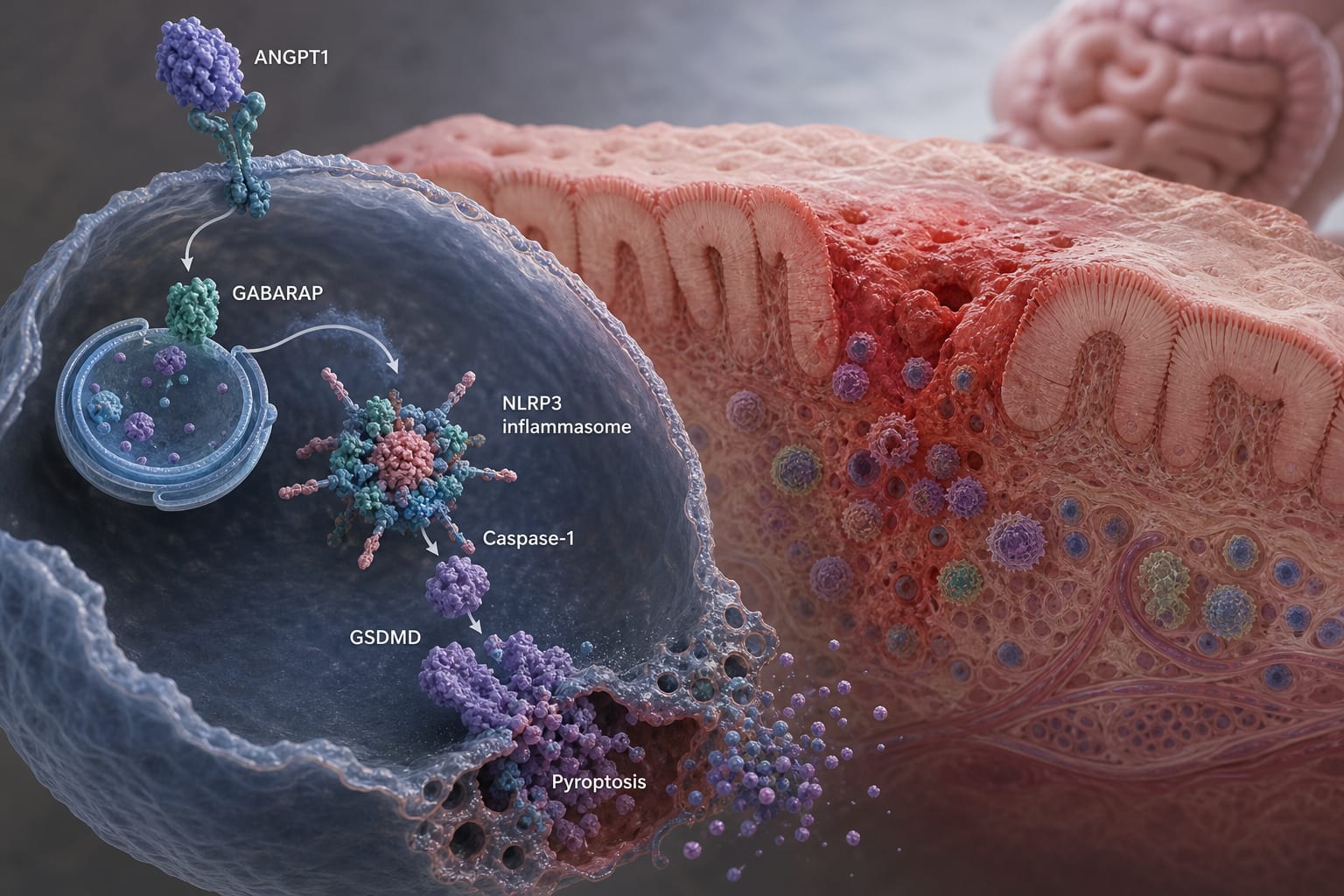
Expand on the significance of the ANGPT1–GABARAP axis in NLRP3 inflammasome regulation.
Background
Crohn's disease (CD) is a chronic inflammatory bowel disease characterized by immune dysregulation and intestinal barrier dysfunction. Understanding the molecular mechanisms underlying pyroptosis, particularly the role of the NLRP3 inflammasome, is crucial for developing effective therapies. The ANGPT1–GABARAP pathway may provide insights into the regulation of inflammation in CD.
Data Highlights
Finding
Value
OR for GABARAP levels and CD risk
0.563 (95% CI 0.327–0.968, P = 0.038)
Mediation proportion of GABARAP in ANGPT1–CD association
22.97%
Key Findings
GABARAP is genetically associated with a decreased risk of Crohn's disease.
ANGPT1 levels are reduced in DSS-induced colitis models.
Inhibition of GABARAP or ANGPT1 enhances NLRP3 inflammasome activation.
Exogenous ANGPT1 treatment restores GABARAP expression and attenuates pyroptotic signaling.
IL-1β and IL-18 levels are elevated in DSS-induced colitis.
Clinical Implications
The findings suggest that targeting the ANGPT1–GABARAP pathway may offer a novel therapeutic strategy for managing Crohn's disease. Further research is needed to explore the clinical application of these molecular insights in treating inflammatory bowel disease.
Conclusion
The study underscores the importance of the ANGPT1–GABARAP axis in regulating pyroptosis in Crohn's disease, providing a foundation for future therapeutic exploration.