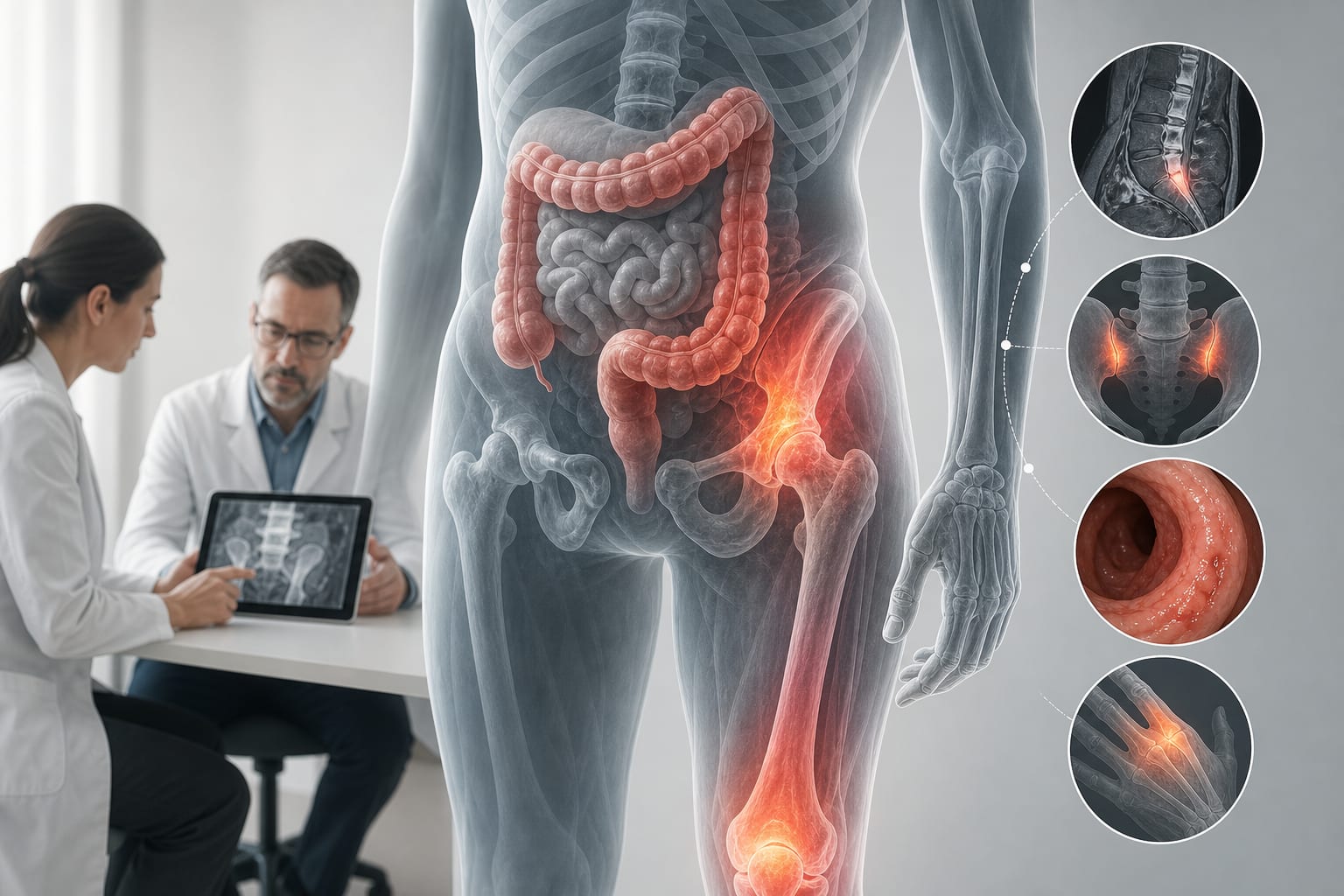
Unconventional Dysplastic Lesions in IBD Patients with Colorectal Adenocarcinoma
Overview
This case-cohort study evaluated the incidence and risk association of nonconventional (NC) dysplastic lesions in inflammatory bowel disease (IBD) patients who developed colorectal cancer (CRC). Both conventional and NC lesions were linked to increased CRC risk, with conventional lesions showing a stronger association in the era of high-definition (HD) colonoscopy.
Background
Inflammatory bowel disease (IBD) increases the risk of colorectal cancer (CRC), a major cause of morbidity and mortality in this population. Surveillance colonoscopy aims to detect and remove premalignant dysplastic lesions to prevent CRC development. While conventional dysplasia is well-characterized, nonconventional (NC) dysplastic lesions, which may lack classic features, are less understood and may be under-recognized by pathologists. Clarifying the neoplastic potential of NC lesions is critical for improving CRC prevention strategies in IBD.
Data Highlights
Parameter
IBD with CRC (n=87)
IBD without CRC (n=200)
Ulcerative colitis cases
52 (60%)
Not specified
Extensive colitis among UC cases
46 (89%)
Not specified
Hazard ratio (HR) for CRC with conventional lesions
2.18 (95% CI 1.34-3.52)
Reference
HR for CRC with NC lesions
2.28 (95% CI 1.59-3.26)
Reference
Post-HD era HR for conventional lesions
2.79 (95% CI 1.62-4.77)
Reference
Post-HD era HR for NC lesions
1.62 (95% CI 0.86-3.06)
Reference
Key Findings
Both conventional and nonconventional dysplastic lesions are associated with increased risk of colorectal cancer in IBD patients.
Conventional dysplastic lesions have a stronger association with CRC risk than NC lesions in the post-high-definition colonoscopy era.
Nonconventional lesions include diverse morphologies such as serrated changes and indefinite for dysplasia, which may be under-recognized.
Misclassification of lesions in the pre-HD era may have inflated the perceived risk associated with NC lesions.
Most CRC cases had ulcerative colitis with extensive colonic involvement.
Surveillance colonoscopy with HD imaging improves detection and risk stratification of dysplastic lesions.
Clinical Implications
Clinicians should recognize that both conventional and nonconventional dysplastic lesions confer increased CRC risk in IBD patients, emphasizing the importance of thorough surveillance. High-definition colonoscopy enhances lesion detection and may help differentiate lesion types to better guide management. Awareness and accurate classification of NC lesions by pathologists are crucial to optimize CRC prevention strategies.
Conclusion
This study demonstrates that nonconventional dysplastic lesions in IBD patients are associated with colorectal cancer risk, though conventional lesions remain more strongly predictive in the HD colonoscopy era. Improved detection and classification of these lesions can enhance surveillance effectiveness and CRC prevention.
References
Choi et al. 2023 -- Unconventional Dysplastic Lesions in IBD Patients with Colorectal Adenocarcinoma: A Case-Cohort Analysis
by Siri A Urquhart, Namratha Pallipamu, Hima Varsha Voruganti, Bhavana Baraskar, Pratyusha Muddaloor, Arshia K Sethi, Renisha Redij, Keirthana Aedma, Keerthy Gopalakrishnan, Shivaram Poigai Arunachalam, Kelli N Burger, Douglas W Mahoney, Blake A Kassmeyer, Ryan J Lennon, John B Kisiel, Nayantara Coelho-Prabhu