Clinical Report: Development of a Risk Assessment Model for T2DM Complications
Overview
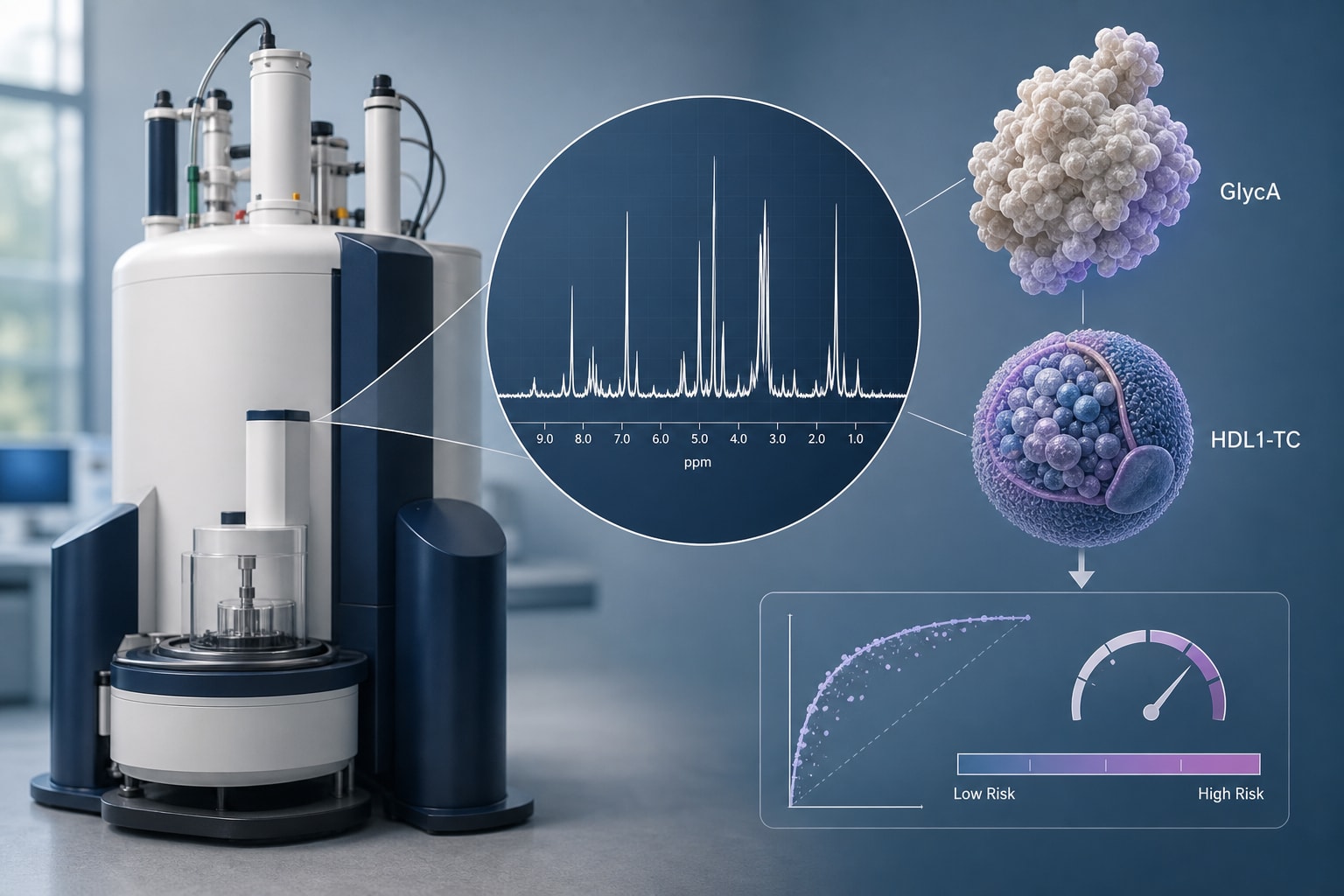
This study developed a risk assessment model for complications in type 2 diabetes (T2DM) utilizing NMR-derived GlycA and HDL1-TC. The model demonstrated good fit and discrimination, outperforming traditional markers like HbA1c and hs-CRP.
Background
The rising prevalence of T2DM necessitates effective strategies for preventing complications, which are often asymptomatic in early stages. Current risk assessments primarily rely on traditional clinical tests, which may not adequately stratify risk. This study aims to enhance risk stratification by integrating novel inflammatory markers and lipoprotein subfractions.
Data Highlights
Variable
Value
Age
Retained
Diabetes Duration
Retained
Fasting Plasma Glucose
Retained
GlycA
Retained
HDL1-TC
Retained
AUC
0.82 (95% CI: 0.756–0.873)
MAE
0.021
Key Findings
The model integrates GlycA, HDL1-TC, and clinical variables for T2DM complication risk stratification.
It showed good fit (χ² = 7.141, P = 0.521) and discrimination (AUC = 0.82).
Bootstrap calibration and decision-curve analysis indicated higher net benefit compared to HbA1c/hs-CRP.
Age, diabetes duration, fasting plasma glucose, GlycA, and HDL1-TC were significant predictors.
The study highlights the potential of NMR-derived markers in clinical practice.
Clinical Implications
The findings suggest that incorporating GlycA and HDL1-TC into routine assessments may improve risk stratification for T2DM complications. Clinicians should consider these markers alongside traditional indicators to enhance patient management.
Conclusion
The study presents a promising model for T2DM complication risk assessment, emphasizing the need for further validation of NMR-derived markers in clinical settings.